If you’ve been comparing neighborhoods across central Tokyo and keep coming back to Tomigaya and Yoyogi-Uehara, you’re not alone. These two adjoining areas in Shibuya Ward have earned a reputation among foreign professionals as some of the most livable pockets in the city — but the real picture is more nuanced than the Instagram-worthy cafés suggest. This article cuts through the surface appeal to give you the ground-level perspective you actually need before signing a lease.
Whether you’re relocating from abroad or moving within Tokyo, the gap between “looks great online” and “works for my daily life” can be significant. Tomigaya and Yoyogi-Uehara sit at the intersection of walkability, cultural energy, and residential calm — but they also come with specific trade-offs around space, cost, and English-language accessibility that matter enormously for foreign residents. This guide draws on the lived experience of expats who have called these neighborhoods home, so you can make an informed decision rather than a hopeful guess.
Who this article is for
- ●Foreign professionals in their 20s–40s working near Shibuya who are actively comparing neighborhoods before committing to a lease
- ●Expats who have read the general overviews and now want honest, specific detail about daily life in Tomigaya and Yoyogi-Uehara
- ●Couples or singles who value walkable lifestyle infrastructure alongside easy access to central Tokyo
What you’ll learn
- ●How these neighborhoods actually function day-to-day for foreign residents — transport, groceries, healthcare, and social life
- ●The honest trade-offs: what expats love, what frustrates them, and what they wish they’d known before moving in
- ●How Living in Jonan can help you find the right property in this area with bilingual support and 25 years of real-estate experience behind every recommendation
Tomigaya and Yoyogi-Uehara: Location, Character, and First Impressions
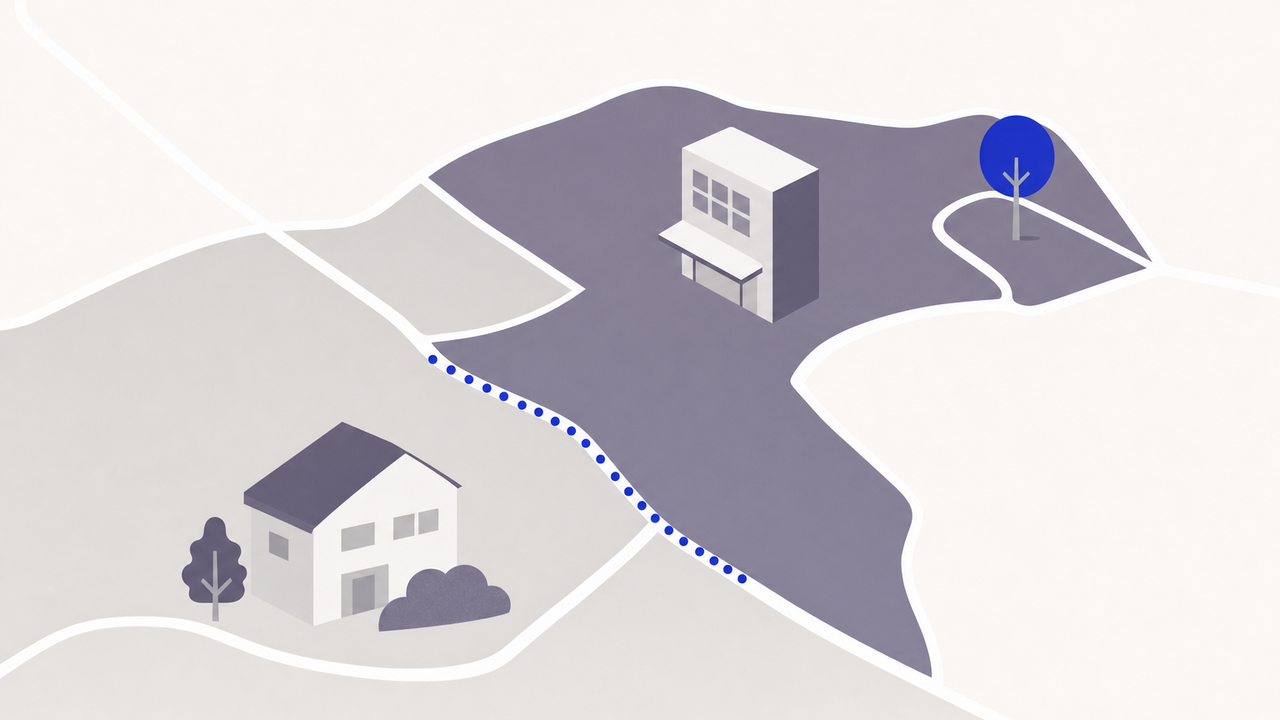
These two neighborhoods sit in the northwestern corner of Shibuya Ward, sharing a boundary that many residents barely notice. Tomigaya stretches along the slope between Yoyogi Park and Kōen-dōri, while Yoyogi-Uehara extends further west toward the Odakyu line. Together they form one of the most coherent residential districts in central Tokyo — low-rise, tree-lined, and immediately distinct from the commercial density of Shibuya Station just fifteen minutes away on foot.
What makes this area feel different from central Shibuya
The contrast with Shibuya’s commercial core is immediate and deliberate. Buildings in Tomigaya and Yoyogi-Uehara are predominantly two to four storeys — a result of strict height restrictions in the area. The streets narrow quickly once you leave the main roads, and weekend afternoons bring a particular quality of quiet that is genuinely unusual for a neighborhood this close to one of Tokyo’s busiest stations. Long-term foreign residents consistently cite this residential character as the primary reason they chose to stay beyond their initial contract period.
The social makeup is meaningfully international. A visible cluster of foreign residents — many working in technology, media, and international business — has settled here over the past decade, drawn partly by the concentration of specialty food stores, multilingual cafés, and the proximity to Yoyogi Park’s open space. Turkish restaurants, French bakeries, Middle Eastern grocery stores, and third-wave coffee shops line the lanes around Tomigaya Ichiba, creating an atmosphere that feels genuinely cosmopolitan rather than merely “expat-friendly” by design.
Yoyogi Park as a functional asset, not just a scenic backdrop
Yoyogi Park deserves mention not as an aesthetic bonus but as a genuine piece of daily infrastructure for residents who use it actively. 54 hectares of open green space, a five-minute walk from the centre of Tomigaya, functions as an outdoor gym, a weekend social hub, a dog-walking route, and a cycling destination. For foreign professionals accustomed to city parks that serve a real recreational role — Central Park, Hyde Park, Vondelpark — Yoyogi Park delivers that function in a way that most Tokyo neighborhoods simply cannot. Residents who run, cycle, or simply need unscheduled green time consistently rate this proximity as among the most significant quality-of-life factors in the area.
The realistic price of admission
Tomigaya and Yoyogi-Uehara are not budget options. Rental prices in these neighborhoods sit among the higher ranges for Shibuya Ward, reflecting demand that has remained strong even as remote work patterns have shifted where people want to live. A one-bedroom apartment in the area typically commands a premium relative to comparable units in neighboring Nakameguro or Sangenjaya. For professionals on salaries in the range common at large technology companies operating near Shibuya, this is generally workable — but it is worth entering the search with realistic expectations about what your budget will reach in terms of floor space. Units under 50 square metres are common; anything significantly larger will require either a higher budget or a willingness to be further from the park and the main café streets.
Transport Access and the Daily Commute

One of the most consistent points of praise from foreign residents in Tomigaya and Yoyogi-Uehara is how effectively the area connects to the rest of central Tokyo — despite the neighborhood’s residential, almost village-like feel. Transport from this area is genuinely strong, with multiple options covering different directions of commute.
Yoyogi-Uehara Station: the central transport node
Yoyogi-Uehara Station serves as the area’s primary hub and punches well above its size in terms of connectivity. The Odakyu Odawara Line reaches Shinjuku in four minutes — faster than many Yamanote Line journeys between adjacent stations. The Tokyo Metro Chiyoda Line runs from the same station, providing direct service to Shibuya (six minutes), Omotesando (eight minutes), and Otemachi in roughly twenty-five minutes without a transfer. For professionals commuting to Marunouchi, Kasumigaseki, or other central business districts along the Chiyoda Line corridor, this is an exceptional connection from what is effectively a quiet residential neighborhood. The station itself is small and human-scale by Tokyo standards — no labyrinthine underground corridors, no confusing exits. Foreign residents who are new to Tokyo’s rail network consistently describe navigating Yoyogi-Uehara Station as one of the less stressful parts of adjusting to the city.
Reaching Shibuya without the train
A point that surprises many newcomers: central Tomigaya is walkable to Shibuya Station in approximately fifteen to eighteen minutes at a comfortable pace, passing through some of the most pleasant streetscape in the ward along the way. For residents who prefer to avoid trains entirely for their daily commute — particularly those working at the many tech companies clustered around Dōgenzaka and the Shibuya Scramble area — this walk is a genuine daily option, not merely a theoretical one. Several expats interviewed for area research specifically cited the Shibuya walk as something they had not anticipated and came to value significantly, using it as a daily decompression ritual in both directions.
Bus access and the wider network
Bus routes through the area provide additional flexibility, connecting Tomigaya toward Harajuku, Omotesando, and Daikanyama without requiring the train. For residents whose workplace or social destinations lie to the south and east rather than toward Shinjuku, these routes extend the effective catchment area meaningfully. The Hatagaya and Yoyogi-Kōen stations on the Keio New Line also sit within reasonable walking distance for residents in the western sections of the area, providing yet another routing option toward Shinjuku. In practical terms, foreign residents in Tomigaya and Yoyogi-Uehara rarely describe transport as a source of friction — it is one of the areas where the neighborhood’s central positioning shows most clearly.
Daily Life Infrastructure: Groceries, Healthcare, and Essential Services

Transport and atmosphere can make an area feel appealing on a viewing visit, but the real test of livability is whether the infrastructure of daily life holds up week after week. Tomigaya and Yoyogi-Uehara perform well in most categories — but there are specific gaps that foreign residents consistently flag and that are worth knowing about in advance.
Grocery shopping: options and gaps
Residents within the Tomigaya area have access to multiple supermarkets within a ten-minute walk, including options that stock a solid range of imported and international goods. The cluster around Tomigaya Ichiba — a small street market that has evolved into one of the neighborhood’s defining features — includes specialty food shops carrying Middle Eastern, European, and Southeast Asian ingredients that are genuinely difficult to find elsewhere in the ward. For professionals who cook at home and value access to non-Japanese ingredients as part of maintaining their quality of life, this is a meaningful differentiator from neighborhoods that require a train journey to reach a well-stocked international supermarket.
The National Azabu and Nissin World Delicatessen — two of Tokyo’s most internationally-stocked grocery stores — are accessible from the area via short transit or a longer walk, supplementing the local options for specialty imports. Several residents note that the weekly shop rarely requires more than two stops: a local supermarket for everyday Japanese ingredients and a visit to one of the specialty stores for international staples. The picture is positive overall, with the main limitation being store size rather than range — the local shops are generally smaller than what many Western expats are accustomed to, which can require more frequent shopping trips.
| Daily Need | Availability | Notes for Expats |
|---|---|---|
| Everyday groceries | Strong — multiple supermarkets within 10 min walk | Stores tend to be compact; expect more frequent trips than a large Western supermarket |
| International / imported ingredients | Good — specialty shops in Tomigaya Ichiba area | Strong for Middle Eastern, European; supplement with National Azabu / Nissin for wider range |
| English-speaking medical care | Moderate — limited in-neighborhood, strong within 20 min | Hiroo and Omotesando clinics frequently used; plan in advance rather than relying on walk-in |
| Pharmacy (yakkyoku) | Good — several within walking distance | Staff English ability varies; bring the name of any specific medication in Japanese if possible |
| Convenience stores (konbini) | Excellent — FamilyMart, Lawson, 7-Eleven all present | Essential for late-night needs, bill payments, ATM access; deeply integrated into daily life |
| English-language administrative support | Limited locally — available at Shibuya Ward Office | Shibuya-ku has multilingual support staff; most residents handle registration and procedures there |
Healthcare access for foreign residents
English-language medical care is one area where Tomigaya and Yoyogi-Uehara residents face a moderate gap that is worth planning around rather than discovering in an emergency. The neighborhood itself does not have a high concentration of English-speaking clinics, but the surrounding area — particularly Hiroo, Omotesando, and Minami-Aoyama — offers a solid cluster of international clinics and hospitals within a fifteen to twenty-minute journey. The International Clinic in Hiroo and Tokyo Midtown Medical Center in Akasaka are frequently referenced by long-term foreign residents as their primary care options. For those with comprehensive international health insurance — standard for many professionals at multinational firms — access to adequate care is manageable; for those relying solely on Japanese national health insurance, navigating the system without Japanese language support can require extra preparation. This is a practical reason why professional guidance at the move-in stage has lasting value well beyond the apartment search itself.
Schools and family infrastructure
While Tomigaya and Yoyogi-Uehara attract a predominantly single or dual-income adult demographic, the area does have proximity to international educational options that matter for couples planning ahead. The area falls within reasonable distance of several international preschools, and the broader Shibuya Ward has a higher concentration of international schools than most Tokyo wards. Day-to-day family infrastructure — parks, paediatricians, child-related administrative services — is present but leans Japanese-language in its delivery. Families with children who require English-medium schooling consistently look toward Hiroo, Minami-Aoyama, and Azabu as supplementary catchment areas rather than expecting the full infrastructure to be local.
What Expats Actually Say About Living Here

The most useful input for anyone making a neighborhood decision tends not to come from listings or general guides, but from the accumulated observations of people who have already made the choice and lived with its consequences for a year or more. The following reflects consistent themes drawn from the experiences of foreign residents who have lived in Tomigaya and Yoyogi-Uehara.
I did not expect to feel this settled in a Tokyo neighborhood. The park, the cafés, the fact that I can walk to Shibuya when I want but also genuinely switch off in my street — that combination is rare here.
What residents consistently praise
The single most frequently cited positive in expat accounts of this area is the quality of daily life on foot. Residents describe a neighborhood that rewards walking — not because it is laid out in an unusually efficient grid, but because the density of worthwhile destinations within a fifteen-minute radius is genuinely high. Morning coffee, a farmers’ market stop, an evening run through Yoyogi Park, a dinner reservation at a restaurant that would attract attention in any major international city: all of these are achievable without planning, without a train, and without the sensory overload that accompanies life in denser parts of Tokyo. For professionals whose working days are already highly structured and often intense, the capacity to decompress simply by walking out of their apartment is valued almost universally.
A second consistent theme is the social quality of the neighborhood’s international community. Unlike some Tokyo areas where foreign residents exist in parallel with the local community rather than within it, Tomigaya and Yoyogi-Uehara have developed a social fabric that mixes nationalities, occupations, and lifestyles in a way that feels organic rather than forced. Language café events, international dining groups, and the simply more frequent street-level interaction that comes from a neighborhood where people walk and linger — these create conditions where meeting people feels less effortful than in many Tokyo neighborhoods.
What residents find frustrating
Space and cost are the twin frustrations that appear most consistently. Apartments in the area are expensive for their size, and the low-rise character that gives the neighborhood its charm also limits the supply of large units. Residents who moved from cities with generous apartment square footage — New York, London, Sydney — frequently describe an adjustment period around the physical limitations of their living space that is compounded by the cost of those limitations. A second recurring frustration is the limited English-language support for administrative tasks. Signing a lease, registering at the ward office, navigating utility setup, understanding waste collection schedules: these processes are manageable but require either Japanese language ability, a patient bilingual friend, or professional support. Many foreign residents note that the move-in phase, in particular, is where language gaps feel most acute — and where having a knowledgeable intermediary would have saved significant time and stress.
The gap between expectation and reality
Several residents note a gap between the neighborhood’s reputation and what it actually delivers for a new arrival without an established social network. The cafés are genuinely excellent; the park is genuinely exceptional. But the neighborhood’s social warmth — the quality that long-term residents describe so vividly — takes time to access. It is built through repeated presence at the same places, recognition by local shop owners, and the gradual accumulation of connections that come from staying put. Residents who moved in expecting immediate community report a slower start than they anticipated; those who gave it six months before evaluating tend to describe the same area very differently. This is perhaps the most important piece of calibration for anyone considering the move: Tomigaya and Yoyogi-Uehara reward patience and consistent engagement in a way that some neighborhoods do not require.
Honest Assessment: Pros, Cons, and Who This Area Actually Suits
Every neighborhood involves trade-offs, and being honest about those trade-offs is more useful than presenting an uncomplicated positive picture. Here is the balanced view that Living in Jonan’s consultants give clients who are actively considering Tomigaya and Yoyogi-Uehara.
| What Works Well | What to Be Aware Of |
|---|---|
|
|
The profile of residents who thrive here
Based on the consistent patterns in expat accounts, certain professional and lifestyle profiles tend to find Tomigaya and Yoyogi-Uehara an excellent long-term match. Professionals in their late twenties to early forties, working at technology companies, creative agencies, or international firms near Shibuya or in Marunouchi, who value walkable daily life and are willing to pay for the privilege of it — this is the demographic that has settled here most consistently and expressed the highest satisfaction. Singles and couples without children are the dominant resident profile, and the neighborhood’s infrastructure reflects that; it is designed for active adult life rather than family logistics.
Individuals who place a high premium on gastronomic quality — who want to be walking distance from serious coffee, interesting restaurants, and the kind of food retail that requires no compromise — will find the area unusually well-suited to that preference. The food and café culture here is not incidental; it is one of the neighborhood’s most distinctive and durable assets, and it attracts and retains residents for whom this matters.
Who might find the area less suitable
Residents who prioritize maximum apartment size for their budget will likely find better value in adjacent neighborhoods — Sangenjaya, Shimokitazawa, or parts of Nakameguro offer more floor space for comparable or lower rental cost, with different but genuine lifestyle assets of their own. Families requiring proximity to English-medium schools will need to evaluate commute times carefully; the area is not a natural hub for that infrastructure. And residents who are genuinely sensitive to the adjustment challenges of Japanese administrative processes — particularly if arriving without Japanese language ability or a professional support network — should factor in the real time and energy cost of navigating those systems independently.
- Foreign professionals (20s–40s) working near Shibuya or in the Chiyoda Line corridor who want a residential base with strong walkability and international community
- Singles or couples without children who value gastronomy, green space, and café culture as genuine daily-life priorities
- Relocating professionals who benefit from bilingual support during the move-in process and want to avoid the friction of navigating lease and registration in Japanese
Summary: Making the Right Decision for Your Situation
Tomigaya and Yoyogi-Uehara are among the most genuinely livable neighborhoods in central Tokyo for foreign professionals — but they are not the right choice for everyone, and the decision deserves more than a surface-level assessment based on café aesthetics and proximity to Yoyogi Park. The area’s strengths are real and durable: exceptional transport connectivity, walkable daily life, a cosmopolitan community with genuine depth, and outdoor infrastructure that is rare in a neighborhood this close to Shibuya Station. The trade-offs are equally real: premium rental pricing relative to floor space, limited local English-language healthcare, and the practical challenges of Japanese administrative processes that affect every foreign resident, regardless of how settled they eventually become.
The most consistent piece of advice from long-term expat residents in the area is to visit at different times of day and on both weekdays and weekends before committing — the neighborhood has a pronounced character that varies with time and season, and how you respond to that character on a quiet Tuesday evening versus a sunny Saturday morning will tell you more about fit than any article can. Where this guide and direct neighborhood experience diverge, trust the latter.
For residents comparing Tomigaya and Yoyogi-Uehara against alternatives in the Jonan area — Daikanyama, Ebisu, Nakameguro, Sangenjaya — the comparison ultimately comes down to the relative weight you place on walkability and park access versus floor space and cost efficiency. Each of those alternatives has a genuine and defensible case. This area’s case rests on a very specific combination of factors that, when they align with a resident’s priorities, tends to produce lasting satisfaction.
Living in Jonan works with foreign professionals navigating exactly this kind of comparison. Our bilingual consultants have guided hundreds of international residents through neighborhood selection and lease negotiation across the Jonan area, and we draw on 25 years of real-estate consulting experience to match clients with properties that reflect their actual priorities — not just the neighborhood’s reputation. If you are actively comparing Tomigaya and Yoyogi-Uehara against other areas, a conversation with our team can help clarify the decision based on your specific situation rather than generalizations.
- Foreign professionals who need English-language support throughout the Tokyo rental process
- Anyone comparing multiple neighborhoods and wanting expert, unbiased guidance on which area fits their lifestyle and commute
- Relocating expats who want the process handled competently, in English, with no surprises
About our bilingual rental support service
Frequently Asked Questions
Is Tomigaya or Yoyogi-Uehara better for expats?
The two areas overlap significantly and most residents use both interchangeably. Tomigaya tends to attract residents who prioritize café culture, Yoyogi Park access, and a slightly more village-like atmosphere. Yoyogi-Uehara (closer to the station of the same name) suits those whose commute benefits most from the Odakyu and Chiyoda line connections. In practice, the best fit depends on your specific building’s location and how you weight daily walk versus commute efficiency.
How much does it cost to rent an apartment in Tomigaya or Yoyogi-Uehara?
Rental prices in this area sit among the higher ranges within Shibuya Ward, reflecting sustained demand from both domestic and international residents. Actual pricing varies significantly by building age, floor space, and exact location relative to the station and park. For current, property-specific pricing, we recommend speaking directly with a bilingual consultant who can match options to your budget. Please contact Living in Jonan for up-to-date information.
Can I find English-speaking doctors near Tomigaya and Yoyogi-Uehara?
English-speaking medical care is available in the broader area but is limited within the immediate neighborhood. The most commonly used options by foreign residents are in Hiroo and Omotesando, reachable within fifteen to twenty minutes by public transport. It is worth identifying a preferred clinic and registering before you need urgent care, rather than relying on a walk-in approach.
Is Yoyogi-Uehara Station easy to navigate for someone new to Tokyo?
Yes — Yoyogi-Uehara Station is compact and straightforward compared to larger Tokyo hubs. It serves the Odakyu Odawara Line and the Tokyo Metro Chiyoda Line from the same location, and exits are clearly signed. Many foreign residents describe it as one of the less intimidating entry points into Tokyo’s rail network, particularly compared to stations like Shibuya or Shinjuku.
Do I need Japanese language ability to rent in this area?
Japanese language ability is not a hard requirement, but the rental process — from lease negotiation to ward registration to utility setup — is conducted primarily in Japanese. Many foreign residents manage with support from their employer’s relocation service or a bilingual real-estate consultant. Using a service like Living in Jonan, which provides full English-language support through the rental process, removes most of the language friction and significantly reduces the risk of misunderstanding lease terms or administrative requirements.
Take the next step with Area Comparison.
Bilingual consultants guide you so foreign residents can find a home with confidence
Contact us