If you’re weighing Minami-Aoyama against Ebisu for your next Tokyo home, you’re already asking the right question — both neighborhoods attract international professionals working in Shibuya, but they deliver remarkably different everyday experiences.
This guide breaks down the real differences that matter to expats in 2026: rent levels, English-friendliness, commute patterns, lifestyle amenities, and the subtle cultural feel that shapes daily life. Whether you’re a solo tech worker joining a Shibuya startup or a couple relocating from overseas, the comparison ahead will help you cut through the noise and make a confident decision.
Who this article is for
- Foreign professionals in their 20s–40s working near Shibuya Station who need English-language support throughout their apartment search
- Expats comparing premium residential neighborhoods in Tokyo’s Jonan area and wanting a clear, side-by-side breakdown
- Couples or singles earning ¥10 million+ annually who want to balance lifestyle quality with a manageable commute
What you’ll learn
- How Minami-Aoyama and Ebisu differ across rent, walkability, English services, and overall expat lifestyle
- Which neighborhood suits which type of professional or lifestyle preference — with concrete, persona-based recommendations
- Practical tips for navigating the Tokyo rental market as a foreign national, including how bilingual consultants can help
What to Consider Before Choosing a Tokyo Neighborhood as an Expat
Choosing between two desirable Tokyo neighborhoods is rarely about one factor alone. For foreign professionals commuting to Shibuya, the decision involves layered trade-offs: how much rent you’re comfortable paying, how English-friendly your local environment needs to be, how long your commute can realistically be before it erodes your quality of life, and what kind of weekend lifestyle restores your energy after a demanding workweek.
Rent and Budget Expectations in 2026
Both Minami-Aoyama and Ebisu sit firmly in Tokyo’s premium residential tier, but there is a measurable gap in what you get for your money. Minami-Aoyama commands some of the highest residential rents in the entire city — a reflection of its luxury brand identity and the prestige of an Omotesando address. A one-bedroom apartment (1LDK) in Minami-Aoyama typically starts at around ¥200,000–¥280,000 per month, with larger or newer units reaching well beyond ¥350,000.
Ebisu, while also considered an upscale residential area, tends to offer comparable quality at slightly lower price points. A 1LDK in Ebisu generally falls in the ¥160,000–¥240,000 range, with the higher end concentrated near Ebisu Garden Place or newly built towers. For professionals on a generous but not unlimited housing budget, this difference — often ¥30,000–¥60,000 per month — is worth factoring in carefully. Note that rental market conditions fluctuate; always verify current listings with a bilingual consultant for the most accurate figures.
Commute Patterns to Shibuya
Shibuya Station is the hub for most international professionals in this area, and both neighborhoods have strong access to it. Ebisu sits directly on the JR Yamanote Line, making the commute to Shibuya a single stop — typically under five minutes door-to-platform. This is one of Ebisu’s most compelling practical advantages, particularly for professionals who value reclaiming commute time or dislike crowded transfers.
Minami-Aoyama’s relationship with Shibuya is a little more varied. The neighborhood is best served by the Tokyo Metro Ginza Line (Omotesando Station) and, depending on where exactly you live, walking to Shibuya in around 20–30 minutes is genuinely feasible. The Ginza Line ride from Omotesando to Shibuya takes about four minutes. However, the Omotesando–Shibuya subway stretch is notably crowded during peak hours, and those living in the southern or quieter parts of Minami-Aoyama may find the walk preferable in good weather.
English-Friendliness and Daily Life Accessibility
For newly arrived expats, the ability to handle everyday tasks — grocery shopping, medical appointments, gym memberships, utility contracts — without fluent Japanese is not a luxury; it’s a practical necessity. Both neighborhoods score relatively well by Tokyo standards, but with different strengths. Minami-Aoyama’s concentration of international brands, boutiques, and cosmopolitan restaurants means staff are generally more accustomed to English-speaking customers. Several international clinics and dental offices operate in the Aoyama–Omotesando corridor.
Ebisu offers a similarly international atmosphere, anchored by the European-influenced Ebisu Garden Place complex, which houses restaurants, a cinema, and a Westin hotel. The area around Daikanyama — a short walk from Ebisu — is particularly rich in English-menu cafes, imported goods stores, and foreigner-friendly boutiques. That said, for both neighborhoods, navigating lease agreements and dealings with Japanese landlords without professional support remains genuinely challenging. This is where a bilingual real estate consultant adds the most tangible value.
Minami-Aoyama vs Ebisu: Side-by-Side Comparison
The table below summarizes how both neighborhoods compare across the criteria that matter most to expat professionals working near Shibuya in 2026. Use this as a quick reference before diving into the detailed breakdown of each area.
| Evaluation Axis | Minami-Aoyama | Ebisu |
|---|---|---|
| Monthly Rent (1LDK, approx.) | ¥200,000–¥350,000+ | ¥160,000–¥240,000 |
| Commute to Shibuya | 5–10 min (Metro) or 20–30 min walk | Under 5 min (JR Yamanote Line) |
| English-Friendliness | High (international retail, clinics) | High (Garden Place, Daikanyama proximity) |
| Neighborhood Character | Luxury, fashion-forward, design-centric | Relaxed upscale, bistro culture, walkable |
| Expat Community Density | Moderate–High | Moderate–High |
| Green Space & Walkability | Moderate (Aoyama Cemetery, Meiji Jingu proximity) | Good (Yebisu Garden Place, Meguro River nearby) |
| Foreign National Rental Access | Challenging without bilingual support | Challenging without bilingual support |
| Administrative Ward | Minato-ku (港区) | Shibuya-ku (渋谷区) |
Minami-Aoyama — Tokyo’s Most Design-Forward Address
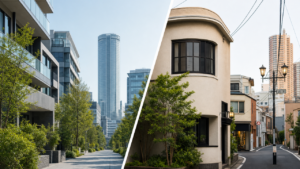
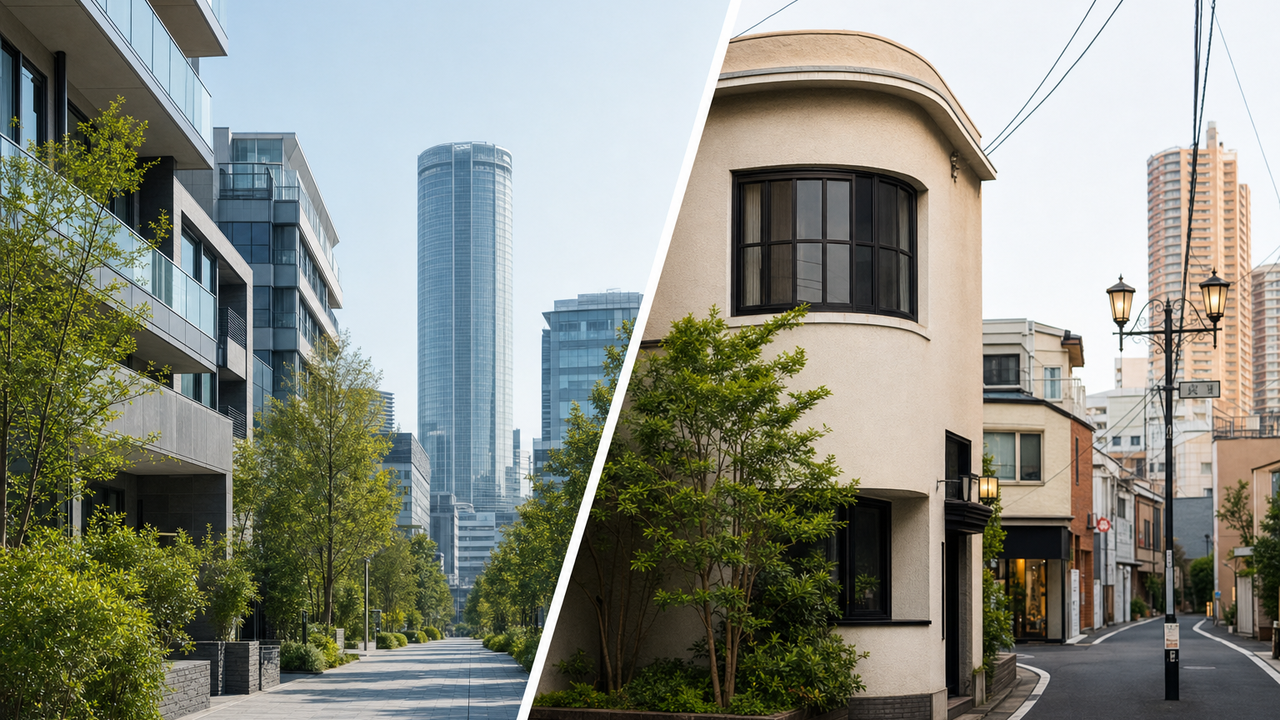
Minami-Aoyama is, in the eyes of many Tokyo residents and global expats alike, the city’s most visually curated neighborhood. The streets between Omotesando and Gaien-mae are lined with flagship architecture, independent galleries, and some of the most photographed stretches of pavement in Japan. For professionals who identify strongly with design, fashion, art, or creative industries, living here carries a distinct sense of alignment between work identity and home address.
| Axis | Assessment for Minami-Aoyama |
|---|---|
| Rent (1LDK) | ¥200,000–¥350,000+ (premium tier) |
| Commute to Shibuya | ◎ 5–10 min via Ginza Line, or walkable |
| English-Friendliness | ○ High — international retail & clinic density |
| Expat Community | ○ Strong creative/fashion international scene |
| Best Suited For | Design, fashion, creative, and luxury-lifestyle oriented expats |
The practical reality of living in Minami-Aoyama is that everyday conveniences exist, but the neighborhood’s primary identity is aesthetic rather than utilitarian. Supermarkets are present — most notably the basement floors of the Aoyama area department stores and a few well-stocked local options — but you won’t find the dense cluster of budget-friendly grocery options that characterize more residential Tokyo neighborhoods. Dining out is a genuine pleasure: the area is dense with independent restaurants, wine bars, and cafes that cater to an internationally minded clientele, and English menus are common enough that navigating dinner without Japanese rarely presents a problem.
One factor that surprises some newcomers is the quiet residential character of the side streets off Aoyama-dori. Once you step away from the main boulevard, Minami-Aoyama offers genuinely calm, low-density streets with mature trees, gated apartment buildings, and a pace of life that feels more village-like than metropolitan. This duality — high-fashion street presence by day, quiet residential feel in the evenings — is part of what makes the area so sought after. The proximity of Aoyama Cemetery, a large and genuinely peaceful green space, adds to this sense of calm.
- Creative directors, UX designers, architects, and fashion industry professionals who identify with the Aoyama aesthetic
- Expats who prioritize prestige address and proximity to international art, design, and cultural institutions
- High-income singles or couples willing to pay a premium for one of Tokyo’s most coveted postcodes
Ebisu — The Relaxed Upscale Neighborhood That Delivers on Livability
Ebisu occupies a sweet spot that is genuinely difficult to find in central Tokyo: it is upscale without being ostentatious, centrally located without feeling like a transit hub, and internationally minded without losing its distinctly Tokyo character. For expats who want to feel at home rather than on display, Ebisu consistently earns high marks.
| Axis | Assessment for Ebisu |
|---|---|
| Rent (1LDK) | ¥160,000–¥240,000 (upscale, competitive value) |
| Commute to Shibuya | ◎ Under 5 min, JR Yamanote Line, no transfer needed |
| English-Friendliness | ○ High — Garden Place, Daikanyama dining & retail nearby |
| Expat Community | ○ Strong tech, finance, and creative professional scene |
| Best Suited For | Tech workers, finance professionals, and lifestyle-oriented expats who value commute efficiency and bistro culture |
The anchor of Ebisu’s identity is Ebisu Garden Place — a self-contained complex built on the former Yebisu Brewery site, housing a Westin hotel, restaurants, a cinema, an art museum (the Tokyo Metropolitan Museum of Photography), and a pleasant outdoor plaza. This complex alone gives the neighborhood a social and cultural gravity that many comparable Tokyo residential areas lack. On weekday evenings, the plaza fills with after-work groups from the surrounding offices; on weekends, it draws a relaxed mix of couples, families, and tourists who blend seamlessly into the neighborhood’s unhurried atmosphere.
The Daikanyama adjacency is another significant draw. A ten-minute walk from Ebisu Station, Daikanyama is one of Tokyo’s most beloved neighborhoods for its low-rise architecture, independent bookstores (most famously Tsutaya Books), farm-to-table cafes, and a street culture that feels more akin to a relaxed European city than central Tokyo. For expats who want easy access to this kind of environment without paying Daikanyama-adjacent rent premiums, living in Ebisu gives you the best of both worlds. For those interested in exploring neighboring areas, our Nakameguro Living Guide covers another highly popular option just a few stations away.
Ebisu is also exceptionally well connected beyond Shibuya. The JR Yamanote Line reaches Meguro in one stop and Shinagawa in three, giving residents access to some of Tokyo’s best international dining, business districts, and international school corridors without a lengthy journey. This multi-directional connectivity is a practical asset that compounds in value over time.
- Tech professionals at companies like Google, ByteDance, or Shibuya-based startups who want a minimal commute and relaxed after-work options
- Expats who value lifestyle balance — great restaurants, walkable streets, and natural green space — over prestige address
- Couples or individuals who want upscale living at a slightly more accessible price point than Minami-Aoyama
Who Should Choose Which Neighborhood?
The real question isn’t which neighborhood is objectively better — both offer genuinely high quality of life for international professionals. The question is which one matches your priorities, work style, and the kind of daily life you want to come home to. Below are two clear persona-based recommendations drawn from the comparison above.
If You Work in Tech or Finance and Value Commute Efficiency: Choose Ebisu
For professionals at companies like Google Japan, ByteDance, or any of the growing cluster of international tech and finance firms near Shibuya, Ebisu delivers the best balance of commute time, lifestyle amenity, and value. The single-stop JR Yamanote connection to Shibuya means you can leave the office at 7pm, be home by 7:10pm, and still have a full evening in front of you — a real quality-of-life advantage over longer or more transfer-heavy commutes. You can explore more walkable tech-friendly neighborhood options in our guide to 5 Walkable Tokyo Neighborhoods for Tech Workers Near Shibuya.
From a financial perspective, Ebisu allows high-income professionals to live well without spending at Minami-Aoyama’s top tier. The roughly ¥40,000–¥60,000 monthly rent difference represents meaningful savings over a two-year contract — savings that can fund travel, accelerated savings, or simply a more relaxed relationship with monthly expenses. The neighborhood’s restaurant scene, anchored by the Garden Place complex and the stretch leading toward Daikanyama, is genuinely excellent and offers both casual and special-occasion options within walking distance.
If You Work in Creative Industries or Value Prestige and Cultural Access: Choose Minami-Aoyama
Minami-Aoyama is a deliberate choice — one that rewards professionals for whom the neighborhood itself is part of their identity and lifestyle expression. If you work in architecture, fashion, branding, luxury consumer goods, or the creative technology space, and you want your home address to reflect and reinforce that, Aoyama delivers something Ebisu genuinely cannot replicate. The density of design studios, galleries, concept stores, and creative agency offices in the area means your professional and personal worlds exist in close proximity.
From a practical standpoint, the Ginza Line’s connections toward Ginza, Nihonbashi, and Omotesando give Minami-Aoyama residents easy access to a wide arc of central Tokyo without relying solely on the Yamanote Line. For expats whose work involves client meetings across multiple Tokyo business districts, this east-west connectivity has its own strategic value. The neighborhood’s international medical infrastructure — including several English-speaking clinics and dental offices along the Aoyama corridor — also makes it a practical choice for professionals who travel frequently and need reliable healthcare access close to home. Those comparing their options across the broader Jonan and central Tokyo area may also find value in our Tokyo Neighborhood Comparison guide.
Important Note on Rental Access
Foreign nationals face specific hurdles in Tokyo’s rental market regardless of neighborhood — from guarantor requirements and documentation in Japanese to landlords who are hesitant to rent to non-Japanese residents. This challenge applies equally in both Minami-Aoyama and Ebisu. Working with a bilingual consultant who understands these dynamics from the outset is strongly recommended, and can materially change the outcome of your property search. Real estate market conditions are also subject to change; always confirm current availability and pricing through a specialist.
Summary: Making Your Final Decision
Both Minami-Aoyama and Ebisu are among the strongest choices available to international professionals working near Shibuya in 2026. Neither is a wrong answer — but they serve meaningfully different profiles.
Minami-Aoyama is the right choice if you place a premium on aesthetic environment, cultural access, and the prestige of one of Tokyo’s most recognizable addresses, and if your budget comfortably accommodates the higher rent tier. It suits creative and luxury-industry professionals who want their home address to be in alignment with their professional identity.
Ebisu is the right choice if you want superb commute efficiency to Shibuya, a relaxed and walkable lifestyle with excellent dining and green space, and strong value within the premium segment. It is consistently the more pragmatically appealing option for tech professionals, finance workers, and anyone who wants to live well without over-allocating to rent.
In either case, navigating Tokyo’s rental market as a foreign national — with its language barriers, documentation requirements, and guarantor complexities — is significantly smoother with the support of a bilingual consultant. Services like Balleggs Global specialize in supporting international residents through the process from search to signing, with 25 years of experience in Tokyo’s central residential market.
- Foreign nationals who need bilingual guidance throughout the Tokyo apartment search and leasing process
- Expats considering Minami-Aoyama, Ebisu, or other Jonan-area neighborhoods who want access to curated, English-supported listings
- Professionals who want reliable, experienced support — backed by 25 years of Tokyo real estate consulting — to avoid common pitfalls in the Japanese rental market
About the rental search process with bilingual support
Frequently Asked Questions
Is Minami-Aoyama or Ebisu better for a solo expat professional in their 30s working at a Shibuya tech company?
For most solo tech professionals, Ebisu tends to offer a stronger overall package: the JR Yamanote Line puts you in Shibuya in under five minutes, the neighborhood’s bistro and dining culture makes for an excellent work-life balance, and rent is generally more competitive than Minami-Aoyama. That said, if your work is in a creative or design-adjacent field and the Aoyama aesthetic resonates with you personally, the premium for Minami-Aoyama may well be justified.
Can foreign nationals rent apartments in Minami-Aoyama and Ebisu without speaking Japanese?
It is possible, but meaningfully more difficult without Japanese language support. Lease agreements, landlord communications, and guarantor processes are typically conducted in Japanese. Foreign nationals are strongly advised to work with a bilingual real estate consultant who can handle these processes on your behalf. Both neighborhoods have properties that accept foreign tenants, but identifying them efficiently and navigating the paperwork requires specialist support.
What is the approximate monthly rent difference between a 1LDK in Minami-Aoyama versus Ebisu in 2026?
As a general indication, 1LDK apartments in Minami-Aoyama typically start around ¥200,000 per month, with many units in newer or larger buildings reaching ¥280,000–¥350,000 or more. Comparable units in Ebisu tend to fall in the ¥160,000–¥240,000 range. The gap of roughly ¥40,000–¥60,000 per month is worth factoring into your overall budget planning, though market conditions fluctuate. Always verify current listings through a specialist.
Which train lines serve Minami-Aoyama and Ebisu, and how do they connect to Shibuya?
Minami-Aoyama is primarily served by the Tokyo Metro Ginza Line at Omotesando Station, with a journey of approximately four minutes to Shibuya. Some residents also use the Chiyoda Line or Hanzomon Line from Omotesando, offering additional connections. Ebisu is served by the JR Yamanote Line at Ebisu Station, which is one stop from Shibuya — typically under five minutes. Ebisu is also served by the Tokyo Metro Hibiya Line, offering east-bound connections toward Roppongi and Ginza.
Are there English-speaking medical facilities near both Minami-Aoyama and Ebisu?
Yes — both areas are relatively well served by English-friendly medical providers by Tokyo standards. The Aoyama–Omotesando corridor has several international clinics and English-speaking dental offices. Ebisu and the surrounding Daikanyama–Nakameguro area also have clinics accustomed to foreign patients, and the proximity to Hiroo — which has a particularly high concentration of international medical services — gives Ebisu residents additional options within a short taxi or train ride.