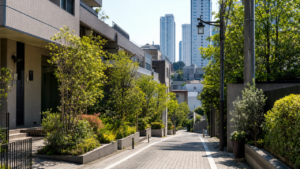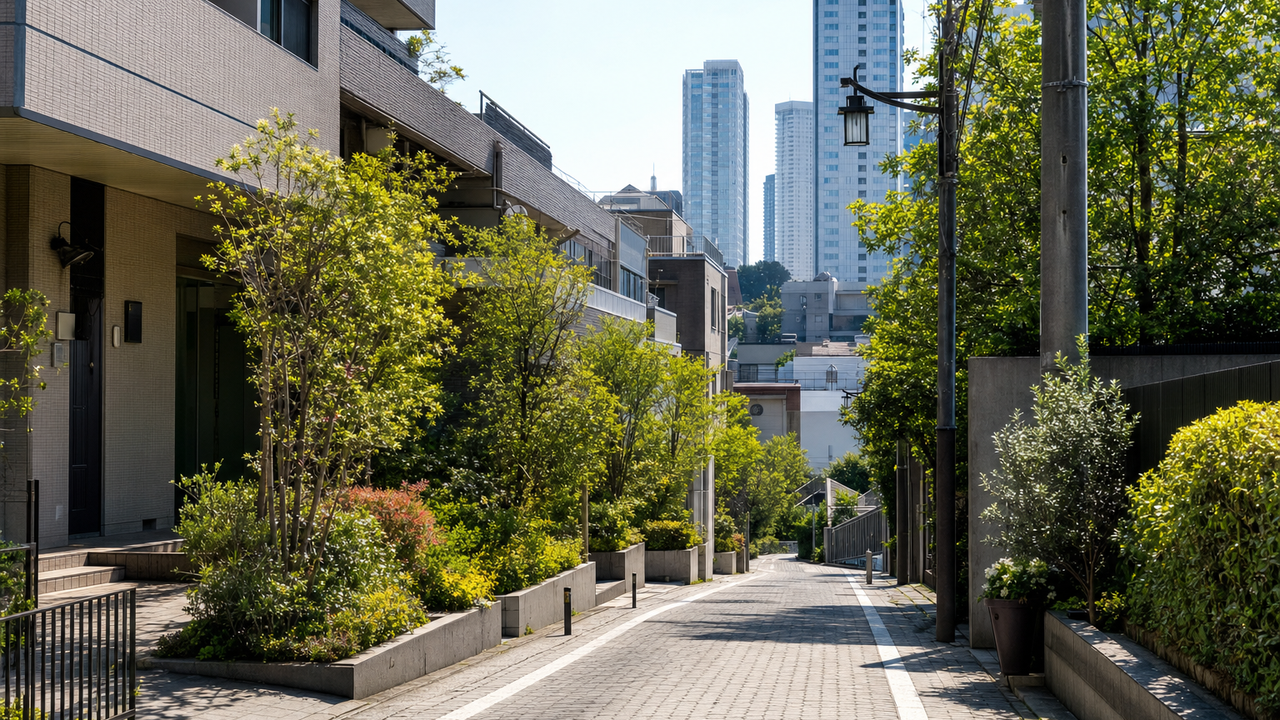
If you’re working near Shibuya and searching for a neighborhood that feels genuinely livable — not just convenient on paper — Eifukucho is one of the most underrated choices in South Tokyo. Many expats overlook it because it lacks the name recognition of Nakameguro or the urban buzz of Daikanyama. But that’s precisely what makes it worth a closer look.
Eifukucho sits on the Keio Inokashira Line, just four stops from Shibuya. It offers a quiet, predominantly residential character, low-rise streets lined with independent cafés and local grocers, and some of the most competitive rents in the Jonan area for the space you get. This guide covers everything a foreign professional needs to know before deciding whether Eifukucho belongs on their shortlist — from commute times and rent ranges to English-friendly infrastructure and day-to-day livability.
Who this article is for
- Foreign professionals in their 20s–40s working in or near Shibuya who want a quieter, more residential alternative to central neighborhoods
- Expats relocating to Tokyo for the first time who need honest, practical information about a lesser-known area
- Couples or single professionals with a budget of roughly ¥120,000–¥220,000/month who want good value for space
What you’ll learn
- How long the Eifukucho commute to Shibuya actually takes, and what the Inokashira Line experience is like day-to-day
- Realistic rent ranges for 1K through 2LDK apartments in 2026
- What English-friendly services, supermarkets, and community resources exist in the area
- Honest pros and cons compared to similar residential neighborhoods on the same commuter corridor
Why Eifukucho Deserves a Place on Your Shortlist
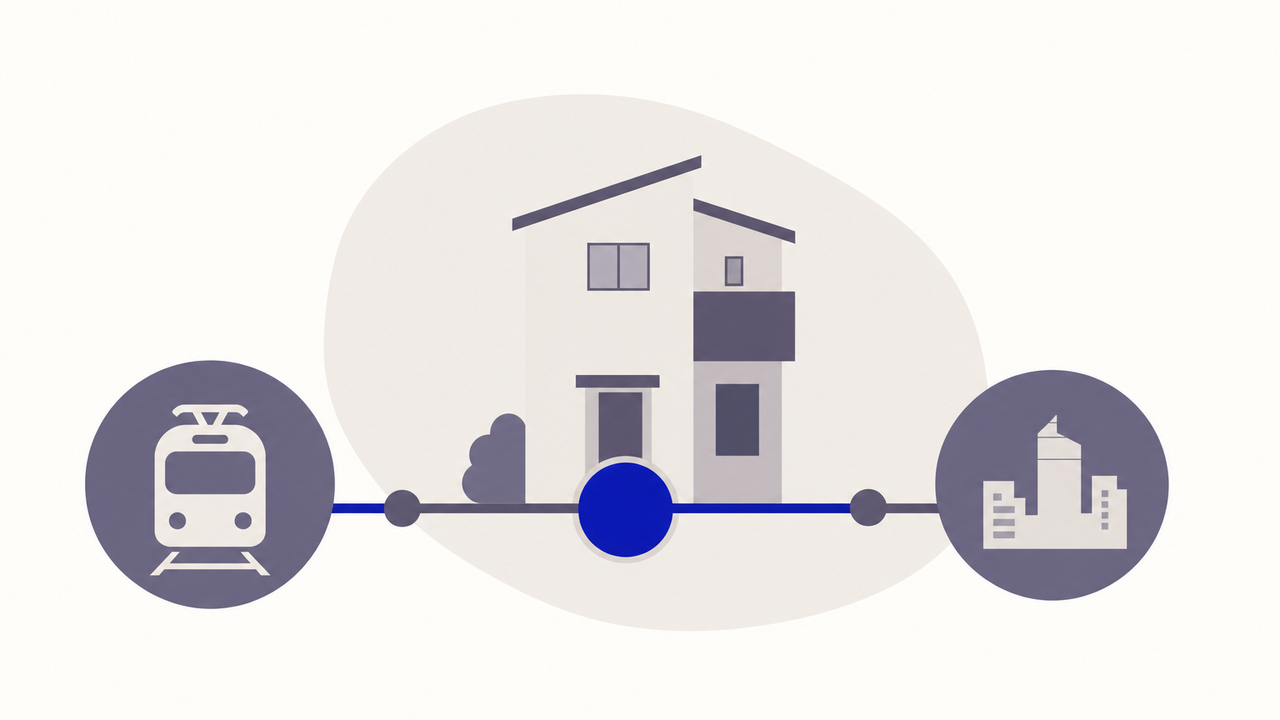
Eifukucho (永福町) is a neighborhood in Suginami Ward, Tokyo, served exclusively by the Keio Inokashira Line. It sits between Hamadayama to the west and Meidaimae to the east, and its character is defined almost entirely by the absence of the things that make other neighborhoods exhausting: there are no major shopping complexes, no nightlife clusters, and no tourist traffic. What it does have is a well-maintained residential grid, easy access to Inokashira Park, and a commute to Shibuya that most residents complete in under 12 minutes.
The Inokashira Line Advantage
The Keio Inokashira Line is one of the most rider-friendly commuter lines in Tokyo. Unlike the Yamanote Line or the Chuo Line, it runs a relatively simple, non-transferring route from Shibuya to Kichijoji with no branching, no complex interchange requirements, and a consistent schedule. From Eifukucho Station to Shibuya Station, the journey typically takes 10 to 12 minutes on an express or semi-express service, and about 14 to 16 minutes on the local. Morning rush hour on this line is noticeably less chaotic than equivalent commuter lines running into Shinjuku or Tokyo Station, which is a genuine quality-of-life differentiator for daily commuters.
For professionals working at companies near Shibuya — whether in Cerulean Tower, Scramble Square, or the many tech offices in Daikanyama and Ebisu — Eifukucho means you can be at your desk in under 20 minutes door-to-door on most days. That time saving, compounded over a year, is significant. It also means you’re not locked into the Yamanote Line corridor, which can give you more apartment options at lower price points than equivalent commutes from Meguro or Nakameguro.
Suginami Ward: What It Means for Residents
Eifukucho falls within Suginami Ward (杉並区), which is relevant for expats because ward affiliation determines which municipal office handles your residency registration, healthcare enrollment, and city tax. Suginami Ward’s main office is located in Ogikubo, with a branch office closer to Eifukucho at Meidaimae. Suginami Ward does offer multilingual support at its ward office, though the depth of English assistance is generally described as functional rather than comprehensive — meaning you can complete standard procedures like address registration, but complex queries about visa documentation or tax filings will benefit from professional or bilingual support.
The ward has a generally peaceful, middle-class residential character. It scores well on standard urban livability metrics: low crime rates, clean streets, good access to parks, and a network of small neighborhood associations (chōkai) that maintain communal spaces. For expats who want a “real Tokyo neighborhood” experience rather than an internationalized enclave, Suginami delivers that authentically.
Who Typically Chooses Eifukucho
Based on general market observation, Eifukucho tends to attract a particular type of resident: people who have already lived in Tokyo for a year or more, know what they want, and are deliberately trading down on centrality in exchange for space, calm, and value. First-time Tokyo expats may find the neighborhood’s lack of English-language density challenging initially. But for those on their second or third Tokyo contract, or for couples who want a livable home base rather than a social hub, Eifukucho consistently appears on shortlists.
- Shibuya-based professionals who want a sub-15 minute commute without paying Daikanyama or Nakameguro rents
- Couples or singles seeking a quiet, low-noise residential environment with good walkability
- Expats who are comfortable navigating Japanese bureaucracy with occasional professional support
Rent and Apartment Options in Eifukucho (2026)
Rent in Eifukucho sits notably below comparable neighborhoods on the same Inokashira Line corridor — particularly when compared to Shimokitazawa (two stops toward Shibuya) or Koenji (a different line but comparable commute). The tradeoff is that newer, fully renovated stock is less abundant, and the international real estate agent network is thinner than in more expat-dense areas. Understanding what the market actually offers — rather than what listing sites suggest at a glance — is essential before committing to a search.
Typical Rent Ranges by Apartment Type
The following ranges reflect general market conditions in Eifukucho as observed in 2026. Individual rents will vary significantly based on building age, floor level, proximity to the station, and whether utilities or management fees (kanrihi) are included. These figures exclude key money (reikin), deposit (shikikin), and agent fees, which typically add two to three months’ rent to upfront costs.
| Apartment Type | Typical Monthly Rent | Approximate Floor Area | Notes |
|---|---|---|---|
| 1K | ¥75,000 – ¥105,000 | 18–30 sqm | Older stock common at lower end; newer units push toward upper range |
| 1DK / 1LDK | ¥105,000 – ¥155,000 | 30–50 sqm | Strong value-for-space versus Shimokitazawa or Sangenjaya |
| 2LDK | ¥155,000 – ¥220,000 | 55–80 sqm | Relatively limited supply; best units go quickly in spring (March–April) |
| 3LDK and above | ¥220,000+ | 75+ sqm | Rare in this area; more likely found in adjacent Hamadayama or Nishiogi |
What Drives the Value Gap vs. Adjacent Neighborhoods
Eifukucho is consistently cheaper per square meter than Shimokitazawa and Sangenjaya despite offering nearly identical commute times to Shibuya. The gap is primarily explained by brand recognition and the absence of a curated commercial scene, not by any meaningful difference in transportation access or residential quality. Shimokitazawa has a well-established reputation as a “cool” Tokyo neighborhood with vintage stores, live music venues, and a dense café culture that attracts both local and international renters willing to pay a premium. Eifukucho has none of those branding factors — which is precisely why its rents remain lower.
For a Shibuya-based professional whose social and professional life centers on Shibuya itself rather than their immediate neighborhood, this brand gap is financially irrelevant. You get a quieter home, more space for the same budget, and the same train line. The tradeoff is that weekend entertainment will require a train ride rather than a walk.
Key Costs Beyond Monthly Rent
Foreign nationals renting in Japan for the first time should budget carefully for upfront costs, which are structurally higher in Japan than in many Western countries. Key money (reikin) of one to two months’ rent remains common in Tokyo, though some landlords — particularly in newer buildings or those working with international-focused agencies — have moved away from this requirement. Deposits (shikikin) of one to two months are standard. Guarantor requirements (hoshō-nin) are near-universal; most foreign nationals will need to use a third-party guarantor company (hoshō gaisha), which typically charges 0.5–1 month’s rent as an annual or one-time fee.
CAUTION
Some older buildings in Eifukucho still carry restrictions for foreign nationals, either explicitly stated or informally enforced. Working with a bilingual agent who has established landlord relationships in this specific area significantly reduces the risk of encountering these barriers. Do not rely on self-service listing searches alone when targeting this neighborhood.
Eifukucho vs. Comparable Neighborhoods: A Practical Comparison
To make a genuine decision about Eifukucho, it helps to compare it against the neighborhoods expats most commonly shortlist alongside it — particularly others on the Inokashira Line or within a similar commute radius of Shibuya. The neighborhoods below represent the most realistic alternatives based on location, commute time, and typical expat interest levels.
| Criteria | Eifukucho | Shimokitazawa | Sangenjaya | Meidaimae |
|---|---|---|---|---|
| Commute to Shibuya | ~12 min (Inokashira Line) | ~7 min (Inokashira Line) | ~8 min (Den-en-toshi / Setagaya Line) | ~10 min (Inokashira Line) |
| Typical 1LDK Rent | ¥105,000–¥155,000 | ¥120,000–¥175,000 | ¥115,000–¥170,000 | ¥100,000–¥145,000 |
| Neighborhood Vibe | Quiet residential, local | Vibrant, arts & vintage culture | Lively, younger demographic | Transitional, student-adjacent |
| English Infrastructure | Moderate | Moderate–Good | Moderate | Low–Moderate |
| International Supermarket Access | Limited locally; better in Shibuya or Kichijoji | Limited locally | Moderate (Tokyu system) | Limited |
| Noise Level / Density | Low | Medium–High (especially weekends) | Medium | Low–Medium |
Eifukucho vs. Shimokitazawa
Shimokitazawa is the most frequent point of comparison for Eifukucho, and the contrast is instructive. Shimokitazawa costs roughly ¥15,000–¥25,000 more per month for equivalent space, and in exchange you get one of Tokyo’s most lively neighborhood commercial scenes: vintage fashion shops, independent bookstores, small live music venues, and a dense concentration of cafés that attracts a young, culturally active crowd. If you value being able to walk downstairs and be in the middle of something interesting, Shimokitazawa delivers. If you value quiet evenings, lower ambient noise, and a genuine sense of “neighborhood” rather than a curated scene, Eifukucho is a more natural fit.
The commute difference is roughly four to five minutes — negligible in practice. Both stations are on the same Inokashira Line, so the infrastructure experience is identical. The decision comes down almost entirely to lifestyle preference and budget sensitivity.
Eifukucho vs. Sangenjaya
Sangenjaya operates on a different line (the Den-en-toshi Line and the Setagaya Line) and has a distinct personality — it’s known as a livelier, slightly grittier alternative to Daikanyama, with a strong bar and izakaya culture around its covered shopping streets. For expats who want easy access to Shibuya but prefer more evening entertainment options within walking distance, Sangenjaya competes directly with Shimokitazawa for that use case. Rents in Sangenjaya are broadly comparable to Shimokitazawa, making Eifukucho the clear choice on value grounds if quiet residential life is the priority.
One practical advantage Sangenjaya holds is its connection to both the Den-en-toshi Line and the Setagaya Streetcar Line, which gives slightly more routing flexibility for commutes to locations other than Shibuya. If your office is in Omotesando or Aoyama, Sangenjaya’s line options may be more convenient than Eifukucho’s single-line service.
Eifukucho vs. Meidaimae
Meidaimae is one stop closer to Shibuya on the Inokashira Line and sits at the intersection with the Keio Line, which adds transfer options to Shinjuku. It tends to have slightly lower rents than Eifukucho in older stock, driven partly by its proximity to Meiji University campuses and the student demographic that implies. For expats who want the absolute lowest cost on this corridor, Meidaimae warrants a look — but the neighborhood ambience is more transitional and less polished than Eifukucho, and the student-adjacent commercial strips feel less settled for long-term residential life.
| Pros of Eifukucho | Cons of Eifukucho |
|---|---|
|
|
Daily Life in Eifukucho: What to Expect on the Ground
Practical day-to-day experience in Eifukucho is shaped by three factors: the station area’s commercial density (moderate), the surrounding residential streets (calm and walkable), and proximity to the Kanda River and green spaces that give the neighborhood its seasonal character. This section covers the elements that matter most to foreign residents navigating life in a Japanese neighborhood with limited English signage.
Grocery Shopping and Food Options
Eifukucho has the grocery infrastructure you’d expect from a mid-density Tokyo residential neighborhood: a handful of local supermarkets within comfortable walking distance of the station, plus the ubiquitous 7-Eleven and FamilyMart for convenience items. The primary limitation for foreign residents is the absence of internationally stocked grocery stores in the immediate area. If your diet regularly includes specific imported cheeses, Western bread styles, international spirits, or specialty ingredients, you will need to plan a weekly or biweekly trip to Shibuya (where National Azabu and other international options are accessible) or Kichijoji (the other terminus of the Inokashira Line, with a Tokyu department store food hall and a broader selection).
For everyday Japanese grocery needs — fresh produce, proteins, deli items, basic pantry staples, and a reasonable wine selection at the lower price points — the local options in Eifukucho are perfectly adequate. Independent cafés have become a feature of the station area in recent years, offering working-from-café options on quieter days, though none are specifically targeting English-speaking customers.
Green Space and Weekend Activities
One of Eifukucho’s underappreciated assets is its proximity to the Kanda River path, which runs through the neighborhood and provides a pleasant walking and cycling corridor through a largely residential urban landscape. Inokashira Park — one of Tokyo’s most popular and genuinely beautiful parks — is approximately 15 minutes by bicycle or a short train ride to Kichijoji, making it a realistic weekend destination for Eifukucho residents rather than a distant attraction.
For expats accustomed to weekend outdoor activities, this matters. The Kanda River itself has a series of small parks and pocket green spaces along its banks, and the quiet streets between the river and the station area are well-suited to morning runs or evening walks. This outdoor access is a genuine differentiator compared to more urbanized neighborhoods like Daikanyama or Ebisu, where green space requires more deliberate travel.
English Language Services and Expat Community
Eifukucho does not have a significant expat community presence in the way that neighborhoods like Hiroo, Nakameguro, or Ebisu do. This is both a practical consideration and a lifestyle one. There are no English-language community centers, international schools, or organized expat meetup hubs in the immediate neighborhood, so building a social network will require connecting with the broader Shibuya-area expat community rather than finding one on your doorstep. For professionals whose social life is primarily structured through work or organized activities in Shibuya, this is unlikely to matter. For those who place high value on walking-distance community, it’s worth factoring in.
Medical services in English-speaking Tokyo are generally centered in Hiroo, Azabu-Juban, and Shibuya proper. Eifukucho residents will typically travel to these areas for English-compatible medical consultations, which is a common experience for expats in any Suginami or Setagaya Ward address. Dental clinics in the neighborhood sometimes have multilingual staff or English-language leaflets, but confirmation before booking is advisable.
INFO
For expats working near Shibuya, commuting infrastructure matters more than neighborhood English density in day-to-day life. Most administrative tasks — including ward registration, healthcare enrollment, and tax procedures — can be managed with bilingual professional support, which is particularly valuable for first-time renters in Japan. Agencies with dedicated foreign-resident services can handle paperwork coordination that would otherwise require Japanese fluency.
Who Should Choose Eifukucho — and Who Shouldn’t
The most honest way to evaluate Eifukucho is to be direct about who it suits well and who it doesn’t. Not every expat profile maps to this neighborhood, and the right choice depends heavily on how you structure your daily life, what your social priorities are, and how much you value home as a retreat versus a hub.
Strong Fit: The Experienced Professional Who Wants Value and Quiet
Eifukucho makes the most sense for expats who have already established themselves in Tokyo — professionally and socially — and are making a deliberate choice to optimize their living situation. If your office is in Shibuya, your social life is primarily centered on Shibuya or central Tokyo, and you want to come home to quiet streets and more space for the same or lower rent than Nakameguro or Shimokitazawa, Eifukucho delivers. The 12-minute commute is sustainable long-term, the streets are peaceful, and the value-for-space equation is genuinely favorable by South Tokyo standards.
Couples without children who value domestic space — a proper living room, a separate bedroom, a workspace — will find that their budget goes significantly further here than in more prestigious addresses. A budget of ¥180,000/month that buys a compact 1LDK in Daikanyama can find a comfortable 2LDK in Eifukucho with change to spare.
- Professionals on their second or third Tokyo posting who know how to navigate Japanese systems
- Couples seeking a genuinely home-sized apartment within a reasonable Shibuya commute
- Individuals who work from home part-time and value a quiet daytime environment
- Those comfortable using Shibuya or Kichijoji as their primary commercial hub
Moderate Fit: The First-Time Tokyo Expat
For someone arriving in Tokyo for the first time without prior Japan experience, Eifukucho presents a steeper learning curve than more expat-established neighborhoods. The absence of a local English-language community means you’re navigating a largely Japanese-language daily environment without the informal network that areas like Hiroo or Minami-Azabu provide. This is manageable but requires more proactive effort — seeking out expat communities online, using professional support for rental paperwork, and being comfortable with ambiguity in local interactions. For the right person, this immersive environment is actually part of the appeal. For others, starting in a more internationalized neighborhood and moving to Eifukucho after a year makes more practical sense.
If you’re a first-time resident who is nevertheless drawn to Eifukucho, working with a bilingual real estate consultant who specializes in the Jonan and Suginami areas is strongly advisable. The rental process for foreign nationals in Japan involves steps — guarantor coordination, contract document interpretation, initial utility setup — that are significantly easier with professional guidance than through self-service listing platforms alone. See our complete guide to renting an apartment in Tokyo as a foreigner for a full breakdown of the process.
Weaker Fit: Those Who Need Neighborhood-Level Amenity Density
If a core part of your daily life in Tokyo involves being able to walk to high-quality restaurants, international grocery options, English-language bookstores, specialty coffee shops, or an active expat social scene, Eifukucho will likely feel isolating on weekday evenings and slow on weekends. The neighborhood’s commercial strip is pleasant but thin — it does not compare to Nakameguro, Shimokitazawa, or Daikanyama in terms of the variety and quality of walkable amenities. For lifestyle-first expats who view their neighborhood as a social habitat rather than just a home base, one of those alternatives will likely be more satisfying, even at a higher rent. Our comparison of Tokyo’s best neighborhoods by lifestyle and budget covers these options in more detail.
- Confirm whether the specific building accepts foreign national tenants — some older buildings in Suginami Ward still have informal restrictions
- Check the building’s earthquake resistance certification (耐震基準): buildings constructed before 1981 should have a retrofitting record
- Verify whether management fees (kanrihi) and parking are included or separate in the listed rent
- Confirm guarantor company requirements and their fee structure upfront — costs vary significantly by agency and landlord
- Test mobile signal strength in the specific apartment before signing, particularly in ground-floor or basement units
How to Rent in Eifukucho as a Foreign National
The practical steps for renting in Eifukucho follow the standard Tokyo process for foreign nationals, but with some neighborhood-specific considerations worth understanding before you begin your search. The thin supply of dedicated bilingual agents with direct Suginami Ward landlord relationships means that working with the right agency from the start saves time and reduces the risk of encountering the informal barriers that still exist in parts of this market.
Define your requirements and budget before searching
Establish your non-negotiables: minimum floor area, preferred building age, required appliances, and upper rent limit including management fees. In Eifukucho, being flexible on building age (accepting pre-2000 construction) typically unlocks meaningfully lower rents for the same space.
Engage a bilingual agent with Suginami/Inokashira Line expertise
General-purpose listing platforms will show you inventory but cannot verify foreign-national acceptance or negotiate on your behalf. An agent with established local relationships can identify landlords open to international tenants and handle the initial inquiry stage in Japanese on your behalf.
Prepare your documentation in advance
Standard documents include your residence card (zairyu card), employment certificate (zaishoku shomeisho) or income evidence, passport, and sometimes company letter of introduction. Having these ready before viewings accelerates the application process significantly — desirable units in this area can move quickly, particularly in peak season.
Complete the guarantor process
Most foreign nationals will use a third-party guarantor company (hoshō gaisha). Your agent will typically recommend one or a landlord may specify a preferred provider. Fees and requirements vary, and some companies have more streamlined processes for international applicants than others.
Sign the contract and complete move-in procedures
Japanese rental contracts are legally significant documents. Ensuring you understand the key terms — particularly around contract renewal, early termination penalties, and restoration-to-original-condition obligations — is important before signing. A bilingual consultant can translate key clauses and flag any unusual terms.
Using a Bilingual Consultant for the Eifukucho Market
The value of bilingual real estate support is higher in neighborhoods like Eifukucho — where the landlord base is primarily local Japanese owners rather than international-scale property managers — than it is in more institutionalized markets. A consultant who has worked with this specific corridor and its landlord community can navigate informal preferences and surface inventory that never appears on public listing platforms. This is particularly relevant for foreign nationals who may be encountering Japan’s rental system for the first time and need support not just with language but with the structural logic of the process itself.
For expats searching for rentals across the broader Jonan area, working with an agency that understands both the Inokashira Line corridor and the Den-en-toshi Line alternatives gives you the broadest view of the market. Services like Balleggs Global, which pairs foreign nationals with bilingual consultants and draws on 25 years of real estate consulting experience in central Tokyo, offer the kind of end-to-end support that makes this process significantly less stressful.
Timing Your Search
Tokyo’s rental market has a pronounced seasonal pattern that matters in Eifukucho more than in some high-inventory neighborhoods. The period from February through April is peak season, driven by Japan’s corporate transfer cycle and university year start. During this window, competition for well-priced units is highest, response times from landlords are faster, and the risk of losing a desired unit to another applicant is real. Searching outside this window — particularly in September through November — generally results in more options, less competition, and occasionally more negotiating flexibility on rent or deposit terms.
For foreign professionals whose company determines their relocation timeline, aligning your search with this seasonal reality is not always possible. In that case, starting the search process earlier than you think necessary — and having documentation pre-prepared — is the most effective mitigation strategy.
Final Verdict: Is Eifukucho Right for You in 2026?
Eifukucho occupies a specific and genuinely valuable niche in the South Tokyo rental market. It is not the right neighborhood for every foreign professional working near Shibuya — but for the right profile, it offers a combination of commute efficiency, residential quality, and value-for-space that is difficult to replicate on the same budget anywhere closer to central Tokyo.
The clearest case for choosing Eifukucho is a professional or couple who has identified their priorities clearly: a reliable Shibuya commute under 15 minutes, a quiet home environment, more space than their budget allows in higher-profile neighborhoods, and comfort navigating Japanese systems with occasional professional support. For that profile, the 10 to 12 minutes to Shibuya and the meaningful rent differential versus Shimokitazawa or Sangenjaya make Eifukucho a compelling choice that deserves more attention than it typically receives. You can also compare it against other commuter-friendly options in our guide to walkable Tokyo neighborhoods for tech workers near Shibuya, or explore the Den-en-toshi Line alternative in our Toyoko vs Den-en-toshi Line comparison.
- Work in or near Shibuya and want a sub-15-minute door-to-desk commute
- Prioritize living space and quiet over neighborhood commercial density
- Are working with a budget of ¥120,000–¥220,000/month and want to maximize square meters
- Are comfortable navigating a primarily Japanese-language neighborhood with professional support
About working with a bilingual rental consultant for this area
Frequently Asked Questions about Eifukucho
How long does it take to commute from Eifukucho to Shibuya?
On the Keio Inokashira Line, the journey from Eifukucho Station to Shibuya Station takes approximately 10 to 12 minutes on an express or semi-express service, and 14 to 16 minutes on the local. Total door-to-desk time for most locations near Shibuya Station is under 20 minutes. The Inokashira Line is generally regarded as a smoother, less congested commuter experience than the Chuo or Yamanote lines during rush hour.
Is Eifukucho suitable for foreign nationals who don’t speak Japanese?
Eifukucho is manageable without Japanese fluency, but it requires more proactive support than neighborhoods with established expat communities. Daily life — grocery shopping, local dining, using the train — is navigable with basic apps and translation tools. Administrative tasks like ward registration and rental paperwork are best handled with bilingual professional support, particularly for first-time Japan residents. The neighborhood itself does not have significant English-language commercial infrastructure, so comfort with a primarily Japanese-language environment is advisable.
How do Eifukucho rents compare to Shimokitazawa and Sangenjaya?
Eifukucho is generally cheaper than both Shimokitazawa and Sangenjaya for equivalent apartment sizes, with the gap typically ranging from ¥10,000 to ¥25,000 per month on comparable 1LDK or 2LDK units. The commute time difference to Shibuya is small — Shimokitazawa is about four to five minutes closer, Sangenjaya is roughly comparable. The rent difference reflects brand perception and neighborhood amenity density rather than any meaningful difference in transportation access or residential quality.
Are there English-speaking doctors or medical facilities near Eifukucho?
There are no internationally specialized English-language clinics in the immediate Eifukucho area. Residents typically travel to Shibuya or Hiroo for English-compatible medical care, which is a common situation for expats living in Suginami or western Setagaya addresses. Some local clinics may have staff with basic English ability or printed materials in English, but this should be confirmed before booking. Telehealth options in English have also expanded considerably in Japan in recent years and may cover many routine health needs.
What is the best time of year to search for apartments in Eifukucho?
September through November is generally considered the most favorable window for apartment hunters in Tokyo, including Eifukucho. Competition is lower, landlords may be more flexible on terms, and the inventory that sat unrented through summer can sometimes be negotiated on. February through April is peak season and sees the highest competition due to Japan’s spring corporate transfer and university enrollment cycle. If your move timeline is flexible, searching outside peak season is likely to result in better options and more negotiating room.