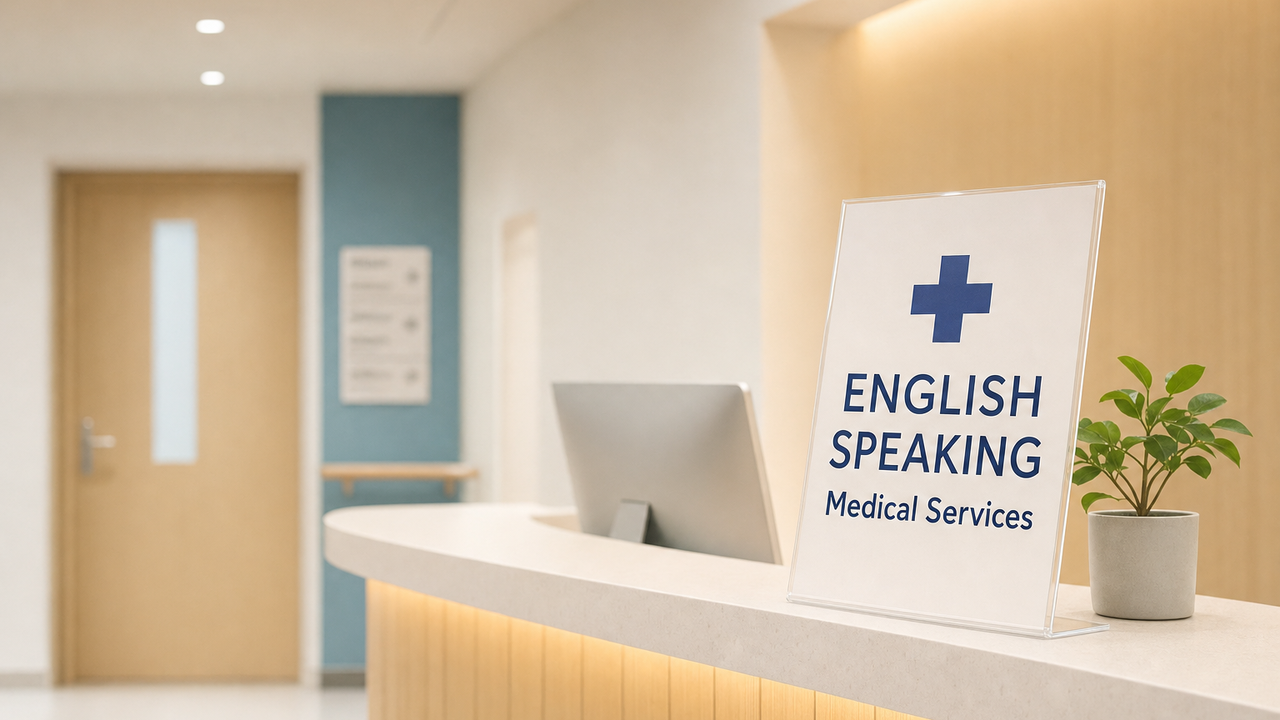
Finding a doctor in Tokyo when you don’t speak Japanese fluently is one of those challenges that sounds manageable until you actually need urgent help. Whether you’ve just relocated near Shibuya for work or you’ve been living in the city for years, knowing which clinics offer English-speaking staff before a health issue arises can make all the difference between confident, timely care and a stressful, delayed visit.
This guide is designed specifically for foreign professionals living and working around Shibuya. It covers general practitioners, specialists, dental care, women’s health services, and what to do in a genuine emergency — all with English-language access in mind. You’ll also find practical comparison tables, cost estimates, and insider tips so you can prepare your medical toolkit before you ever need it.
Who this article is for
- Foreign nationals working around Shibuya who need English-speaking medical care in Tokyo
- Expats new to Japan who haven’t yet registered with a local clinic or dentist
- Long-term residents who want to understand their options for women’s health, dental, or specialist referrals
What you’ll learn
- Which English-speaking general clinics, dental practices, and women’s health providers are located near Shibuya
- How to navigate a Japanese emergency room as a non-Japanese speaker
- Practical tips on insurance compatibility, appointment booking in English, and after-hours access
What to Look for When Choosing an English-Friendly Clinic in Tokyo
Not all “international” or “English-friendly” clinics in Tokyo offer the same level of support. Before committing to a provider, it’s worth understanding the key criteria that separate a genuinely accessible experience from one where English is limited to a basic intake form.
English Language Capability: What It Actually Means
A clinic’s “English support” can range from a doctor who trained abroad and consults entirely in English, to a receptionist who can handle basic administrative questions, to a hospital that provides a translation service on request. Knowing which level you’re dealing with matters — especially for complex consultations involving mental health, chronic conditions, or specialist referrals.
The most reliable indicator is whether the clinic explicitly lists English-speaking physicians on its website, rather than just mentioning “multi-language support.” Clinics staffed by doctors who completed residencies in English-speaking countries (the US, UK, Australia, Canada) tend to offer the most fluent and diagnostically nuanced consultations. When reviewing clinic websites, look for doctor profiles that mention overseas training or membership in international medical associations.
Secondary indicators include whether the intake forms, prescription receipts, and after-visit summaries are available in English. Receiving a prescription you cannot read is a common and avoidable frustration. Before your first visit, ask directly: “Can I receive my consultation notes in English?” A clinic that handles this request comfortably is one that regularly sees international patients.
Insurance Compatibility and Out-of-Pocket Costs
Japan’s National Health Insurance (NHI/Kokumin Kenko Hoken) covers most residents, including foreign nationals enrolled through their employer or municipality, and typically pays 70% of eligible medical costs. Most English-friendly clinics near Shibuya accept NHI, but the remaining 30% co-pay can still add up for specialist visits or procedures.
If your employer provides international private health insurance — common among tech workers at companies such as Google, ByteDance, or global startups — it is worth confirming whether your plan offers direct billing to Tokyo clinics or requires upfront payment with reimbursement. Several internationally oriented clinics in the Shibuya and Minato ward areas have experience with major global insurers and can advise on the paperwork process.
For those without any insurance coverage, out-of-pocket fees at private international clinics can be considerably higher than standard Japanese rates. A general consultation at a fully private international clinic may range from approximately ¥5,000 to ¥15,000 or more depending on the facility and services provided. Always confirm fees before your visit, particularly for specialist or same-day consultations.
- Confirm whether the clinic accepts your NHI card — most do, but some international clinics operate on a fully private basis
- If you have global insurance, ask whether the clinic can handle direct billing or provides itemized receipts in English for reimbursement claims
- Some clinics charge a registration or membership fee for first-time visits — ask in advance
- Prescription medications dispensed at the clinic may be billed separately from the consultation fee
Booking Access and Location Relative to Shibuya
For professionals commuting through Shibuya Station, proximity and accessibility matter almost as much as language capability. Clinics within a 15–20 minute train ride on the Yamanote, Tokyu Toyoko, Den-en-toshi, or Keio Inokashira lines are generally the most practical options. The broader Jonan area — covering Shibuya, Meguro, Setagaya, Minato, Shinagawa, and Ota wards — contains a strong concentration of internationally oriented medical providers.
Online booking in English is a significant convenience marker. Clinics with English-language booking systems (via their own portal or platforms such as Medley or PocketMark) allow you to check availability and confirm appointments without a phone call in Japanese. This is particularly useful for working adults who need to schedule around office hours.
English-Speaking General Clinics Near Shibuya
General practice — including internal medicine, family health, and routine check-ups — is where most expats first engage with Tokyo’s healthcare system. The following overview covers the types of clinics that serve English-speaking patients in and around the Shibuya area, along with what each category typically offers.
| Clinic Type | Typical English Level | NHI Accepted | Best For | Approximate Cost (Self-pay) |
|---|---|---|---|---|
| International Private Clinic | Fluent English physician | Varies (often no) | Complex consultations, expat-focused care | ¥8,000–¥20,000+ per visit |
| NHI-Compatible English-Friendly Clinic | English-speaking doctor or bilingual staff | Yes | Routine care, ongoing treatment | ¥1,500–¥5,000 (30% co-pay) |
| University Hospital International Center | Interpreter services available | Yes | Specialist referrals, complex diagnoses | ¥3,000–¥10,000+ (varies by department) |
| Telemedicine / Online Clinic | English-language platform | Partial | Minor ailments, prescriptions, follow-ups | ¥2,000–¥6,000 per session |
International Private Clinics: Full English Care Without Language Barriers
For many expats arriving in Tokyo, fully private international clinics — where consultations are conducted entirely in English — represent the most reassuring starting point. These facilities are typically staffed by doctors who trained or practiced in English-speaking countries, and their support teams handle everything from scheduling to insurance paperwork in English.
The Minato and Shibuya ward areas have a concentration of such clinics, many of which have served the diplomatic and corporate expatriate community for decades. Because they operate outside the standard NHI fee schedule, consultation fees tend to be higher than at typical Japanese clinics — a routine visit may cost ¥10,000–¥20,000 or more without insurance. However, for those with comprehensive employer-provided global health plans, the out-of-pocket difference is often minimal.
The key advantage of this category is diagnostic depth: doctors who consult entirely in your language can gather a far more accurate medical history and catch nuances that translation might miss. For ongoing conditions, mental health, or situations where precision matters, this is often the most appropriate choice.
- Newly arrived expats who want a trusted English-speaking GP from day one
- Professionals with employer-provided global insurance that covers private clinic fees
- Anyone managing a chronic condition who needs precise, nuanced communication with their doctor
NHI-Compatible English-Friendly Clinics: Everyday Care at Standard Costs
A growing number of clinics across Shibuya, Meguro, and Setagaya wards have bilingual or English-speaking doctors who also accept Japan’s National Health Insurance. These represent perhaps the most practical option for long-term residents: you receive English-language care at standard co-pay rates (typically 30% of the NHI fee schedule), rather than the higher flat fees of fully private international clinics.
Finding these clinics requires a little research, as they are not always prominently marketed as “international.” Tokyo-based expat communities, employer HR departments, and ward office multilingual support desks can all be useful sources. The Shibuya Ward international residents’ support service, for example, maintains referral information for English-capable local medical providers.
One practical approach is to ask directly when calling a clinic: “Do you have an English-speaking doctor available?” Many clinics have at least one physician who is comfortable in English even if the clinic is not formally marketed as international. Scheduling your appointment with that specific doctor is often straightforward once you’ve confirmed availability.
University Hospital International Centers: Access to Specialist Care
For complex diagnoses, specialist referrals, or conditions requiring hospital-level resources, Tokyo’s major university hospitals offer international patient centers with interpreter services. Facilities in the broader area surrounding Shibuya include Keio University Hospital (Shinjuku), Tokyo Medical University Hospital (Shinjuku), and Jikei University Hospital (Minato) — all accessible by train from Shibuya within roughly 20–30 minutes.
These centers generally accept NHI and provide professional medical interpretation for English-speaking patients, either through in-person interpreters or telephone/video interpretation services. Lead time for appointments is typically longer than at private clinics, and the facilities are better suited to planned specialist consultations than same-day urgent care. If you require a referral letter, your GP — whether at a private or NHI clinic — can prepare one in Japanese, which is the standard format these hospitals work with.
English-Speaking Dentists in Tokyo Near Shibuya
Dental care is one of the most commonly overlooked aspects of healthcare planning for newcomers to Tokyo. Finding an English-speaking dentist before you develop a problem — rather than searching in discomfort — is strongly advisable. The good news is that the Shibuya and Minato ward areas have a number of dental clinics with English-capable staff, and dental fees in Japan are generally more affordable than in many Western countries when covered under NHI.
What NHI Covers at the Dentist — and What It Does Not
Japan’s NHI covers standard dental treatments including cleanings, cavity fillings, root canals, extractions, and basic prosthetics such as metal crowns. Cosmetic procedures are not covered — this includes tooth whitening, ceramic or zirconia crowns for cosmetic purposes, and orthodontics (braces or Invisalign). If you want tooth-colored fillings or ceramic restorations for visible front teeth, these may also fall outside NHI coverage depending on the case, so it is worth confirming at the start of treatment.
The co-pay structure at a dentist under NHI is the same as for general medicine — typically 30% of the official NHI fee. This means a routine cleaning and examination might cost around ¥1,500–¥3,000 out of pocket, and a basic cavity filling could be ¥2,000–¥5,000. These are substantially lower than equivalent procedures in many Western countries, making regular check-ups under NHI genuinely practical and affordable.
Finding an English-Speaking Dentist Near Shibuya
The concentration of international residents and corporate offices around Shibuya means that several dental clinics in the area have developed English capability over the years. As with medical clinics, the most reliable approach is to look for clinics that explicitly list English-speaking dentists on their website, rather than assuming based on location alone.
Practical search approaches include reviewing Google Maps listings for dental clinics in Shibuya, Ebisu, Daikanyama, and Omotesando — many of which include patient reviews that mention English availability. Expat community forums and company HR resources (particularly at larger international employers) often maintain updated lists of recommended dental providers. Once you identify a clinic of interest, a brief email or online inquiry in English is the quickest way to confirm language capability before your first appointment.
For complex dental work such as implants, orthodontics, or oral surgery, some English-speaking patients choose clinics in the Roppongi or Hiroo areas (Minato ward), which have historically had higher concentrations of internationally oriented dental practices due to their proximity to the diplomatic community. These are easily reachable from Shibuya by subway in approximately 15–20 minutes.
Tips for Your First Dental Visit in Japan
Dental care in Japan follows a somewhat different rhythm than in many Western countries. Appointments for cleanings and check-ups are often scheduled in multiple shorter sessions rather than completed in a single extended visit, and treatment plans can be phased over several appointments. This is normal practice and not a sign of inefficiency — it reflects the way Japanese dental insurance billing is structured.
Bringing a brief written summary of your dental history — any past crowns, root canals, implants, allergies to anesthetic, or ongoing sensitivities — in English is helpful and most English-capable dentists will appreciate it. If your dentist can also provide treatment notes in English, this makes it much easier to continue care if you change clinics or travel internationally. Do not hesitate to ask for an English-language summary of the treatment plan and estimated cost before agreeing to proceed.
- Expats who want to establish regular preventive dental care under NHI in Tokyo
- Those seeking cosmetic dentistry or implant consultations and need clear cost estimates in English
- Newcomers who want to locate a trusted English-speaking dentist before any issue arises
Women’s Health: OB/GYN and Related Services in English

Access to women’s health services in English — including gynecological check-ups, contraception, pregnancy care, and menopause support — is an important and sometimes underserved need for foreign women living in Tokyo. The Shibuya and surrounding Jonan area has a reasonable selection of gynecological clinics with English capability, though availability can vary and advance planning is advisable.
Routine Gynecological Care and Contraception
Routine gynecological exams, cervical cancer screening (Pap smears), STI testing, and contraception consultations are available at a number of English-capable women’s clinics in the Shibuya, Minato, and Meguro area. Oral contraceptives are available in Japan but historically required a doctor’s prescription; as of 2023, low-dose combined pills became available online through specific telemedicine providers, though a prescription from a licensed Japanese physician is still required.
IUDs and implants are available in Japan but less commonly offered than in some Western countries, and the range of products may differ from what you are accustomed to. If you currently use a specific contraceptive method, it is worth researching availability before your appointment and, if possible, consulting in advance with an English-speaking gynecologist who can advise on the local equivalent or appropriate transition plan.
NHI covers many gynecological services including examinations and medically indicated treatments, but cosmetic gynecological procedures and elective contraception (such as IUD insertion purely for contraceptive purposes) may not be covered. Confirm coverage at the time of booking.
Pregnancy and Prenatal Care for Foreign Residents
Foreign residents in Tokyo who become pregnant should register at their local ward office (区役所) as soon as possible to receive a Maternal and Child Health Handbook (母子手帳, Boshi Techo). This handbook records all prenatal check-ups and is used throughout pregnancy and the child’s early years. Most ward offices in the Shibuya area provide multilingual support for this registration, and some offer the handbook itself in English or other languages.
Prenatal care in Japan is thorough and regular check-ups are well-structured, but finding an obstetric hospital or midwife clinic with English-speaking staff requires research. Some hospitals in the Minato and Shibuya area — including certain internationally oriented private hospitals — offer English-language pregnancy care and delivery services, though fees for private delivery facilities can be substantially higher than standard hospital births. Costs for delivery in Japan are not covered by NHI in the same way as illness; however, the government provides a lump-sum childbirth allowance (出産育児一時金) which as of 2026 is set at ¥500,000 per birth, payable through your NHI or employer health insurance plan.
Menopause, Hormone Therapy, and Specialist Gynecological Care
Menopause support, hormone replacement therapy (HRT), and specialist gynecological consultations are available in English at select clinics in the Shibuya and Minato areas. Japanese gynecological practice has historically placed less emphasis on proactive menopausal management than some Western health systems, so finding a physician who takes a globally current approach to HRT options may require seeking out a clinic with internationally trained staff.
For women dealing with conditions such as endometriosis, PCOS, or fertility concerns, specialist care is available through both private clinics and university hospital gynecology departments. University hospitals offer the most advanced diagnostic and surgical resources, but accessing English support may require using the hospital’s international patient center or arranging a professional interpreter. A trusted English-speaking GP can be invaluable in this context, helping to write referral letters, interpret hospital reports, and coordinate your care across multiple providers.
Navigating a Medical Emergency in Tokyo as a Non-Japanese Speaker
Medical emergencies are stressful under any circumstances. In Tokyo, the situation is manageable — the city’s emergency services are efficient and well-resourced — but knowing the steps in advance will help you act quickly and communicate effectively when you need urgent care.
EMERGENCY PROCEDURE
Call 119 for ambulance services in Japan. When connected, say clearly: “Kyuukyuu desu” (救急です — “This is an emergency”) followed by your address in English if possible. Tokyo Fire Department dispatchers have access to English interpretation services. Alternatively, call #7119 (Tokyo Emergency Medical Consultation Service) for non-life-threatening urgent questions — an English-language line is available. For poison emergencies, the Japan Poison Information Center can be reached at 072-726-9923 (Osaka, 24-hour, Japanese) or via the Tokyo Metropolitan Medical Council’s multilingual services.
Calling an Ambulance: What to Expect
Japan’s ambulance service (救急車, kyuukyuusha) is called by dialing 119 — the equivalent of 911 or 999. Response times in central Tokyo are generally fast, typically within a few minutes in dense urban areas. When the dispatcher answers, stating “Kyuukyuu desu” (it’s an emergency) and then your location is sufficient to begin the response.
Tokyo Fire Department dispatchers have access to a three-way telephone interpretation service, so English communication is possible even if the initial dispatcher does not speak English. Having your address written in Japanese characters (available from your residence contract or via Google Maps’ Japanese address display) can help the dispatcher relay the exact location quickly. The ambulance crew will assess your condition and transport you to an appropriate hospital — in Japan, you generally do not choose your emergency hospital; the crew selects the nearest facility able to treat your condition.
Once at the emergency room (救急外来, kyuukyuu garai), the level of English support will vary by hospital. Major public and university hospitals in central Tokyo are increasingly equipped to handle English-speaking patients in emergencies, and many carry multilingual communication sheets or have access to telephone interpretation. Bring your NHI card, any current medications (or their packaging), and your residence card (在留カード, Zairyu Card) if possible.
The #7119 Non-Emergency Medical Consultation Line
For situations that are urgent but not immediately life-threatening — a high fever, an injury that may or may not need hospital attention, a prescription question late at night — Tokyo provides a dedicated medical consultation hotline: #7119 (or 03-5272-0303 from outside Tokyo). This service is available 24 hours a day and connects callers with medical professionals who can advise whether a hospital visit is necessary.
The #7119 service provides English-language support, making it a genuinely useful resource for foreign residents facing medical uncertainty outside of clinic hours. The service can advise on symptom severity, suggest nearby open facilities, and help you decide whether to go to an emergency room, wait until morning, or call an ambulance. Saving this number in your phone before you need it is one of the simplest and most practical steps you can take.
After-Hours Clinics and Emergency Rooms in the Shibuya Area
Tokyo operates a network of designated after-hours and holiday emergency clinics (休日・夜間急患センター) that function outside standard clinic hours. Shibuya Ward operates an after-hours clinic for residents; details including address and operating hours are available from the Shibuya Ward website and its multilingual resident information service. Similar facilities exist in Minato, Meguro, and Setagaya wards.
For serious emergencies, the major hospitals near Shibuya with emergency departments include Keio University Hospital (Shinjuku), Tokyo Metropolitan Hiroo Hospital (Ebisu area, Shibuya ward), and NTT Medical Center Tokyo (Osaki, Shinagawa). Tokyo Metropolitan Hiroo Hospital in particular has experience with international patients given its location near the Hiroo residential expat community. If you are transported by ambulance, you will be directed to the most appropriate facility for your condition regardless of language capability; if you are able to travel independently to an ER, choosing a hospital with a track record of international patient care is worth the extra travel time.
Mental Health Support in English
Mental health care is an area where language precision genuinely matters, and it is one where the gap between English-speaking and Japanese-speaking care in Tokyo has historically been most pronounced. The situation has improved in recent years, with a growing number of licensed therapists, counselors, and psychiatrists offering English-language services in the Shibuya area and beyond.
Counseling and Psychotherapy in English
Licensed psychologists and counselors offering English-language sessions can be found in central Tokyo, with several operating in or near the Shibuya, Omotesando, and Ebisu areas. Sessions are typically conducted in a private practice setting or via online video call, which has significantly expanded access for working professionals whose schedules make in-person sessions difficult. Online English-language counseling with licensed practitioners based in Tokyo has become a well-established option, and some practitioners are licensed in multiple countries.
Fees for English-language therapy in Tokyo are generally not covered by Japan’s NHI, as psychological counseling by non-medical practitioners sits outside the NHI framework. A standard session typically ranges from approximately ¥8,000 to ¥20,000 or more, depending on the practitioner and session length. Some global employer health plans include an Employee Assistance Programme (EAP) that covers a set number of counseling sessions — worth checking with your HR department.
Psychiatry and Medication Management
For those requiring psychiatric medication — including antidepressants, anxiolytics, ADHD medication, or sleep treatment — seeing a licensed psychiatrist is necessary in Japan. English-speaking psychiatrists are available at select private clinics in central Tokyo, and some internationally oriented medical clinics include psychiatry or mental health referrals within their service scope.
One important note: certain medications widely prescribed in other countries are either controlled or unavailable in Japan. Stimulant medications for ADHD (such as Adderall) are prohibited in Japan under narcotics law. Alternative medications for ADHD are available (Strattera and Concerta are licensed), but require consultation with a Japanese psychiatrist who confirms the diagnosis under Japanese clinical criteria. If you currently take a controlled substance, research its legal status in Japan carefully before relocating, and consult with a physician experienced in international prescriptions before or shortly after arriving.
Practical Tips for Building Your Medical Toolkit in Tokyo
Preparing for healthcare in a new country is most effective when done before you actually need it. A few practical steps taken in the first weeks of living near Shibuya can save significant stress later.
Register with a GP Before You Get Sick
Finding and registering with an English-speaking general practitioner while you are healthy — rather than searching during an illness — is the single most valuable medical preparation step you can take. A GP who knows your medical history can provide faster, more accurate care during an acute episode, write referral letters, interpret hospital results, and help coordinate care across different providers.
Even a single introductory appointment at an English-friendly clinic, where you share your medical history and establish a patient record, is sufficient to create this foundation. Some internationally oriented clinics offer an initial health assessment or welcome check-up that serves this purpose well. If your employer has a health plan administered through a specific clinic network, starting there is often the most efficient route.
Understand Your NHI Card and How to Use It
Your NHI card (健康保険証, Kenko Hoken Sho) or, if you are enrolled through your employer, your company’s health insurance card (社会保険証) is the key document at every medical appointment. Present it at reception before your consultation. If you have not yet enrolled in NHI or your employer’s plan, this should be a priority — uninsured medical costs in Japan can be substantial, and enrollment is a legal requirement for most residents.
Some medical facilities in Japan now accept the My Number Card (マイナンバーカード) as a combined insurance verification card through the government’s online system. If you have a My Number Card and have linked it to your insurance, you can use it in place of the traditional insurance card at compatible facilities — a growing number of clinics in the Shibuya area have adopted this system.
Keep a Personal Medical Record in Both English and Japanese
Maintaining a one-page personal medical summary in both English and Japanese — listing your current medications (with Japanese names if possible), known allergies, blood type, past surgeries, and chronic conditions — is a practical precaution that costs nothing and can be invaluable in an emergency. Online translation tools combined with a brief review by your English-speaking GP can produce an accurate Japanese-language version.
Storing this document digitally on your phone and sharing a copy with a trusted person in Tokyo ensures it is accessible even if you are incapacitated. Some internationally oriented clinics or expat community organizations in Tokyo offer templates for this type of document — it is worth asking at your first GP registration appointment.
Finding the Right Neighborhood Alongside the Right Medical Support
Healthcare accessibility is closely tied to where you live in Tokyo. Residents of the Jonan area — covering Shibuya, Meguro, Setagaya, Minato, Shinagawa, and Ota wards — benefit from one of the highest concentrations of English-friendly medical providers in the city, alongside excellent transport links to Shibuya for both commuting and accessing specialist care.
Living in Jonan helps foreign professionals navigate exactly this kind of dual consideration: finding an apartment that suits your lifestyle and commute while also positioning you well for the English-language services — medical, commercial, and social — that make life in Tokyo genuinely comfortable. With bilingual consultants and 25 years of real estate experience in the Jonan area, Living in Jonan is well placed to help you find a home in a neighborhood where access to English-speaking healthcare is a practical reality rather than an afterthought.
If you are still in the process of finding your base in Tokyo, the area guides and neighborhood comparisons on this site — including practical information on commute times, local amenities, and expat communities — are a useful complement to this medical guide. The right home and the right doctor, within reach of each other: that combination is worth planning for from the start.
- Foreign professionals working near Shibuya who need English-speaking support to find a home in central Tokyo
- Expats who want to live in a neighborhood with strong English-language medical, commercial, and transport access
- Anyone who wants a bilingual consultant to guide them through the Tokyo rental process with confidence
About Living in Jonan’s bilingual rental support
Summary: Your Medical Preparation Checklist for Life Near Shibuya
Tokyo’s healthcare system is high-quality and accessible — but navigating it confidently as a non-Japanese speaker requires some upfront planning. The key takeaways from this guide are straightforward: identify an English-speaking GP before you need one, confirm your insurance coverage and how to use it, save the emergency numbers #119 and #7119 in your phone, and research dental and specialist providers in your neighborhood before a specific need arises.
The Jonan area’s concentration of internationally oriented clinics — across general practice, dental care, women’s health, and mental health — makes it one of the more livable parts of Tokyo for English-speaking expats from a healthcare standpoint. Combining that with proximity to Shibuya for work, and you have the foundation for a genuinely comfortable Tokyo life.
- Save 119 (ambulance) and #7119 (non-emergency medical consultation, English available) in your phone
- Enroll in NHI or your employer’s health insurance plan as soon as you arrive
- Register with an English-speaking GP during a healthy period, not an emergency
- Locate an English-capable dentist in your neighborhood and book a check-up within your first few months
- If you require specialist care (gynecology, psychiatry, etc.), research English-capable providers before the need is urgent
- Prepare a personal medical summary in English and Japanese and keep it accessible on your phone
Frequently Asked Questions
Are there English-speaking doctors near Shibuya who accept Japan’s National Health Insurance?
Yes. While fully private international clinics often operate outside the NHI fee schedule, a growing number of clinics in Shibuya, Meguro, and Setagaya wards have English-speaking or bilingual doctors who also accept NHI. Asking directly — either by email or phone before your visit — is the most reliable way to confirm both English availability and NHI acceptance at a specific clinic.
What is the best way to find an English-speaking dentist in Tokyo?
Start with Google Maps searches for dental clinics in Shibuya, Ebisu, Daikanyama, or Omotesando and look for English-language reviews that mention bilingual staff. Expat community forums and your company’s HR department are also useful sources. Once you identify a candidate clinic, send a brief email in English to confirm language availability before booking. Clinics that respond fluently in English are generally the most reliable options for ongoing English-language care.
How do I call an ambulance in Japan if I don’t speak Japanese?
Dial 119. When the dispatcher answers, say “Kyuukyuu desu” (it’s an emergency) and then your address. Tokyo Fire Department dispatchers have access to English telephone interpretation services, so communication is possible even without Japanese. For non-life-threatening urgent questions, #7119 offers a 24-hour medical consultation line with English support.
Can foreign residents access women’s health services — including contraception and prenatal care — in English in Tokyo?
Yes. English-capable OB/GYN clinics are available in the Shibuya, Minato, and Meguro area. Contraceptive prescriptions, routine gynecological exams, and prenatal care are all accessible, though the specific products and protocols may differ from what you are used to in your home country. For pregnancy care, registering at your ward office early to receive the Maternal and Child Health Handbook (Boshi Techo) is an important first step, and ward offices in the Shibuya area provide multilingual registration support.
Is ADHD medication available in Japan for foreign residents?
Some ADHD medications are available in Japan, including Strattera (atomoxetine) and Concerta (methylphenidate), which require a prescription from a licensed Japanese psychiatrist. However, stimulant medications such as Adderall are classified as prohibited narcotics in Japan and cannot be brought into or prescribed within the country. If you currently take a controlled stimulant, consult a physician experienced in international prescriptions before relocating to Japan to plan an appropriate transition.


