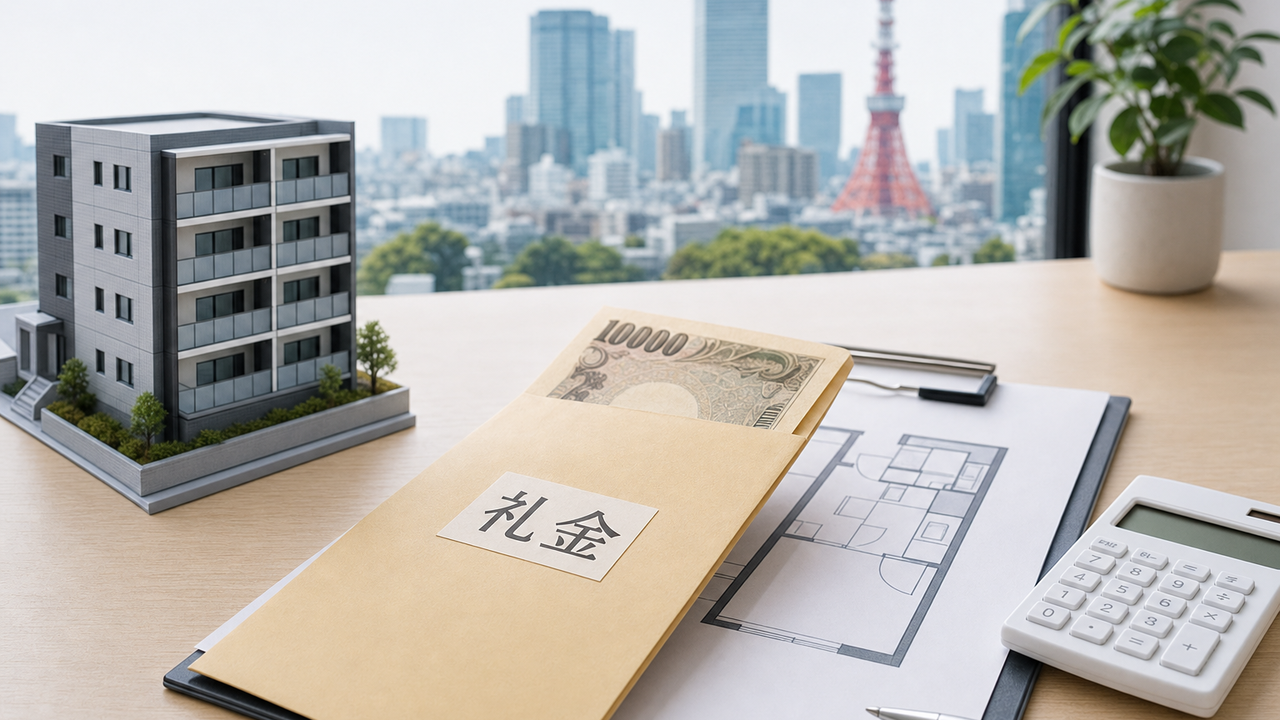
If you’re a foreign professional preparing to rent an apartment in Tokyo, you’ve probably encountered the term key money — and wondered why you’re expected to hand over a large sum of cash before you’ve even moved in.
Known in Japanese as 礼金 (reikin), key money is one of the most confusing and often frustrating aspects of renting in Tokyo for international residents. Unlike a security deposit, you don’t get it back. Unlike rent, it doesn’t cover any specific service. It’s a cultural institution rooted in post-war Japan — and understanding it is essential before you sign any lease in 2026.
Who this article is for
- ●Foreign nationals working in Tokyo who are searching for an apartment and encountering unfamiliar upfront costs
- ●Professionals relocating from abroad who want to understand the full financial picture before committing to a lease
- ●Anyone who has seen “reikin: 2 months” on a listing and wants to know whether they can negotiate or avoid it entirely
What you’ll learn
- ●What key money (reikin) is, where it comes from, and why landlords still charge it in 2026
- ●How much you can typically expect to pay, and what other upfront costs come with it
- ●How to find zero-reikin apartments in Tokyo — and how a bilingual consultant can make the process far smoother
How Much Does It Cost?
Key Money vs. Other Upfront Costs
Finding Zero-Reikin Apartments
Working With a Bilingual Agent
FAQ
What Is Key Money (Reikin) and Why Does Tokyo Still Charge It in 2026?
Quick answer: Key money (礼金, reikin) is a non-refundable upfront payment — typically one to two months’ rent — paid by a tenant to a landlord when signing a Tokyo apartment lease. Unlike a security deposit, you never get it back regardless of how well you maintain the apartment. It originated as a post-war custom when housing was scarce, and while zero-reikin listings have grown significantly in 2026, reikin remains standard in high-demand central Tokyo neighborhoods such as Ebisu, Nakameguro, and Daikanyama. The good news: it is negotiable in the right circumstances, and a bilingual agent can often reduce or eliminate it on your behalf.
Key money — or reikin (礼金) — is a non-refundable payment made by a tenant to a landlord at the start of a lease. Unlike a security deposit, which is held against damage or unpaid rent and returned at the end of your tenancy, reikin is gone the moment you hand it over. Think of it as a gift to the landlord for agreeing to rent to you.
The Cultural and Historical Origins of Reikin
Reikin has its roots in post-World War II Japan, when housing was severely scarce. With far more renters than available properties, landlords held enormous power — and tenants who wanted to secure a home would offer a monetary gift as a gesture of gratitude. Over decades, this informal practice became institutionalized, embedded into standard lease agreements as a line-item cost.
The word itself is telling: rei (礼) means courtesy or gratitude, and kin (金) means money. It was, literally, “money to say thank you.” In a society where social contracts and deference to landlords carried deep weight, this made cultural sense — even if it seems baffling to newcomers from countries where rental contracts are purely transactional.
By the 1980s and 1990s, reikin of two months or even more was standard practice across Tokyo. The expectation was simply part of the cost of renting. Foreign professionals arriving in the city had no choice but to comply, often without fully understanding what they were paying for.
Is Reikin Still Common in Tokyo in 2026?
Yes — but the landscape has shifted considerably. Zero-reikin listings now represent a meaningful share of available stock in Tokyo, particularly in newer buildings, large-scale residential complexes, and areas where landlords face sustained competition for tenants. The rise of corporate housing platforms and institutional landlords has further normalized zero-reikin terms as a competitive standard.
That said, reikin remains common in certain segments of the market: older buildings managed by traditional landlords, desirable low-vacancy neighborhoods, and properties with distinctive features that command consistent demand. In central Tokyo neighborhoods popular with foreign professionals — such as Nakameguro, Ebisu, Daikanyama, Shimokitazawa, and parts of Minato-ku — landlords frequently still require one to two months’ reikin as a baseline expectation in 2026.
The key takeaway: reikin is no longer universal, but it remains very much present in the segments of the market most foreign professionals target. Knowing when to expect it, how to compare zero-reikin alternatives, and which requests are worth making is exactly what separates a stressful search from an efficient one.
INFO
Unlike a security deposit (shikikin), reikin is never returned — not even if you leave the apartment in perfect condition. Always confirm whether a listing charges reikin before proceeding to a viewing.
How Much Key Money Should You Expect in Central Tokyo? (2026 Area Guide)
Understanding reikin in isolation isn’t enough. To budget accurately for a Tokyo apartment move, you need to see the full picture of upfront costs — because reikin is just one component of a total initial payment that can feel startling if you’re unprepared.
The Standard Reikin Range in Central Tokyo (2026)
In central Tokyo as of 2026, reikin is generally set at one to two months’ rent. On a property renting for ¥160,000–¥180,000 per month — a realistic figure for a mid-range one-bedroom apartment in areas popular with foreign professionals near Shibuya or Minato-ku — that translates to ¥160,000 to ¥360,000 paid upfront, with no possibility of recovery.
Rent levels across central Tokyo have trended upward through 2025 and into 2026, driven by sustained demand from international workers, a weaker yen attracting foreign investment, and limited new supply in core neighborhoods. This means the absolute yen amount of reikin is higher than it was several years ago even when it remains capped at one month’s rent, simply because the base rent itself has risen.
Reikin by Neighborhood: What to Expect in 2026
| Neighborhood | Reikin Likelihood | Typical Range |
|---|---|---|
| Ebisu / Daikanyama | High | 1–2 months |
| Nakameguro / Meguro | High | 1–2 months |
| Shibuya / Omotesando | Medium–High | 1–2 months |
| Minato-ku (Azabu, Hiroo) | Medium–High | 1–2 months |
| Shimokitazawa / Sangenjaya | Medium | 0–1 month |
| Shinagawa / Osaki | Low–Medium | 0–1 month |
| Newer large-scale complexes (any area) | Low | Often zero |
Browse central Tokyo listings by area and train line — with full English support.
Search Apartments on rent-apartment.tokyo →
Key Money vs. Security Deposit vs. Agency Fee: Know Exactly What You’re Paying

One of the most common sources of confusion for foreign renters in Tokyo is being presented with a lease estimate showing five or six months’ worth of fees at signing — and not understanding which charges are which. Here is a clear breakdown of every major upfront cost you are likely to encounter.
Reikin vs. Shikikin: The Core Distinction
The distinction matters enormously when calculating your real costs. Shikikin is a refundable security deposit held by the landlord against damage, cleaning, or unpaid rent. In most cases, you’ll receive it back at the end of your lease — though deductions for cleaning or minor repairs are common, and the rules governing these deductions can be contested.
Reikin, by contrast, is never refunded under any circumstances. It is not held in trust. It goes directly to the landlord as a non-contractual gift. Even if you are an immaculate tenant who pays on time, causes zero damage, and leaves the apartment in pristine condition, your reikin is gone. This is precisely why so many foreign nationals — accustomed to purely deposit-based rental systems in the UK, US, Europe, or Australia — find it so difficult to accept.
| Reikin (Key Money) — Tenant’s Reality | What Many Renters Would Prefer |
|---|---|
|
|
Full Breakdown of Tokyo Apartment Move-In Costs
This amount is entirely separate from shikikin (the security deposit), which covers a similar range and serves a completely different purpose. Add in the agency fee, your first month’s rent, fire insurance (mandatory in most buildings), a key replacement fee, and a rental guarantor fee — and total move-in costs can reach five to six months’ equivalent rent before you’ve spent a single yen on furniture or utilities.


