Finding an apartment near Shibuya when you’re earning a tech salary sounds straightforward — until you actually start looking. The rent is high, the paperwork is in Japanese, and many landlords still hesitate to rent to foreign nationals without a guarantor who is a Japanese citizen.
This guide cuts through the noise. Whether you’ve just accepted an offer at a major tech company in Shibuya or you’re already in Tokyo and ready to upgrade your living situation, you’ll find practical, honest advice on what your salary actually gets you, which neighborhoods make sense for your lifestyle, and how to navigate the rental process without unnecessary stress.
Who this guide is for:
- ●Foreign tech professionals working near Shibuya who are actively searching for an apartment in central Tokyo
- ●Expats earning 10 million JPY or more who want to understand what their budget realistically covers in the rental market
- ●Anyone who has been rejected by landlords or confused by Japanese rental contracts and wants bilingual support
What you’ll learn:
- ●A clear breakdown of what rent to expect at different budget levels near Shibuya in 2026
- ●An honest comparison of three neighborhoods that work well for tech workers — with real trade-offs explained
- ●A step-by-step overview of the rental process in Japan, and where bilingual support makes the biggest difference
Why Renting Near Shibuya Is Harder Than Your Salary Suggests
The rent-to-income gap is real — even on a tech salary
A gross annual income of 10 to 15 million JPY sounds considerable, but after tax and social insurance deductions, monthly take-home pay is typically in the range of 650,000 to 900,000 JPY. A well-located 1LDK or 2LDK within a 10-minute commute of Shibuya Station will generally start at around 180,000 JPY per month and can easily reach 300,000 JPY or more for a newer building with good facilities.
The foreign national barrier is structural, not personal
Many foreign professionals are surprised to discover that their income is not the main obstacle — it’s the landlord’s risk assessment framework. Japanese rental contracts traditionally require a Japanese national guarantor, and while corporate guarantee companies have made this more manageable in recent years, a significant portion of landlords still require a personal guarantor.
The search process itself is not designed for international residents
Japan’s real estate market operates through a network of registered agents, and most of them conduct business entirely in Japanese. For tech workers who arrived recently or who are managing a busy onboarding period, this creates a practical bottleneck. Working with a service that offers bilingual consultation — like Living in Jonan — can reduce weeks of back-and-forth into a manageable process.
What Your Budget Actually Gets You: Rent Ranges in 2026

| Monthly Budget | Apartment Type | Typical Location | What to Expect |
|---|---|---|---|
| ¥130,000–¥160,000 | 1K / 1DK | Sangenjaya, Nakameguro, Meguro | Compact single-person unit, 25–35 sqm, older building |
| ¥160,000–¥220,000 | 1LDK | Daikanyama, Ebisu, Nakameguro | Comfortable single or couple apartment, 40–55 sqm |
| ¥220,000–¥320,000 | 2LDK | Hiroo, Ebisu, Daikanyama, Shirokanedai | Spacious couple or home-office setup, 55–80 sqm |
| ¥320,000+ | 2LDK / 3LDK | Hiroo, Minami-Aoyama, Daikanyama (premium) | High-spec buildings, concierge services |
POINT
When budgeting for a move, plan for upfront costs of at least 5x your monthly rent. On a ¥200,000 apartment, that means having ¥1,000,000 or more available before your move-in date.
Three Neighborhoods Worth Considering — With Honest Trade-offs

Nakameguro and Meguro — lifestyle appeal with a commute you can walk or bike
Nakameguro has become one of the most sought-after residential areas in central Tokyo over the past decade. The canal-side streets, concentration of independent cafés and restaurants, and easy access to Shibuya (roughly 5 minutes by Tokyu Toyoko Line) make it appealing for people who value a vibrant neighbourhood atmosphere. For a 1LDK in a post-2010 building, budget 180,000 JPY or more.
Sangenjaya — value, character, and a manageable commute
Sangenjaya is frequently recommended as the best value-for-location option for tech workers who want to live near Shibuya without paying central Shibuya prices. Located two stops from Shibuya on the Tokyu Den-en-toshi Line (about 4 minutes), rents can be 10 to 20 percent lower than in Nakameguro for comparable floor sizes.
Hiroo and Ebisu — established expat infrastructure with a premium price
Hiroo has been a traditional base for Tokyo’s international community for decades. A 2LDK in Hiroo in a quality building will generally start at 250,000 JPY per month. For couples or professionals who value the established international environment, the area delivers consistently.
Common Mistakes Expats Make When Searching for Apartments Near Shibuya

- ●Early termination fees that exceed two months’ rent
- ●Automatic renewal clauses with short notice periods
- ●Restoration costs that go beyond standard wear-and-tear
- ●Vague clauses about “foreigner-specific” additional deposits
The Rental Process in Japan: A Step-by-Step Overview
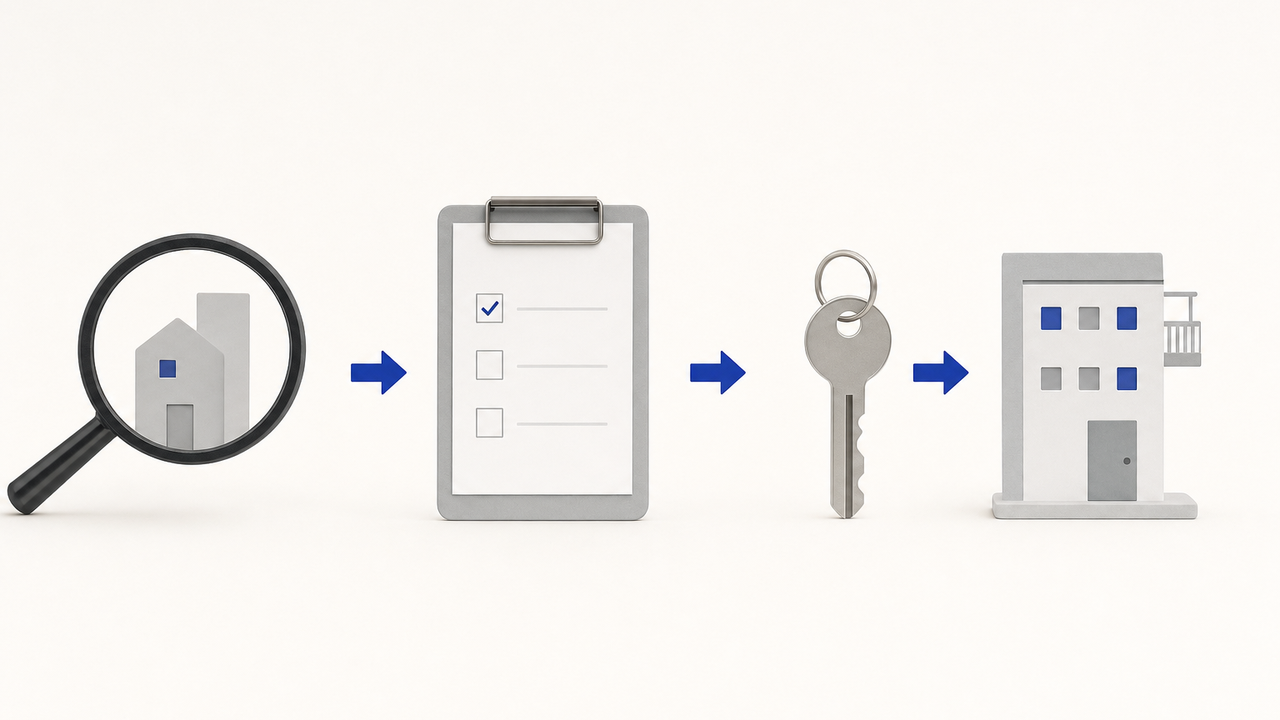
- Define your budget and requirements — Establish your monthly rent ceiling, preferred areas, minimum floor area, and must-have features before you start searching.
- Choose a bilingual agent — Engaging an agent who specialises in foreign nationals is the single most impactful decision you can make.
- Arrange viewings — Properties in popular areas can be listed and rented within a week, so being responsive matters.
- Submit your application — Documentation typically includes your residence card, employment contract or proof of income, and guarantor documentation.
- Credit review and guarantor approval — Typically takes 3 to 7 business days.
- Contract signing and payment of initial costs — Have a bilingual advisor review every clause before you sign.
- Key handover and move-in — Your agent should conduct a move-in inspection with you to document the apartment’s condition.
How Living in Jonan Can Help You Find the Right Apartment
Living in Jonan is a real estate consulting service backed by 25 years of experience, operating specifically to support foreign residents in finding homes in central Tokyo with confidence. The bilingual consultants guide you through every stage of the process in English.
- ●Foreign tech professionals earning 10M+ JPY annually who want to rent confidently near Shibuya
- ●Couples or individuals who need a bilingual consultant to review contracts before signing
- ●Anyone who has previously been rejected by landlords or encountered difficulty finding a property that accepts foreign nationals
Frequently Asked Questions
Do I need a Japanese guarantor to rent an apartment in Tokyo as a foreign national?
Not necessarily. Many properties accept corporate guarantee companies instead. If you are employed by a major tech company in Japan, your HR department may be able to arrange this on your behalf.
How far in advance should I start searching for an apartment near Shibuya?
Starting your active search two to four weeks before your intended move-in date is a reasonable window. If relocating from overseas, start six to eight weeks in advance to handle documentation requirements.
What documents do I need to submit a rental application in Japan?
Standard documentation includes your residence card, a recent pay slip or employment certificate, your employment contract, and guarantor documentation. Your bilingual agent will provide a checklist specific to the property.
Is it better to live in Shibuya itself or in a nearby neighborhood?
For most tech workers, neighborhoods like Nakameguro, Daikanyama, Sangenjaya, or Ebisu — all within 5 to 15 minutes of Shibuya by train — offer a better quality of residential environment at comparable or lower cost.
Ready to find your Tokyo apartment?
Bilingual consultants guide you so foreign residents can find a home with confidence.