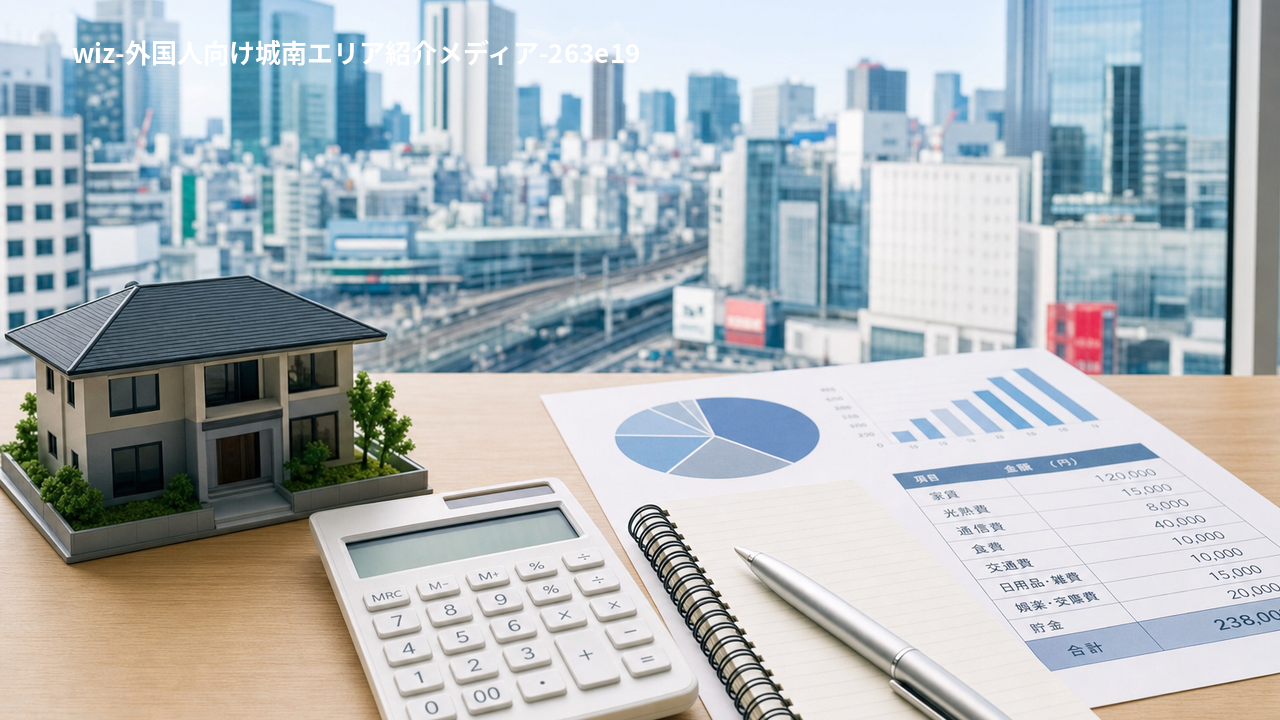
Tokyo has a reputation for being expensive — but the reality of living near Shibuya depends almost entirely on how well you plan before you sign a lease. Many foreign professionals arrive with a vague sense that rent will be high and food will be manageable, only to discover a cluster of monthly costs they never accounted for: key money, agency fees, guarantor services, utilities on old wiring, and the invisible premium that comes with any apartment marketed as “foreigner-friendly.” The gap between expectation and actual monthly spend can easily reach ¥50,000 or more.
This guide breaks down what a realistic monthly budget looks like for a foreign professional living within commuting distance of Shibuya Station in 2026. Whether you are relocating solo, moving as a couple, or transitioning from a company-arranged apartment to one you choose yourself, the numbers here will help you plan with clarity rather than guesswork.
Who this article is for
- ●Foreign professionals relocating to Tokyo who work near Shibuya and need a realistic picture of monthly living costs
- ●Expats currently in company housing who want to understand what independent renting will actually cost
- ●Couples or singles earning 10M+ JPY annually who want to live comfortably without overspending
What you’ll learn
- ●You will know the average monthly cost ranges for rent, food, transport, utilities, and lifestyle in the Shibuya area
- ●You will understand the hidden and one-time costs that most expats miss during budget planning
- ●You will have a practical framework to compare budget scenarios and make a confident housing decision
Why Expats Struggle with Budget Planning in Shibuya

Budget planning for life near Shibuya is harder than it looks because the Japanese rental market does not present its costs transparently upfront. The monthly rent figure on a listing is rarely the whole picture, and the surrounding neighborhood premium adds another layer that catches many newcomers off guard.
The information gap that hits international renters hardest
The single biggest budgeting problem for foreign professionals is that most online cost-of-living calculators were built for a different kind of expat. They assume you already have a guarantor, that you understand what “reikin” means, and that you know the difference between management fees included and excluded from the advertised rent. In practice, most professionals arriving from abroad have none of that context.
The Shibuya area — broadly covering Ebisu, Daikanyama, Nakameguro, Hiroo, Minami-Aoyama, and the Jiyugaoka corridor to the south — carries a location premium that sits 20 to 35% above the Tokyo metropolitan average for comparable apartment sizes, based on general market patterns. That premium is real and persistent. But it is manageable when you know where it comes from.
The information gap compounds the cost gap. Without bilingual support, foreign renters often end up in listings that have been filtered to the small subset of landlords willing to accept non-Japanese applicants, which reduces negotiating power and limits choice. That is precisely where a service like Living in Jonan makes a structural difference: bilingual consultants who can access the full market, not just the English-friendly corner of it.
Why the Shibuya commuter zone is uniquely complex
Shibuya sits at the intersection of three major rail networks — the JR Yamanote Line, the Tokyu Den-en-toshi Line, and the Tokyo Metro Ginza and Hibiya lines — which means the “commuter zone” is unusually large. You can live in Sangenjaya (10 minutes on the Tokyu) or Nakameguro (8 minutes on the Hibiya) and still be within easy reach of most Shibuya office buildings.
This geography matters for budgeting. Rent drops noticeably as you move one or two stations further from Shibuya itself, but the commute remains nearly identical. A 1LDK apartment in central Nakameguro might list at ¥180,000 to ¥220,000 per month, while a comparable unit in Gakugeidaigaku — two stations south — often sits closer to ¥140,000 to ¥165,000. The monthly saving is real and the lifestyle difference is minimal. Understanding this geography is one of the highest-ROI pieces of knowledge for any expat planning their housing budget.
The mindset problem: treating rent as the only variable
Most professionals arrive with a maximum rent figure in mind and treat everything else as fixed. In reality, the surrounding cost structure — utilities in older buildings, guarantor fees, renters insurance, and the ongoing management fees some landlords charge separately — can add ¥30,000 to ¥60,000 per month on top of the headline rent. Treating rent as the only budget variable is the most common planning error, and it leads to real financial stress in the first six months.
The Hidden Costs Most Expats Miss
Beyond the monthly rent, Tokyo’s rental system includes a set of one-time and recurring costs that are genuinely unfamiliar to renters from most Western countries. Missing even one of these can throw a budget off by hundreds of thousands of yen in the first year.
Move-in costs: the upfront cash requirement
The standard move-in cost structure in Tokyo’s private rental market typically includes a deposit (shikikin) of one to two months’ rent, a non-refundable key money (reikin) payment of one to two months’ rent, the first month’s rent paid in advance, an agency fee (typically one month’s rent plus tax), and a guarantor service fee. On a ¥180,000 per month apartment, this can amount to ¥700,000 to ¥1,100,000 before you collect your keys.
Key money in particular surprises almost every first-time renter from abroad. It is a traditional payment to the landlord with no contractual return obligation — it is simply gone. In more competitive areas close to Shibuya, reikin of two months is common. Some newer buildings and certain landlord types have moved away from this practice, but it remains widespread in the properties that tend to attract the Shibuya-area lifestyle.
CAUTION
Always confirm whether the quoted rent includes the monthly management fee (kanrihi). In many listings, the management fee of ¥5,000–¥20,000 per month is listed separately. On a year-long lease, this adds ¥60,000–¥240,000 to your total housing cost.
Guarantor fees and foreigner-specific requirements
Most Japanese landlords require a guarantor (hoshounin) before approving a lease. For foreign nationals without a Japanese family member to act as personal guarantor, the standard solution is a corporate guarantor service (hoshougaisha). These services typically charge an initial fee of 0.5 to one month’s rent at signing, plus an annual renewal fee of ¥10,000 to ¥20,000 each subsequent year.
Some landlords also require additional documentation from foreign applicants that would not be asked of Japanese renters: employment certificates in Japanese, salary verification going back 12 months, and occasionally a Japanese-language explanation of your visa status. Without a bilingual agent, this paperwork can delay a lease signing by weeks or cause applications to be rejected outright — costing you the apartment entirely.
Utilities in older buildings: the hidden monthly premium
Older apartment buildings in central Tokyo — many built in the 1980s and early 1990s — often have aging electrical systems, poor insulation, and gas equipment that runs less efficiently than modern alternatives. Monthly utility costs in these buildings can run ¥15,000 to ¥25,000 higher than in newer construction during winter and summer months. When comparing apartments, the building age and construction type are real financial variables, not just aesthetic preferences.
Renters insurance is another cost that catches people off guard. Japanese landlords almost universally require it, but it is rarely explained during the viewing process. Standard annual premiums for a 1K or 1LDK apartment typically run ¥15,000 to ¥25,000 per year depending on coverage level.
Average Monthly Breakdown by Category
The table below reflects general market patterns for foreign professionals living within 15 minutes of Shibuya Station by train in 2026. These are not guaranteed figures — actual costs vary based on building age, apartment size, lifestyle habits, and negotiation outcomes. They are intended as a realistic planning baseline, not a promise.
| Category | Single (1K/1LDK) | Couple (1LDK/2LDK) | Notes |
|---|---|---|---|
| Rent (incl. management fee) | ¥130,000–¥200,000 | ¥200,000–¥320,000 | Wide range by location and building age |
| Utilities (electricity, gas, water) | ¥8,000–¥18,000 | ¥12,000–¥25,000 | Higher in older buildings; summer/winter peaks |
| Internet | ¥3,500–¥6,000 | ¥3,500–¥6,000 | Fiber often included in newer buildings |
| Groceries | ¥30,000–¥55,000 | ¥55,000–¥90,000 | Higher if shopping at imported-goods stores |
| Dining out | ¥20,000–¥60,000 | ¥35,000–¥90,000 | Highly variable based on frequency and venue |
| Transportation | ¥8,000–¥15,000 | ¥15,000–¥28,000 | Lower if commute pass is employer-subsidized |
| Health insurance (national) | ¥7,000–¥15,000 | ¥14,000–¥28,000 | Employer-enrolled plans vary; check your contract |
| Phone plan | ¥2,000–¥6,000 | ¥4,000–¥12,000 | MVNOs offer strong value vs. major carriers |
| Gym / fitness | ¥6,000–¥18,000 | ¥12,000–¥36,000 | Premium studios in Shibuya run significantly higher |
| Renters insurance | ¥1,200–¥2,100 | ¥1,200–¥2,100 | Annualized and paid upfront; required by most landlords |
| Total (estimated) | ¥220,000–¥390,000 | ¥360,000–¥630,000 | Before discretionary spending and savings |
How rent location affects your total monthly number
The single most powerful lever in your monthly budget is not your grocery shopping or your phone plan — it is how many train stops you are willing to live from Shibuya Station. A move from central Daikanyama (walking distance to Shibuya) to Nakameguro or Yutenji can reduce monthly rent by ¥20,000 to ¥40,000 for a comparable apartment, with a commute that adds only five to ten minutes. Over a two-year lease, that differential equals ¥480,000 to ¥960,000 — a meaningful sum by any measure.
The areas that tend to offer the best value within the broader Shibuya commuter zone include Sangenjaya and Sangen-jaya-adjacent streets, Nakameguro side streets (away from the main canal strip), Gakugeidaigaku, Jiyugaoka, and Nishi-Meguro. Each has its own character, but all sit within 15 to 20 minutes of Shibuya by rail.
Utilities: what “old building” really costs you
Utility costs in Tokyo are more variable than most people expect. A modern, well-insulated building with efficient appliances might run ¥8,000 to ¥12,000 per month for a single professional. An older building — typically pre-2000 construction — with single-pane windows, older gas equipment, and a less efficient air conditioning system can double that figure during July, August, and January through February. When viewing apartments, it is worth asking the agent directly about average utility bills in the building. Responsible agents who know the stock they are selling should have a reasonable answer.
Food and dining: the Shibuya premium on your plate
Food spending in the Shibuya area is high by Tokyo standards, and not just for restaurants. The supermarkets within walking distance of central Shibuya — including Precce, Seijo Ishii, and National Azabu — carry a significant price premium over local neighborhood stores. A weekly grocery run that might cost ¥5,000 in Shimokitazawa or Sangenjaya can easily reach ¥8,000 to ¥10,000 if you are shopping at the central Shibuya-area options. Identifying a more affordable supermarket within a 10-minute walk of your apartment — Maruetsu, Ozeki, or a local co-op — can save ¥10,000 to ¥20,000 per month on groceries alone.
Budget Scenarios: Single vs. Couple vs. Freelancer

The right budget framework depends on your household structure. A single professional on a corporate employment contract has a very different cost profile from a couple where one partner works remotely on a non-Japanese contract, or from a freelancer who needs to manage their own health insurance and pension contributions. Below are three representative scenarios for 2026, based on general patterns rather than specific case data.
Scenario A: Single professional on a Japanese corporate contract
A single foreign professional working at a Japanese company — or a Japanese subsidiary of a multinational — typically has several costs offset by their employer: commute pass, health insurance through shakai hoken (Japan’s employment-based health system), and sometimes a housing allowance. When these benefits are in place, the effective monthly out-of-pocket cost can be meaningfully lower than the gross figures suggest.
A realistic monthly budget for this profile, renting a 1LDK in the Nakameguro or Sangenjaya area, might look like: rent and management fee ¥155,000, utilities ¥12,000, groceries ¥35,000, dining ¥30,000, transport ¥5,000 (after employer pass subsidy), phone ¥3,000, fitness ¥8,000, personal care and miscellaneous ¥20,000. Total: approximately ¥268,000 per month, excluding savings. On a ¥10M+ annual salary, this leaves a comfortable margin for discretionary spending and investment.
Scenario B: Couple with dual income, one remote worker
Couples where one partner works in a Japanese company and one works remotely for an overseas employer face a more complex cost picture. The remote worker will generally need to self-manage their national health insurance (kokumin kenko hoken) contributions, which are income-dependent and can reach ¥20,000 to ¥40,000 per month at higher income levels. They will also need to manage their own pension contributions.
For this household, a 2LDK in Gakugeidaigaku or the Jiyugaoka area — offering more space and slightly lower rents than equivalent central Shibuya stock — is a realistic and practical choice. Budgeting ¥270,000 to ¥320,000 for rent and management fee, ¥20,000 to ¥28,000 for utilities, ¥70,000 to ¥90,000 for combined food spending, and ¥40,000 to ¥60,000 for transport and insurance brings the total to roughly ¥430,000 to ¥530,000 per month before discretionary spending.
Scenario C: Freelancer or self-employed expat
Freelancers in Japan — whether on a business manager visa or working under a specific skills visa with self-employment permission — face the most complex cost structure of any of these profiles. National health insurance, kokumin nenkin (national pension) contributions, and self-employed income tax provisioning can add ¥60,000 to ¥100,000 per month to the baseline living costs that a salaried employee would not carry. Additionally, many landlords in Japan are reluctant to rent to applicants without a verifiable corporate employment contract, which narrows the available apartment pool and sometimes results in higher rents for properties where the landlord accepts independent contractors.
Freelancers should budget conservatively — building in a larger buffer than salaried peers — and prioritize working with an agent experienced in non-standard applicant profiles. This is an area where experienced bilingual consultants, including the team at Living in Jonan, can make a practical difference by identifying landlords and buildings with more flexible screening criteria.
How Successful Expats Optimize Their Spending
The foreign professionals who report feeling financially comfortable in the Shibuya area are not necessarily those earning the most — they are the ones who made three or four strategic decisions before signing their lease. Optimization in this market is front-loaded: the choices you make before moving in have a much larger impact than the ones you make after.
Choosing the right neighborhood before optimizing within it
Neighborhood selection is the highest-leverage decision in your entire Tokyo budget. A ¥20,000 to ¥50,000 per month rent saving achieved by moving two stations further from Shibuya — to Gakugeidaigaku, Nishi-Meguro, or Sangenjaya, for example — is equivalent to stopping a significant daily expenditure entirely. That saving compounds over a two-year lease to ¥480,000 to ¥1,200,000 in total.
The professionals who optimize this decision well do two things: they define a realistic maximum commute time (most find 15 to 20 minutes entirely acceptable), and they ask a knowledgeable local advisor — not just an online forum — about which specific streets and subdistricts within each neighborhood offer the best quality-to-price ratio. The answer varies by building age, proximity to shopping, and noise environment in ways that are difficult to assess from a listing page alone.
Managing move-in costs strategically
Move-in costs are largely fixed by the landlord and the listing, but there are legitimate ways to minimize them. Buildings with reikin of zero (zero key money) exist in every price range, including the mid-to-upper range near Shibuya — they are simply less commonly advertised in English-language channels. Working with an agent who can search the full Japanese-language rental database, rather than only the foreigner-filtered subset, meaningfully expands access to these properties.
It is also worth negotiating the deposit in cases where the landlord has flexibility. A single month’s deposit rather than two can save ¥130,000 to ¥200,000 in upfront cash on a mid-range apartment — cash that is more useful in your account than sitting as security with a landlord for two years. This negotiation is significantly more likely to succeed when conducted by a bilingual agent who understands the landlord’s concerns and can address them directly.
Reducing recurring costs through informed setup decisions
Several monthly costs can be reduced significantly at the setup stage rather than through ongoing discipline. Choosing a building with fiber internet already installed avoids ¥10,000 to ¥20,000 in router and setup fees and typically delivers lower monthly internet costs. Selecting an MVNO phone plan (IIJmio, OCN Mobile One, or similar) over a major carrier contract reduces phone costs from ¥7,000 to ¥10,000 per month to ¥2,000 to ¥3,500 — a saving of ¥50,000 to ¥80,000 over a two-year lease. And choosing a building with included or low-cost parking — relevant for those with a vehicle — rather than street parking in the Shibuya area can save ¥30,000 to ¥50,000 per month.
Common Budgeting Mistakes and How to Avoid Them
The most expensive mistakes in Tokyo rental budgeting are not made from ignorance of the big numbers — they are made from underestimating the small ones that compound over time, and from making irreversible decisions too quickly under time pressure.
Signing a lease before the full cost picture is clear
The pressure to secure housing quickly upon arrival — especially when operating on a corporate relocation timeline — leads many professionals to sign leases before they have fully understood all the associated costs. The move-in expense sheet (juuraku hiyou) should be reviewed in full before any deposit is paid, and every line item should be explained. If your agent cannot explain a line item clearly in your language, that is not a minor inconvenience — it is a structural problem with your representation.
The cost items most often not fully explained to foreign renters before signing include: the nature and non-refundability of reikin, the annual renewal fee structure (koshin ryou, typically one month’s rent every two years), the specific cleaning charge deductions that will apply at lease end, and the fire insurance terms that the landlord’s recommended provider requires.
- ●Accepting an apartment without confirming the total move-in cost in writing — verbal estimates are unreliable
- ●Assuming the listed rent includes the management fee — always ask explicitly
- ●Not budgeting for the biennial lease renewal fee (koshin ryou), typically one month’s rent
- ●Overlooking the cleaning and restoration charges that apply at lease end — these can reach ¥50,000–¥150,000
- ●Choosing an apartment based solely on interior photos without understanding the building’s utility costs
Overweighting proximity to Shibuya at the expense of total cost
The instinct to minimize commute time is understandable, particularly for professionals who have just relocated and want to establish a stable routine quickly. But the financial premium for living within walking distance of Shibuya — versus a 10 to 15 minute train ride — is substantial and persistent. On a gross income of ¥10 million per year, paying ¥40,000 to ¥60,000 more per month in rent for the privilege of a five-minute shorter commute represents a meaningful reduction in savings capacity. Most people who have lived in Tokyo for a year or more report that a 10 to 15 minute train commute feels entirely comfortable, not a compromise.
Not accounting for lifestyle inflation in the Shibuya area
The Shibuya area is one of Tokyo’s most commercially dense zones, with high-end restaurants, specialty cafés, premium fitness studios, and international grocery stores within easy reach of any apartment in the area. The lifestyle infrastructure is genuinely excellent — and genuinely expensive. Professionals who move to the Shibuya area from other cities often find that their dining and leisure spending increases significantly in the first year, not because they made a deliberate choice to spend more, but because the environment makes higher-cost options the path of least resistance. Building a realistic dining and leisure budget before moving — and revisiting it after the first three months — is a discipline that pays for itself.
How Living in Jonan Can Help You Get This Right
The budget planning challenges described in this article are not unique to any one type of foreign professional — they are structural features of the Tokyo rental market that affect almost every international renter who arrives without established local knowledge. The difference between a stressful first year and a comfortable one is often not income level; it is the quality of guidance received before and during the rental process.
Living in Jonan operates as a bilingual real estate consulting service with 25 years of experience in Tokyo’s central rental market. The team understands both the financial structure of Japanese rental agreements and the practical concerns of foreign professionals who need that structure explained clearly, in English, before they commit. If you are planning a move to the Shibuya area or the broader Jonan district in 2026, the consultation process begins with understanding your actual budget — not just your rent ceiling — and finding properties that fit the whole picture.
- ●Need bilingual support throughout the entire rental process, from search to key handover
- ●Want access to the full Japanese rental market, not just the foreigner-filtered subset
- ●Are relocating within a fixed corporate timeline and cannot afford delays from rejected applications
- ●Are a freelancer or non-standard applicant who needs an agent experienced with complex screening situations
About the 25-year track record
Summary: Building a Realistic Budget Before You Commit
Living near Shibuya as a foreign professional in 2026 is entirely achievable on a 10M+ JPY salary — but only if the planning is grounded in real numbers rather than headline rents. The key takeaways from this breakdown are worth restating clearly.
Rent is the largest line item, and neighborhood selection is the most powerful budget lever available. Moving two stations further from Shibuya — to Nakameguro, Sangenjaya, or Gakugeidaigaku — can save ¥20,000 to ¥50,000 per month for a comparable apartment with a commute difference of 5 to 10 minutes. Over a two-year lease, that saving reaches ¥480,000 to ¥1,200,000.
Move-in costs require a separate, dedicated cash reserve of four to six months’ rent. This is not a variable — it is a structural feature of the Tokyo rental market that applies to almost every mid-to-upper-range apartment in the Shibuya area. Budget for it before you begin viewing.
The hidden costs — utilities in older buildings, biennial renewal fees, cleaning charges at lease end, guarantor fees, and renters insurance — add up to a meaningful annual sum. Treating any of them as optional or uncertain is a planning error that tends to surface at the worst possible moment.
Finally, the quality of your representation matters more in the Japanese rental market than in most other markets you may have rented in. An experienced, bilingual agent changes what is available to you, how your application is presented, and how well you understand what you are agreeing to. That is not a soft benefit — it is a financial one.
- ●Define your maximum commute time before setting your rent ceiling — not after
- ●Budget separately for move-in costs (4–6 months’ rent) and monthly living costs
- ●Confirm whether listed rent includes management fee before booking a viewing
- ●Ask your agent specifically about average utility costs in any building you are seriously considering
- ●Research the biennial renewal fee structure before signing — it is a real recurring cost
- ●Compare MVNO phone plans before committing to a major carrier contract
- ●Build a dining and leisure budget buffer for the first 3 months — lifestyle inflation is real in this area
- ●Work with a bilingual agent who can access the full Japanese rental database, not just foreigner-filtered listings
Frequently Asked Questions
Q: What is a realistic total monthly budget for a single expat renting a 1LDK near Shibuya?
A: Based on general 2026 market patterns, a single professional in a 1LDK apartment within 15 minutes of Shibuya by train should budget approximately ¥250,000 to ¥350,000 per month for all living costs combined — including rent, utilities, food, transport, and insurance. The exact figure depends heavily on the specific neighborhood, building age, and individual lifestyle habits.
Q: Is key money (reikin) still common in the Shibuya area in 2026?
A: Yes. Non-refundable key money remains common in mid-to-upper-range apartments near Shibuya, typically ranging from one to two months’ rent. Zero-reikin properties do exist in the area, including at mid-range price points, but they require access to the full Japanese rental database rather than just the English-language listing platforms. Working with a bilingual agent significantly improves your access to these properties.
Q: Can a freelancer or self-employed expat rent an apartment near Shibuya?
A: Yes, though the process is more complex than for salaried employees. Many landlords prefer corporate employment contracts, which narrows the available pool for self-employed applicants. Experienced bilingual agents can identify landlords with more flexible screening criteria and help present an independent contractor’s application in the most favorable way. Budget planning as a freelancer should also account for self-managed health insurance and pension contributions, which can add ¥60,000 to ¥100,000 per month to baseline living costs compared to an employee enrolled in shakai hoken.
Q: How much should I set aside for move-in costs when renting near Shibuya?
A: A safe planning figure is four to six months’ rent as a dedicated move-in cash reserve. This covers the deposit (shikikin), key money (reikin), agency fee, first month’s rent, guarantor service fee, and renters insurance. On a ¥180,000 per month apartment, this means having ¥720,000 to ¥1,080,000 available before signing — separate from your monthly living budget.
Q: Which neighborhoods near Shibuya offer the best value for foreign professionals?
A: Areas that tend to offer strong value relative to commute time include Sangenjaya (Tokyu Den-en-toshi Line, approximately 5 minutes to Shibuya), Nakameguro side streets away from the main canal strip (Tokyo Metro Hibiya Line, approximately 8 minutes), Gakugeidaigaku (Tokyu Toyoko Line, approximately 12 minutes), and Jiyugaoka (approximately 15 minutes on the Toyoko Line). Each offers meaningfully lower rents than central Shibuya-adjacent neighborhoods while maintaining easy access for most office locations in the Shibuya area.
Learn more about how we can help.
Bilingual consultants guide you so foreign residents can find a home with confid