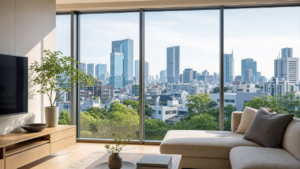
Finding an apartment in Shibuya as a foreign professional can feel like navigating a maze — language barriers, unfamiliar paperwork, and a rental market that rarely accommodates those without Japanese guarantors. If you have recently relocated to Tokyo for work, or are planning to, you already know that securing a home near your office is only half the challenge. Understanding the neighborhood, the commute, the convenience stores open at midnight, the international clinics, the quiet side streets — that is the other half.
This guide cuts through the noise. Whether you are joining a tech company in Cerulean Tower, a startup in Daikanyama, or a global firm near Omotesando, the information here will help you settle into Shibuya and the surrounding Jonan area with confidence. We cover daily life infrastructure, apartment-hunting strategy, neighborhood character, and the common mistakes that trip up even experienced expats.
Who this article is for
- ●Foreign professionals relocating to Tokyo for work who need a clear, English-language guide to living near Shibuya
- ●Expats who have struggled with language barriers, guarantor requirements, or confusing rental paperwork in Japan
- ●People weighing which neighborhood in central Tokyo offers the best commute, lifestyle fit, and value for money
What you’ll learn
- ●You will understand the practical realities of daily life around Shibuya — transport, shopping, healthcare, and more
- ●You will know what to expect from the apartment rental process and how to avoid the most common pitfalls
- ●You will have a clear picture of which sub-neighborhoods best match your lifestyle and budget
Why Expats in Tokyo Choose to Live Near Shibuya: The Real Lifestyle Picture

The short answer: Shibuya is where international Tokyo converges. It sits at the junction of six major rail and subway lines, puts most of central Tokyo within a 20-minute commute, and anchors a residential corridor — the Jonan area — that in 2026 represents the single most practical base for foreign professionals working anywhere from Minato-ku to Shinjuku. If you work in or near Shibuya, living within this corridor means a short, reliable commute, English-language services within walking distance, and a community of international residents large enough to make daily life genuinely comfortable.
The Jonan Area: Shibuya’s Residential Hinterland
Most foreign professionals discover quickly that living inside Shibuya Station itself is neither affordable nor particularly pleasant for everyday life. The real opportunity lies in the Jonan area — the six wards to the south and southwest: Shibuya-ku, Meguro-ku, Setagaya-ku, Minato-ku, Shinagawa-ku, and Ota-ku. These neighborhoods offer a compelling combination of commute convenience, residential calm, international amenities, and access to green space that the immediate station area cannot match.
Daikanyama, a ten-minute walk from Shibuya or one stop on the Tokyu Toyoko Line, is arguably the most internationally-oriented residential pocket in this corridor. Tree-lined streets, independent coffee shops, boutique gyms, and an English-friendly atmosphere make it a natural landing zone for newly arrived professionals. Nakameguro, one stop further, offers canal-side living and a restaurant scene that ranks among Tokyo’s most vibrant.
Further south, Meguro, Jiyugaoka, and Togoshi add quieter, more family-oriented options. Rent generally decreases as you move away from Shibuya, while commute times remain remarkably short — often under fifteen minutes by train. This trade-off is one of the defining advantages of the Jonan corridor for those working near Shibuya.
A Typical Weekday for a Shibuya-Area Expat in 2026
Understanding what daily life actually looks like — not just commute times — helps clarify whether this area fits your lifestyle. Here is a realistic picture drawn from common expat experiences in the corridor:
| ●Morning | Walk or cycle to a local kissaten or international café chain for coffee. Pick up breakfast from a convenience store or neighborhood bakery — both within 3 minutes of any residential building in this corridor. |
| ●Commute | Three to twenty minutes by train depending on sub-neighborhood. Trains run on time to within seconds. No car needed. |
| ●Lunch | Office canteen or one of dozens of restaurant options within Shibuya’s commercial core — ramen, sushi conveyor belts, Italian, Indian, Korean — all within a 10-minute walk of most Shibuya-area offices. |
| ●Evening | Grocery stop at a local supermarket on the way home, or dinner at a neighborhood restaurant. Both options cost significantly less than central Shibuya dining. |
| ●Weekends | Meguro River walks, Daikanyama T-Site browsing, Yoyogi Park on Sundays, or a quick Yamanote Line hop to Harajuku or Ebisu for shopping and dining. |
Who Lives Here: The Expat Community Profile in 2026
The Shibuya-to-Meguro corridor has developed a critical mass of international residents, driven largely by the sustained concentration of global tech companies, creative agencies, and startup operations in and around Shibuya. In 2026, companies such as Google Japan, Amazon Japan, and numerous well-funded scale-ups employ significant numbers of non-Japanese nationals, many of whom choose to live within a short commute of the office.
This concentration has practical consequences for daily life: English-language services have followed the residents. International supermarkets, English-speaking medical clinics, bilingual daycare facilities, and foreign-friendly banking services are more common here than in almost any other part of Tokyo outside Roppongi. For professionals arriving from the United States, Europe, Southeast Asia, or South Korea, the adjustment to daily life is measurably smoother in this area than in many other parts of the city.
Commute Realities: Time and Cost
Typical commute times from key Jonan sub-neighborhoods to Shibuya Station are consistently short. Daikanyama to Shibuya runs approximately three minutes by Tokyu Toyoko Line, or twelve minutes on foot. Nakameguro to Shibuya is four minutes by train. Meguro Station, which sits on the Yamanote Line, connects directly to Shibuya in six minutes. Even Jiyugaoka, a longer commute at roughly twenty minutes, falls well within the threshold that most professionals consider acceptable.
Monthly commuter pass costs for these distances are typically low enough that many residents simply walk or cycle for short hops and reserve the pass for longer journeys. The area is also well-served by a grid of bus routes that provide useful backup connections during rail disruptions.
Shibuya vs. Surrounding Neighborhoods: Where Should Expat Professionals Actually Live?

Almost no expat professional actually lives in Shibuya proper — and for good reason. The station area is loud, commercially dense, and expensive for what you get. The neighborhoods immediately surrounding it, however, offer some of the best expat living conditions in Tokyo. Here is a direct comparison of the most popular options.
| Neighborhood | Commute to Shibuya | 1LDK Rent Range (2026) | Best For |
|---|---|---|---|
| Daikanyama | 3 min by train / 12 min walk | ¥150,000–¥230,000 | Singles, couples; international lifestyle |
| Nakameguro | 4 min by train | ¥140,000–¥210,000 | Young professionals; restaurant scene |
| Ebisu | 5 min by train | ¥160,000–¥240,000 | Established expats; quieter residential feel |
| Meguro | 6 min by Yamanote Line | ¥120,000–¥185,000 | Budget-conscious; families; long-term residents |
| Daikan-yama / Yoyogi-Uehara | 8–10 min by train | ¥130,000–¥190,000 | Families; quieter streets; café culture |
| Jiyugaoka | ~20 min by Tokyu Toyoko | ¥100,000–¥150,000 | Value seekers; families; slower pace |
First-Hand Notes: What Each Neighborhood Actually Feels Like
Daikanyama consistently tops expat preference surveys for a reason: it is walkable, aesthetically pleasant, and has a concentration of English-friendly businesses — from Ivy Place’s all-day dining to the Daikanyama T-Site bookstore complex — that few other Tokyo neighborhoods can match. The trade-off is price: it is the most expensive sub-neighborhood in the Jonan corridor on a per-square-meter basis.
Nakameguro has the most vibrant street-level restaurant and bar scene of any neighborhood in this corridor. The Meguro River canal in spring (cherry blossoms) and autumn (illuminations) is genuinely one of Tokyo’s most beautiful urban experiences. Noise from popular restaurant strips can be a factor for light sleepers — choose a unit a block or two back from the canal if quiet evenings matter.
Meguro offers the best value-for-commute ratio in the corridor. The Yamanote Line connection means you can reach not just Shibuya but also Shinjuku, Harajuku, and Osaki without changing trains. The neighborhood has a lived-in, slightly unglamorous feel that longer-term expats often come to prefer over the self-consciously stylish Daikanyama atmosphere.
Yoyogi-Uehara has emerged as a quieter alternative with strong transport links (Odakyu Line plus Chiyoda Subway Line) and a growing number of independent restaurants and cafés. It sits slightly west of the main Tokyu corridor, which keeps rents lower than comparable spots in Daikanyama while maintaining excellent access to Shibuya.
Search on rent-apartment.tokyo →
Daily Life Infrastructure: What You Actually Need to Know

Daily life convenience in Tokyo is genuinely exceptional by global standards, but that excellence is not evenly distributed. Understanding which services are available in English, where international products are stocked, and how to navigate systems designed primarily for Japanese residents is essential for a smooth transition.
Grocery Shopping: International Options
Access to international food products is a practical priority for most foreign residents, and the Shibuya-Jonan corridor is comparatively well-stocked. National Azabu in Hiroo — roughly fifteen minutes from Shibuya by subway or bus — stocks a wide range of imported products from Europe, North America, and across Asia. Prices run significantly higher than standard Japanese supermarkets, but the selection is broad enough to cover most dietary preferences without ordering online.
Within Shibuya itself, Precce in Shibuya Hikarie carries a solid imported goods section, and the basement food hall of Tokyu Department Store in Shibuya remains one of the most comprehensive food markets in the area. For day-to-day shopping, Maruetsu, Life, and the local Tokyu Store branches throughout Nakameguro and Meguro carry a growing range of international brands alongside standard Japanese products. Most residents find a combination of a local supermarket for everyday items and a monthly run to a specialty store for specific imports covers their needs adequately.
In 2026, delivery services such as Amazon Fresh Japan and OKFood have expanded meaningfully in central Tokyo coverage, making it practical to order international pantry staples online for next-day delivery — a useful supplement to physical shopping that many expats now rely on regularly.
Healthcare: Finding English-Speaking Services
Healthcare access with English-language support is one of the genuine challenges of living in Japan as a foreign national, though the situation around Shibuya is considerably better than the national average. Tokyo Medical and Surgical Clinic in Minato-ku operates primarily in English and is widely used by the expat community for general practice, vaccinations, and referrals. Roppongi Hills Clinic and Hiroo Hospital also offer English-language services and are accessible from Shibuya within twenty to twenty-five minutes.
For dental care, a number of private clinics in the Shibuya and Daikanyama areas have bilingual staff, though it is worth calling ahead to confirm the level of English proficiency before booking. Mental health services in English — therapists, counselors, and psychiatrists — are available but limited in number. The Tokyo English Life Line (TELL) maintains a directory of English-speaking mental health professionals and is a reliable starting point for anyone needing those services.
Enrollment in Japan’s National Health Insurance (kokumin kenko hoken) is mandatory for foreign residents staying longer than three months. Registration is handled at your local ward office (ku-yakusho), and the process requires your residence card (zairyu card). The insurance covers roughly seventy percent of most medical costs, leaving a thirty percent co-pay to the patient.
Banking, Remittance, and Financial Setup
Opening a Japanese bank account as a foreign resident requires your residence card, passport, and in some cases proof of address — which creates a chicken-and-egg problem for those who have just arrived. Japan Post Bank (Yucho) and Shinsei Bank are generally considered the most accessible options for new foreign residents, with lower documentation barriers than major city banks such as Mitsubishi UFJ or Mizuho.
For international money transfers, services such as Wise and Revolut have become the standard choice among expats in Tokyo. These platforms offer significantly better exchange rates than bank wire transfers and process transactions quickly. Seven Bank ATMs, found in every 7-Eleven convenience store, accept a wide range of foreign debit and credit cards and provide an English-language interface — a genuinely useful bridge while your domestic banking is getting set up.
As of 2026, several digital bank options including Sony Bank and Prestia (SMBC Trust Bank) have improved their English-language onboarding processes, making them increasingly viable alternatives to Shinsei for mid-to-long-term residents who need multi-currency accounts.
The Honest Guide to Renting in Tokyo as a Foreigner: What Nobody Tells You

The Japanese apartment rental process operates differently from most Western markets in ways that consistently surprise even experienced international renters. Understanding the structure before you begin saves significant time, money, and frustration. This section covers the barriers that other guides gloss over — because knowing these upfront is the difference between a smooth move and a three-month delay.