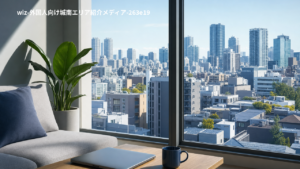
If you’ve just accepted an offer at ByteDance or TikTok Japan and Tokyo is on the horizon, congratulations — and brace yourself for one of the most consequential decisions you’ll make before you land: where to live. For tech expats joining fast-moving companies in one of Asia’s most complex cities, the wrong neighborhood can quietly drain your energy, extend your commute, and disconnect you from the kind of daily life that makes relocating feel worth it.
This guide is built specifically for ByteDance and TikTok Japan employees navigating Tokyo’s rental market for the first time. We’ll walk through the company’s office locations, the neighborhoods that make practical sense, what rents actually look like in 2026, and the hidden factors — English-language services, international community density, commute flexibility — that experienced tech expats say matter more than any single amenity.
Who this article is for
- Foreign professionals joining ByteDance or TikTok Japan who are relocating to Tokyo in 2026
- Tech expats in their 20s–40s who need English-language rental support and practical neighborhood guidance
- Anyone comparing the Jōnan area (Meguro, Setagaya, Shibuya, Minato, Shinagawa, Ota) against central Tokyo options before signing a lease
What you’ll learn
- Where ByteDance and TikTok Japan’s Tokyo offices are located and what that means for your commute
- A neighborhood-by-neighborhood breakdown of the best areas for tech expats, with real rent ranges
- How to avoid common renting mistakes and what English-friendly support actually looks like in practice
Where Are the ByteDance and TikTok Japan Offices in Tokyo?

Before choosing a neighborhood, you need to anchor your search to the right train lines. ByteDance and TikTok Japan’s Tokyo operations are concentrated in the Minato Ward corridor — specifically in the Akasaka and Roppongi area, where a cluster of global tech firms maintains regional headquarters. This is a critical starting point because commute time in Tokyo is not simply about distance — it’s about line transfers, peak-hour crowding, and whether you’re riding with or against the flow of rush-hour traffic.
The Akasaka–Roppongi Tech Hub
The Akasaka–Roppongi corridor is the de facto headquarters zone for international tech companies in Tokyo. For ByteDance and TikTok Japan employees, this means your primary commute anchor sits on the Tokyo Metro Hibiya Line (Roppongi Station) and the Namboku Line (Tameike-Sanno Station), with the Chiyoda Line as a third viable trunk route. These three lines radiate south and southwest into exactly the neighborhoods — Nakameguro, Daikanyama, Meguro, Gotanda, Jiyugaoka — where experienced tech expats tend to concentrate.
Understanding this geography matters because a one-transfer commute of 20–30 minutes is considered very comfortable by Tokyo standards. If you can ride the Hibiya Line directly from Nakameguro to Roppongi in roughly 12 minutes, you’re in genuinely good shape. The alternative — living in a more affordable eastern ward and riding multiple lines for 45–60 minutes — is a trade-off many first-year expats regret once the novelty wears off.
Why the Jōnan Area Has Become the Default for Tech Expats
The six wards that make up Tokyo’s Jōnan (South Tokyo) area — Meguro, Setagaya, Shibuya, Minato, Shinagawa, and Ota — have gradually become the default residential cluster for tech workers at companies like ByteDance, Google Japan, and various Shibuya-based startups. The reasons are structural rather than trendy. International schools, English-friendly medical clinics, expat-oriented supermarkets, and bilingual real estate support are all disproportionately concentrated in this southwestern corridor. For ByteDance and TikTok Japan employees arriving without Japanese language skills, that concentration isn’t a luxury — it’s a practical necessity for daily functioning.
Neighborhood Guide: Best Areas for ByteDance and TikTok Japan Employees

Below is a practical breakdown of the neighborhoods most frequently chosen by tech expats working in the Akasaka–Roppongi corridor. Each area has a distinct character, and the right choice depends on your lifestyle priorities, budget, and whether you’re arriving solo, as a couple, or with family.
| Neighborhood | Ward | Commute to Roppongi | 1LDK Rent Range (2026) | Best For |
|---|---|---|---|---|
| Nakameguro | Meguro | ~12 min (Hibiya Line, direct) | ¥180,000–¥280,000 | Singles, couples, social lifestyle |
| Daikanyama / Ebisu | Shibuya / Meguro | ~15 min (Hibiya Line, 1 transfer) | ¥200,000–¥320,000 | Couples, design-conscious professionals |
| Meguro / Gotanda | Meguro / Shinagawa | ~18 min (Namboku Line, direct) | ¥150,000–¥220,000 | Value-focused expats, practical living |
| Sangenjaya / Setagaya | Setagaya | ~25 min (Den-en-toshi + Hibiya) | ¥130,000–¥190,000 | Budget-conscious, local community feel |
| Jiyugaoka | Meguro / Ota | ~22 min (Toyoko Line + Hibiya) | ¥140,000–¥210,000 | Couples, quiet lifestyle, café culture |
| Hiroo / Minami-Azabu | Minato | ~10 min (Hibiya Line, direct) | ¥220,000–¥400,000+ | Families, embassy district, premium expat enclave |
Nakameguro — The Tech Expat Sweet Spot
Nakameguro is consistently the most popular single neighborhood for tech expats working in the Roppongi–Akasaka corridor, and the commute math is a big reason why. The Hibiya Line runs directly from Nakameguro Station to Roppongi Station in approximately 12 minutes, with no transfers. During off-peak hours that ride feels almost short. Even in morning rush, you’re moving toward the city center from a residential origin, which means the trains — though full — are manageable compared to the reverse-commute overcrowding on outbound lines.
Beyond the commute, Nakameguro has cultivated a genuine international atmosphere. The canal-side strip is lined with independent coffee shops, bookstores, and small restaurants where English menus are common and staff are accustomed to non-Japanese speakers. The area attracts creative professionals, architects, and designers alongside tech workers, which keeps the restaurant and social scene interesting without tipping into pure tourist territory. Rent is higher than in neighboring Setagaya — a standard 1LDK (one living/dining room plus one bedroom) ranges roughly from ¥180,000 to ¥280,000 per month in 2026 — but for a ByteDance or TikTok Japan employee on a competitive tech salary, that range is generally workable. See our detailed Nakameguro Living Guide for Expats for a deeper dive into rents, cafés, and English-friendly services in this neighborhood.
- Singles or couples without children who want a walkable, social neighborhood with strong café culture
- Employees who prioritize a short, direct commute to Roppongi with no transfers
- Tech expats who want easy access to Shibuya (one stop on the Toyoko Line) as a secondary hub
Daikanyama and Ebisu — Design-Forward Living Close to Shibuya
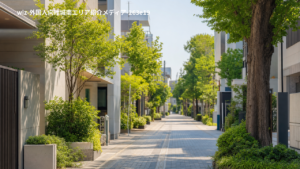
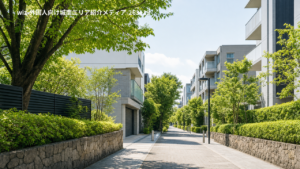
Daikanyama and Ebisu sit immediately adjacent to each other, straddle the Shibuya–Meguro ward boundary, and offer arguably the most polished residential streetscapes in the Jōnan area. Daikanyama in particular has a quiet, almost village-like character for its proximity to Shibuya: boutiques, galleries, and low-rise apartment buildings coexist with small parks and pedestrian-friendly alleys. Ebisu, one train stop south of Shibuya on the Yamanote Line, adds the Ebisu Garden Place complex and a more established, slightly quieter atmosphere.
The commute from Daikanyama to Roppongi involves a short Toyoko Line ride to Nakameguro, then the Hibiya Line south — generally 15 to 20 minutes total. It’s not quite as seamless as living directly on the Hibiya Line, but the added transfer is minor. Rent in this pocket is among the highest in the Jōnan area: expect ¥200,000 to ¥320,000 for a 1LDK, with design-renovated apartments pushing beyond that. For ByteDance and TikTok Japan employees who work in creative roles or who value aesthetics and walkability in their daily environment, the premium tends to feel justified.
- Couples or design-conscious professionals who want a boutique neighborhood feel without full immersion in Shibuya’s commercial energy
- Expats who also frequently need to access Shibuya directly (one Toyoko Line stop from Daikanyama)
- Anyone willing to pay a premium for lower building density and quieter residential streets
Meguro and Gotanda — Practical, Well-Connected, Underrated
Meguro and Gotanda are genuinely underrated by first-time Tokyo expats, partly because neither carries the lifestyle cachet of Nakameguro or Daikanyama, and partly because most relocation guides overweight aesthetics. The practical case for this pocket is strong: the Namboku Line runs directly from Meguro Station to Tameike-Sanno Station (for the Akasaka area) in roughly 18 minutes, making it one of the cleanest single-line commute options for ByteDance employees. Gotanda, served by the Yamanote Line and Toei Asakusa Line, adds flexibility for reaching Shinagawa and Shibuya.
Rents in Meguro and Gotanda are meaningfully lower than Nakameguro: a 1LDK typically runs ¥150,000 to ¥220,000. The area has an established residential character with good supermarkets, a range of restaurants across price points, and proximity to Meguro’s international schools and English-language medical facilities. For tech expats who want the commute advantage without overpaying for a postcode, this is frequently the most sensible choice. Our practical area guide to Gotanda covers the specifics in detail.
- Value-conscious expats who want a clean direct commute on the Namboku Line without paying Nakameguro prices
- Professionals who prefer a functional, established residential neighborhood over a trendy but pricier one
- Anyone who needs easy access to Shinagawa Station for occasional business travel or airport access
Sangenjaya and Setagaya — Local Character at a Lower Price Point
Sangenjaya is the most affordable genuinely appealing neighborhood in this guide — and it has a loyal following among tech expats who discovered it by accident and never left. The area sits on the Den-en-toshi Line, which runs into Shibuya in about 5 minutes. From Shibuya, reaching Roppongi via the Hibiya Line adds another 10–15 minutes, making the total commute around 20–25 minutes with a single transfer at Shibuya. That’s entirely workable, and the rent savings versus Nakameguro can be significant: 1LDK apartments in Sangenjaya typically start around ¥130,000–¥190,000.
Sangenjaya has a distinctly local, non-expat-bubble character that some foreign residents find refreshing after the more international atmosphere of Nakameguro. The shotengai (covered shopping street) and narrow bar-lined alleys around Carrot Tower give it a Tokyo neighborhood authenticity that higher-rent areas have largely lost. English services are somewhat less dense here than in Meguro or Hiroo, so Japanese language basics become more useful. For ByteDance and TikTok Japan employees who speak some Japanese, or who are motivated to develop it, Sangenjaya offers excellent value.
- Budget-conscious expats willing to accept a slightly longer commute in exchange for significantly lower rent
- Individuals who want to integrate into local Tokyo life rather than an expat bubble
- Tech workers who want easy access to Shibuya’s coworking spaces and event venues
Hiroo and Minami-Azabu — The Embassy District Option
Hiroo and Minami-Azabu represent Tokyo’s most established expat enclave, and for ByteDance and TikTok Japan employees with families — or those whose companies offer generous housing allowances — they deserve serious consideration. The Hiroo area sits directly on the Hibiya Line (Hiroo Station) just two stops from Roppongi, making the commute genuinely short. The neighborhood is anchored by a high concentration of embassies, international schools (the German, French, and International School of the Sacred Heart are all within reach), and the National Azabu Supermarket — a well-stocked English-friendly grocery that has served the expat community for decades.
Rent in this area is Tokyo’s highest outside of Minami-Azabu penthouses: a standard 1LDK runs ¥220,000 upward, and family-sized 2LDK apartments routinely exceed ¥350,000–¥400,000. The trade-off is a density of English-language services — medical clinics, legal advisors, real estate agents — that is unmatched elsewhere in Tokyo. For a ByteDance or TikTok Japan employee arriving with a spouse, children, or simply a strong preference for maximum convenience from day one, Hiroo justifies its premium.
- Families with school-age children who need proximity to international schools
- Senior employees or executives with company housing support
- Expats who want the maximum concentration of English-language services within walking distance
The Realities of Renting in Tokyo as a Foreign National

Understanding the neighborhoods is the easy part. Actually securing an apartment as a foreign national in Tokyo involves a set of structural barriers that catch many tech expats off guard — even those who have rented in other major cities globally. The Japanese rental system has its own logic, and approaching it without preparation leads to delays, rejections, and in some cases arriving in Tokyo without confirmed housing.
The Guarantor Problem and How to Solve It
The guarantor requirement is the single biggest rental barrier for foreign nationals in Tokyo, and it’s important to understand why it exists before trying to navigate around it. Traditional Japanese rental contracts require a guarantor (hoshounin, 保証人) — ideally a Japanese national with a permanent address and stable income — who agrees to cover unpaid rent or damages if the tenant defaults. Most newly arrived expats have no such person in their network, which disqualifies them from a significant portion of the rental market.
The practical solution in 2026 is the institutional guarantor company (hoshougaisha, 保証会社) system. Most landlords who accept foreign tenants now work with one of several licensed guarantor companies that screen applications and charge the tenant a one-time fee — typically 0.5 to 1.0 month’s rent upfront — plus an annual renewal fee. ByteDance and TikTok Japan’s HR departments can often facilitate this through preferred corporate housing partners or provide employment letters in the format guarantor companies require. If your company offers a housing relocation allowance, confirm early whether it can be applied to guarantor fees, which are non-refundable.
CAUTION
Some landlords in popular expat neighborhoods will still decline foreign applicants regardless of guarantor company backing — this is technically illegal under Japanese law as of 2020 revisions, but enforcement remains inconsistent. Working with an agent who has established relationships with foreign-friendly landlords dramatically reduces this friction.
Understanding Move-In Costs: Shikikin, Reikin, and the Rest
Move-in costs in Tokyo routinely total 4 to 6 months’ equivalent rent, which surprises tech expats from markets where a single security deposit is standard. The key terms to understand before you begin viewing properties are:
- Shikikin (敷金) — A refundable security deposit, typically 1–2 months’ rent. Returned at move-out minus deductions for cleaning or repairs.
- Reikin (礼金) — A non-refundable “key money” payment to the landlord, typically 0–2 months’ rent. Less common than it was historically, but still present in many contracts in central wards.
- Agency fee (仲介手数料) — Paid to the real estate agent, typically 1 month’s rent plus consumption tax. Required for most standard rental transactions.
- Guarantor fee — Typically 0.5–1.0 month’s rent upfront to the guarantor company, plus an annual renewal fee.
- Fire and liability insurance (火災保険) — Required for all rental contracts; typically ¥15,000–¥30,000 for a two-year policy.
If you’re renting a 1LDK at ¥180,000/month in Nakameguro, you should budget for an initial outlay of approximately ¥700,000–¥1,000,000 before your first month’s living costs. Starting your housing search well in advance — ideally 6–8 weeks before your intended move-in date — gives you time to assemble the right documents and avoid the panic of last-minute decisions.
- Starting the search fewer than 4 weeks before arrival — most landlords won’t hold a unit that long without contract signing
- Underestimating move-in costs by budgeting only one month’s rent as a deposit
- Choosing an apartment without confirming the landlord’s stance on foreign national tenants before investing time in viewings
- Signing a contract in Japanese without a bilingual agent or translator reviewing the key clauses
- Overlooking the lock-in period (解約予告期間) — many Tokyo leases require 1–2 months’ notice before breaking the contract, which matters if your assignment might change
Line Choice Is a Long-Term Decision: Toyoko vs. Den-en-toshi
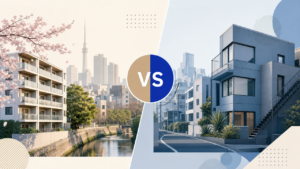
The train line your apartment sits on shapes your daily life more than almost any other single variable — and for ByteDance and TikTok Japan employees, the choice between the Tokyu Toyoko Line and the Tokyu Den-en-toshi Line is one of the most practically significant decisions in your housing search. Both lines connect the Shibuya area to southwestern Tokyo, but they serve different neighborhoods and have different peak-hour characteristics. Our detailed comparison of the Toyoko Line vs. Den-en-toshi Line covers the commuter experience, station character, and neighborhood trade-offs in depth — it’s worth reading before you narrow down your search.
The short version: the Toyoko Line serves Nakameguro, Jiyugaoka, and Musashi-Koyama, with a more boutique residential character and direct access to Shibuya in 4–8 minutes depending on your station. The Den-en-toshi Line serves Sangenjaya, Sangen-jaya, and further-out Setagaya neighborhoods, runs through Shibuya in one stop from Sangen-jaya, and tends to be significantly more crowded during peak hours due to its longer suburban catchment. Both are excellent lines; which suits you better depends on where along the line you plan to live.
English-Language Services That Actually Matter

The phrase “English-friendly” is applied loosely to Tokyo neighborhoods, and it’s worth being specific about what it actually means in practice for a ByteDance or TikTok Japan employee building a life here. There are roughly four categories of English-language support that make a measurable difference in daily functioning: real estate, medical, grocery, and banking.
English-Friendly Real Estate Support
Working with a bilingual real estate agent is not a luxury — it is a functional necessity for most foreign nationals entering the Tokyo rental market. Japanese lease contracts are dense legal documents, and the standard explanation sessions (jūyō jikō setsumei, 重要事項説明) are conducted in Japanese. An agent who can explain the key clauses in English — particularly around move-out conditions, repair liability, and the contract’s lock-in period — protects you from expensive surprises at the end of your tenancy.
Balleggs Global is a Tokyo-based real estate consulting service that specializes in exactly this situation. The company has operated as a real estate consulting firm for 25 years, and its bilingual consultants work specifically with foreign residents navigating the central Tokyo rental market. Unlike general listing portals, Balleggs Global provides end-to-end consulting support — from neighborhood selection through contract review — with English communication throughout. For ByteDance and TikTok Japan employees who need to find housing efficiently and confidently, that kind of guided support is meaningfully different from browsing a Japanese-language listings site.
- Need English-speaking consultants to guide them through Tokyo’s rental contract process from start to finish
- Want access to vetted, foreign-national-friendly landlords in Meguro, Shibuya, and Minato wards
- Are relocating on a compressed timeline and cannot afford to restart a search after a rejection
About the 25-year consulting track record
English-Friendly Medical, Grocery, and Daily Life
Hiroo and Minami-Azabu have the highest concentration of English-language medical clinics in the Jōnan area — the International Clinic on Hiroo and several others in the Azabu–Roppongi corridor are well established within the expat community. Nakameguro and Daikanyama are served by a growing number of multilingual GP clinics. Meguro and Gotanda are slightly less dense in English-language medical options but remain very accessible by train to Hiroo-area clinics.
For everyday grocery shopping, the Hiroo area’s National Azabu Supermarket is the most comprehensive English-friendly option. Meidi-ya in Hiroo and the Whole Foods–style selection at Natural Lawson premium stores are also useful. Throughout the Jōnan area, standard Japanese supermarkets (Maruetsu, Tokyu Store, Life) are excellent in quality and selection — they simply require basic kanji literacy or a translation app for packaged goods. Most ByteDance and TikTok Japan employees find this manageable within a few weeks of arrival. For a broader look at lifestyle options in the area, our overview of central Tokyo neighborhoods by lifestyle and budget provides a useful comparison framework.
Internet Setup, Banking, and Administrative Realities
Setting up home internet in a Tokyo apartment is genuinely more complicated than in most global cities, and it’s worth planning for it explicitly. Most Tokyo apartments require a separate fiber optic contract (hikari, 光) through a provider like NTT, Softbank, or au Hikari, with the building’s existing infrastructure determining which providers are available. Setup typically takes 2–4 weeks from application to installation, which means initiating the process the moment you have a confirmed move-in date. Pocket WiFi rental is a useful bridge during this gap. We’ve written a detailed breakdown of the complete process for foreign nationals renting in Tokyo that covers internet setup alongside the other administrative steps.
Japanese banking for foreign nationals has improved significantly since 2020. Sony Bank and Rakuten Bank offer English-language interfaces and online-only account opening that doesn’t require a physical branch visit. Japan Post Bank (ゆうちょ銀行) remains one of the most accessible options for newly arrived expats before they have a permanent address confirmed. ByteDance and TikTok Japan HR departments typically provide guidance on salary payment accounts — check whether your company has a preferred banking partner for foreign employee onboarding.
Making the Right Choice for Your First Year in Tokyo
Choosing where to live as a ByteDance or TikTok Japan employee in Tokyo comes down to honest prioritization across four variables: commute time, rent budget, English-language service density, and neighborhood character. There is no objectively correct answer, but there are common patterns among tech expats who report high satisfaction with their first-year housing decisions.
Single employees or couples without children who can stretch to Nakameguro or Daikanyama prices tend to value the direct Hibiya Line commute and the vibrant walking neighborhood. Those watching their budget more carefully — or actively trying to build Japanese language skills — often find Sangenjaya or the Meguro–Gotanda corridor provides a better balance of commute viability and lower rent. Families or senior employees with housing allowances frequently gravitate toward Hiroo and Minami-Azabu, accepting the premium in exchange for maximum English-language infrastructure density.
What almost universally separates smooth relocations from stressful ones is starting the housing search early and working with English-speaking support from the beginning. The Tokyo rental market moves quickly, landlord acceptance of foreign nationals varies, and the contract process requires careful review of Japanese-language documents. If you’re preparing to relocate for ByteDance or TikTok Japan, engaging a bilingual real estate consultant before you land — not after — is the single most effective thing you can do to reduce friction in your first weeks in Tokyo.
Living in Jonan is designed specifically for this reader: foreign professionals working in and around Shibuya and the broader Jōnan area who need practical, English-language guidance on where to live and how to navigate Tokyo’s housing market. If you’d like to explore your options in more detail, the 5 walkable Tokyo neighborhoods for tech workers is a good companion read.
Frequently Asked Questions
How long before my start date should I begin searching for an apartment in Tokyo?
Ideally, start your search 6–8 weeks before your intended move-in date. Most Tokyo landlords will not hold a property for more than 2–3 weeks between application approval and contract signing, so beginning too early can mean the units you liked disappear before you’re ready to commit. Starting too late — fewer than 3 weeks out — risks arriving in Tokyo without confirmed housing. If you’re relocating internationally, engaging an English-speaking agent before you land lets you conduct virtual viewings and begin the paperwork process remotely.
Do I need a Japanese guarantor to rent an apartment as a foreign national?
Not necessarily. Most landlords who accept foreign tenants in 2026 work with institutional guarantor companies (hoshougaisha) as an alternative to a personal Japanese guarantor. These companies charge a fee — typically 0.5 to 1.0 month’s rent upfront plus an annual renewal fee — and take on the guarantor role after screening the applicant. Your employer’s employment letter and pay stubs are the key documents they evaluate. Some landlords in very popular neighborhoods still prefer Japanese guarantors, which is one reason working with an experienced bilingual agent who knows which landlords are genuinely foreign-national-friendly saves significant time.
Is the Akasaka/Roppongi area itself a good place to live, or is it better to commute from a residential neighborhood?
Akasaka and Roppongi are viable places to live, but most tech expats find that the commercial and nightlife concentration makes them less suitable as long-term residential bases than the surrounding Jōnan neighborhoods. Rent in Akasaka and Roppongi-area Minato Ward is also high relative to what you get in terms of residential amenities. The consensus among experienced Tokyo expats tends to be: live in a quieter residential neighborhood with good rail access — Nakameguro, Daikanyama, Meguro — and commute into the Akasaka–Roppongi office in 10–20 minutes. The quality-of-life difference between your commute time options is manageable; the difference in residential character is substantial.
What documents do I need to apply for a rental apartment in Tokyo as a foreign national?
The standard document set for a foreign national rental application in Tokyo includes: a valid passport, your residence card (zairyu card, 在留カード) or proof of pending application, an employment letter from ByteDance or TikTok Japan confirming your position and salary, recent bank statements (typically 2–3 months), and a completed application form from the real estate agent. Some landlords or guarantor companies request additional documentation such as a certificate of residence (jūminhyo, 住民票) — which you can only obtain after registering your address at your local ward office, creating a chicken-and-egg situation that a good bilingual agent will know how to navigate.
Are there English-language coworking spaces near the recommended neighborhoods for days when I work from home or need a change of environment?
Yes — the Jōnan area has a strong and growing selection of English-friendly coworking cafés and formal coworking spaces, particularly in and around Nakameguro, Daikanyama, Ebisu, and the Shibuya hub. Our guide to English-friendly coworking cafés in Tokyo’s Jōnan area covers the specific options with practical details on WiFi speed, noise levels, and membership options. For ByteDance and TikTok Japan employees on hybrid schedules, having two or three reliable remote work spots in your neighborhood significantly improves work-from-home days.