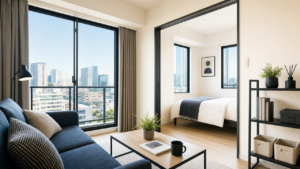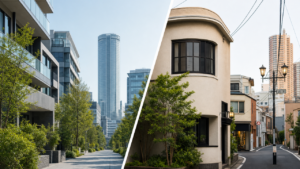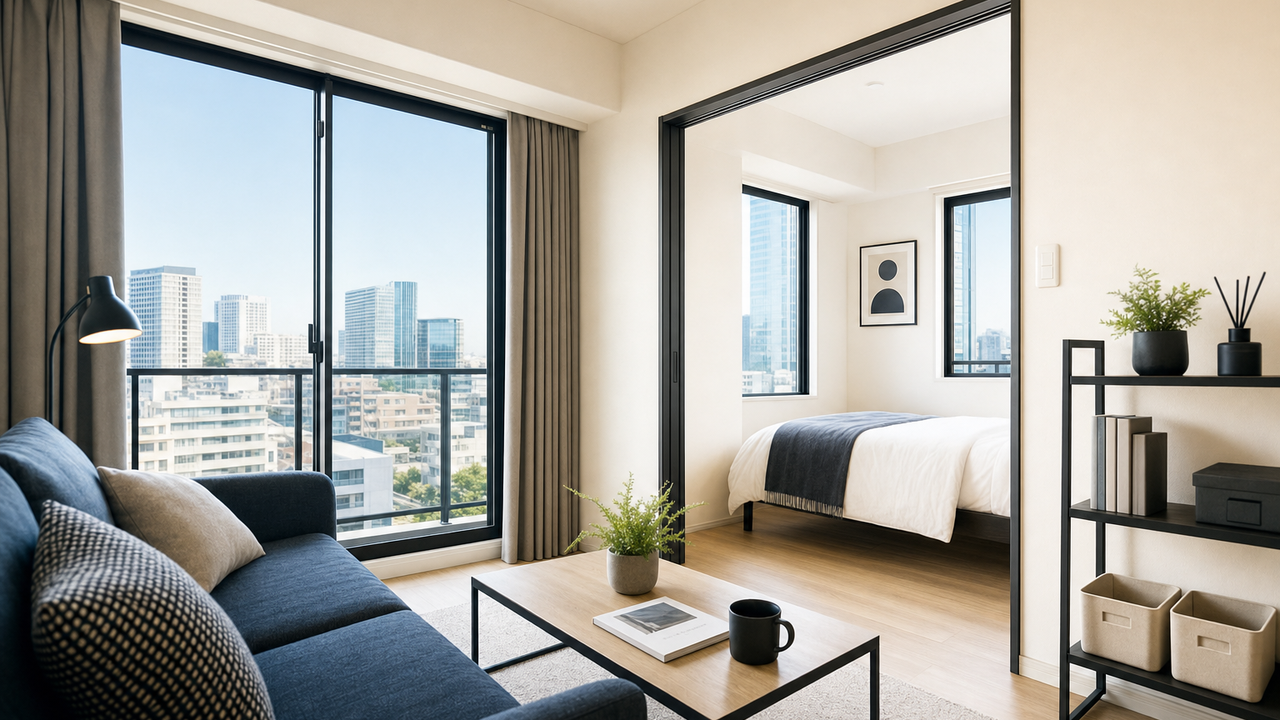
If you’ve been Googling Tokyo neighborhoods as an expat professional working near Shibuya, you’ve almost certainly hit the same wall: vague advice that says “Shibuya is expensive” without ever telling you how expensive, or what your alternatives actually cost. For foreign professionals earning competitive salaries at companies like Google Japan, ByteDance, or Shibuya-based startups, the real question isn’t whether Shibuya is expensive — it’s whether the premium is worth it, and what smarter options exist within commuting range.
This article cuts through the noise with real 2026 rent data, a ward-by-ward breakdown of what expat professionals actually pay in central Tokyo, and a honest comparison of Shibuya against the Jonan-area neighborhoods that offer equivalent lifestyle quality at meaningfully lower cost. Whether you’re relocating to Tokyo for the first time or reconsidering your current setup, the numbers here will give you a real decision-making framework.
Who this article is for
- Foreign professionals in their 20s–40s working around Shibuya who need English-supported housing guidance
- Expats earning ¥10M+ annually who want to understand whether paying Shibuya-level rent makes financial sense
- Relocating professionals who have heard the Jonan area mentioned but aren’t sure how it compares to living in Shibuya itself
What you’ll learn
- Real 2026 rent ranges for Shibuya-ku and comparable Jonan-area wards, broken down by unit type
- The hidden upfront costs that catch most expats off guard when renting in Tokyo
- Which neighborhoods offer the best lifestyle-to-cost ratio for Shibuya commuters
Shibuya’s Reputation vs. Reality: What Expats Actually Pay

Shibuya’s reputation as one of Tokyo’s most expensive residential addresses is not entirely wrong — but it is heavily oversimplified. The ward contains dramatic variation in rent depending on the specific sub-neighborhood, floor plan, and building age. Understanding the actual data is the first step toward making a rational housing decision.
What “Shibuya” Actually Means for Rent Purposes
Shibuya-ku — the administrative ward — is not the same as Shibuya Station. The ward spans from the high-end pockets around Daikanyama and Hiroo all the way to more accessible areas like Yoyogi and Hatagaya. A 1LDK apartment in Daikanyama will routinely list at ¥220,000–¥280,000 per month, while a similarly sized unit near Yoyogi-Uehara or Hatagaya can come in at ¥160,000–¥190,000. The “Shibuya is expensive” generalization collapses the moment you look at specific neighborhoods within the ward.
That said, even the lower end of Shibuya-ku pricing is notably above the Tokyo metropolitan average. For a single professional or a couple without children — the core demographic for most expat professionals working in the area — a comfortable 1LDK in a reasonably modern building will typically start around ¥170,000 per month in most sub-neighborhoods of the ward. Below that threshold, the available inventory narrows considerably.
The Perception Gap: What Expats Expect vs. What They Find
Many expat professionals relocating to Tokyo arrive with a mental budget anchored to what they paid in London, New York, or Singapore — and are either relieved or surprised by Tokyo’s pricing depending on their point of reference. Compared to Zone 1 London or Manhattan, Shibuya-ku pricing is competitive. Compared to, say, Berlin or Taipei, it is significantly higher. The important benchmark, however, is not the city you came from — it’s what comparable quality and convenience costs in the alternative Tokyo neighborhoods you could actually commute from.
The meaningful comparison is not “Shibuya vs. my last city.” It is “Shibuya vs. Nakameguro, Gotanda, or Jiyugaoka” — neighborhoods where a Shibuya commute stays under 20 minutes, lifestyle quality remains high, and monthly rent can be ¥30,000–¥60,000 lower for an equivalent unit.
Studio vs. 1LDK vs. 2LDK: How Rent Scales in Shibuya-ku
Unit size has a predictable and significant effect on rent. For expat professionals considering different household configurations, here is how pricing generally scales within Shibuya-ku based on publicly listed properties as of 2026. These figures represent a general range for reasonably modern buildings (post-2000 construction) in accessible sub-neighborhoods of the ward.
| Unit Type | Floor Area (approx.) | Typical Rent Range (Shibuya-ku) | Typical Tenant Profile |
|---|---|---|---|
| 1K / Studio | 25–35 sqm | ¥110,000–¥160,000/mo | Single professional, new arrival |
| 1LDK | 40–55 sqm | ¥170,000–¥260,000/mo | Single professional wanting workspace, or couple |
| 2LDK | 60–80 sqm | ¥260,000–¥380,000/mo | Couple, or professional needing home office |
| 3LDK+ | 80 sqm+ | ¥380,000+/mo | Family or high-budget executive rental |
The Hidden Costs Expats Don’t Know About
Monthly rent is only one component of what you will actually spend when renting in Tokyo. The Japanese rental system includes several upfront charges that have no direct equivalent in most Western countries — and for expat professionals budgeting a relocation, these costs can add up to three to six months’ worth of rent before you ever spend a night in the apartment.
Key Money (Reikin): The Charge That Still Exists
Reikin, or “key money,” is a non-refundable payment made to the landlord at the time of signing. Historically it represented a gift of gratitude — in practice, it is simply additional income for the property owner. While its prevalence has declined in recent years, it remains common in premium Tokyo neighborhoods, including parts of Shibuya-ku, Minato-ku, and Meguro-ku. Reikin is typically set at one to two months’ rent. On a ¥200,000/month apartment, that means ¥200,000–¥400,000 paid upfront with no return on move-out.
Not all properties require reikin. Properties listed as “reikin nashi” (no key money) exist across all price tiers and are worth specifically filtering for, particularly if you expect to stay fewer than three years. Bilingual real estate consultants who understand your budget horizon can help you identify inventory where this cost is waived without sacrificing location or building quality.
Security Deposit (Shikikin) and Agency Fees
In addition to reikin, most Tokyo rentals require a security deposit (shikikin) of one to two months’ rent, held against potential damage or cleaning costs at move-out. Unlike in some markets, the return of shikikin in Japan is subject to specific guidelines under the Ministry of Land, Infrastructure, Transport and Tourism’s landlord-tenant guidelines — but enforcement depends heavily on the individual landlord and management company. Disputes over shikikin deductions are among the most common friction points for expat renters, especially those who are unaware of their rights under Japanese law.
On top of that, real estate agency fees (chukai tesuryo) in Japan are legally capped at one month’s rent — but this fee is paid by the renter, not the landlord, in most cases. Add a guarantor company fee (hoshonin daiko), which typically costs half a month’s rent upfront plus an annual renewal fee, and the total upfront cost structure for a ¥200,000/month apartment in Shibuya-ku looks roughly like this:
| Cost Item | Typical Amount | Refundable? | Notes |
|---|---|---|---|
| First month’s rent | ¥200,000 | N/A | Prorated if mid-month move-in |
| Security deposit (shikikin) | ¥200,000–¥400,000 | Partially | Subject to deductions at move-out |
| Key money (reikin) | ¥0–¥400,000 | No | Not all properties charge this |
| Agency fee (chukai tesuryo) | ¥200,000 | No | Legally capped at 1 month |
| Guarantor company fee | ¥100,000 | No | Required by most landlords for foreign nationals |
| Estimated total upfront | ¥700,000–¥1,300,000 | Partial | Varies by property and negotiation |
Renewal Fees and Annual Hidden Costs
Tokyo leases are typically two-year contracts. At each renewal, tenants are commonly charged a renewal fee (koshinryo) of one month’s rent, plus a renewal fee to the guarantor company. On a ¥200,000/month apartment, that means approximately ¥200,000–¥300,000 every two years in renewal costs alone — a figure rarely factored into expat housing budgets. Some landlords are open to negotiating renewal fees, particularly when dealing through a trusted intermediary or bilingual consultant, but this is not universally guaranteed.
- Budgeting only first month’s rent — overlook shikikin, reikin, and fees that can add up to 5–6x monthly rent upfront
- Assuming key money is negotiable on all properties — some landlords in premium areas treat it as non-negotiable
- Not accounting for renewal fees when calculating 2-year total housing cost
- Signing a lease without understanding the move-out cleaning clause, which can lead to shikikin disputes
- Using a Japanese-only agency where critical contract terms go unexplained due to language barriers
2026 Shibuya Rent Data: Ward-by-Ward Breakdown
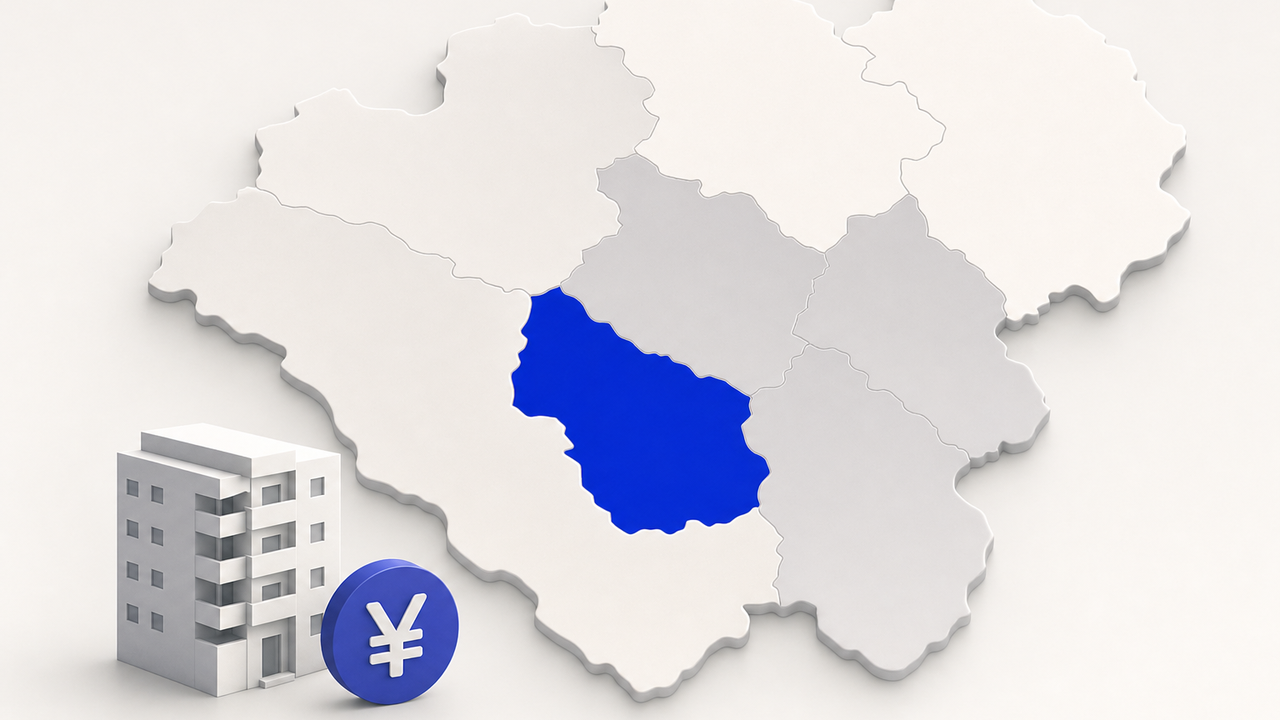
To make a genuinely informed decision about where to live, you need comparative data across the wards that realistically serve Shibuya-based workers. The six Jonan-area wards — Shibuya, Meguro, Setagaya, Minato, Shinagawa, and Ota — each offer meaningfully different rent levels and lifestyle profiles. Below is a consolidated snapshot based on general market data as of 2026.
[[CHIPPER_SVG:type=bar_chart,{“title”:”Average Monthly Rent for 1LDK by Ward — Jonan Area (2026)”,”unit”:”万円”,”bars”:[{“label”:”Minato-ku”,”value”:26,”highlight”:false},{“label”:”Shibuya-ku”,”value”:22,”highlight”:true},{“label”:”Meguro-ku”,”value”:18,”highlight”:false},{“label”:”Shinagawa-ku”,”value”:15,”highlight”:false},{“label”:”Setagaya-ku”,”value”:15,”highlight”:false},{“label”:”Ota-ku”,”value”:13,”highlight”:false}],”note”:”General mid-range estimates for modern 1LDK units. Individual properties vary. Source: general market observation, 2026.”}]]Shibuya-ku: Premium Address, Premium Price
Shibuya-ku commands a premium that goes beyond rent itself — you are paying for immediate access to one of Tokyo’s densest concentrations of amenities, dining, transportation, and cultural life. For expat professionals whose company is covering housing costs or providing a generous relocation allowance, the convenience argument is strong. The ward’s central sub-neighborhoods — Daikanyama, Ebisu, Hiroo, Tomigaya — are internationally recognized for their walkable lifestyle, English-friendly restaurants and cafes, and proximity to embassies and international schools.
The realistic 1LDK price range within the ward is approximately ¥170,000 to ¥260,000 per month for a modern unit in a desirable sub-neighborhood. Below ¥170,000 in Shibuya-ku, available inventory tends to be older buildings or less convenient locations within the ward. If your budget comfortably accommodates ¥200,000+ per month for a 1LDK, and you highly value living within walking or short cycling distance of your office, Shibuya-ku makes practical sense.
Meguro-ku: The Quality Sweet Spot for Expat Professionals
Meguro-ku consistently appears near the top of quality-of-life rankings for expat professionals in Tokyo — and the rent data explains why it functions as the primary alternative to Shibuya-ku for this demographic. A modern 1LDK in neighborhoods like Nakameguro, Yutenji, or Jiyugaoka typically runs ¥140,000 to ¥220,000 per month, with the most desirable areas (Nakameguro riverfront, Nishi-Meguro) sitting in the ¥170,000–¥220,000 range.
Commute times from Meguro-ku to Shibuya Station are generally 10–20 minutes depending on the specific neighborhood, using the Tokyu Toyoko Line, Tokyu Den-en-toshi Line, or Tokyo Metro Hibiya Line. The ward has a well-established expat community, a strong concentration of English-friendly services, and a noticeably quieter, more residential character than Shibuya itself — which many professionals find preferable once past the initial relocation novelty.
If you are comparing Nakameguro as a place to live against living in Shibuya proper, the rent differential on a 1LDK can reach ¥40,000–¥60,000 per month — roughly ¥480,000–¥720,000 per year — for comparable quality and building age.
Setagaya-ku and Shinagawa-ku: Volume, Value, and Variety
Setagaya-ku is Tokyo’s most populous ward and offers the largest volume of rental inventory, which generally keeps prices competitive. For a 1LDK in modern buildings along the Tokyu lines — particularly Sangenjaya, Ikejiri-Ohashi, or Yoga — expect ¥130,000 to ¥190,000 per month. Sangenjaya in particular has a strong, well-established expat community and excellent Shibuya access (approximately 5–8 minutes on the Den-en-toshi Line), making it arguably the most cost-efficient high-quality option for Shibuya commuters. For a deeper look at how to navigate these train lines, this comparison of the Toyoko Line vs. Den-en-toshi Line is worth reading before deciding on a neighborhood.
Shinagawa-ku, positioned between Shibuya and Yokohama, has historically been associated more with business travelers and transit than with long-term expat residential life. However, areas like Gotanda and Osaki have seen significant residential development and offer 1LDK units in the ¥130,000 to ¥180,000 range. Gotanda in particular is worth considering for professionals who commute to both Shibuya and Shinagawa, as it sits on the Yamanote Line and provides exceptional multi-directional connectivity.
Shibuya vs. Alternatives: Where to Actually Save Money

The real decision framework for an expat professional isn’t “is Shibuya expensive?” — it’s “what do I gain and give up at each price point?” This section maps out the most realistic Shibuya-area alternatives with specific commute data, lifestyle trade-offs, and rent differentials.
Head-to-Head Comparison: Shibuya vs. Key Jonan Neighborhoods
| Neighborhood / Ward | 1LDK Rent Range | Commute to Shibuya | English-Friendly Services | Lifestyle Character |
|---|---|---|---|---|
| Daikanyama / Ebisu (Shibuya-ku) | ¥210,000–¥280,000 | Walking / 5 min | Very high | High-end, boutique, international |
| Nakameguro (Meguro-ku) | ¥170,000–¥220,000 | 10–14 min (Tokyu Toyoko) | High | Trendy, walkable, riverside |
| Jiyugaoka (Meguro-ku) | ¥145,000–¥195,000 | 15–22 min (Tokyu Toyoko) | Moderate–high | Quiet, upscale, European café culture |
| Sangenjaya (Setagaya-ku) | ¥130,000–¥175,000 | 5–8 min (Tokyu Den-en-toshi) | Moderate | Lively, creative, young professional |
| Gotanda (Shinagawa-ku) | ¥130,000–¥180,000 | 12–18 min (Yamanote Line) | Moderate | Convenient, business-oriented, up-and-coming |
| Jiyugaoka / Yukigaya (Ota-ku) | ¥110,000–¥160,000 | 20–30 min (Tokyu lines) | Moderate | Residential, family-friendly, quiet |
The Real Savings Calculation: Shibuya Premium Over Two Years
To make the rent differential concrete, consider a 24-month lease comparison between a 1LDK in Daikanyama (Shibuya-ku) and a comparable unit in Nakameguro (Meguro-ku). Assume a rent gap of ¥50,000 per month — a conservative estimate based on available listings for modern buildings in equivalent condition.
Over 24 months, the rent differential alone is ¥1,200,000. Add the typically higher upfront costs in Shibuya-ku (reikin more common, security deposits proportionally larger), and the two-year total cost gap between the two options can reach ¥1,500,000–¥2,000,000 — roughly the equivalent of one to two months of take-home pay for a professional earning ¥10M+ annually. Whether that premium buys something you genuinely value daily is the real question worth answering before committing.
When Living in Shibuya-ku Actually Makes Sense
Despite the cost premium, there are legitimate cases where living directly in Shibuya-ku is the rational choice. If your company’s office is in the immediate Shibuya Station area and you work long hours or frequently return late at night, the time and energy saved by a sub-10-minute walk home has real value. If your lifestyle heavily involves the specific dining, entertainment, and fitness facilities concentrated in Daikanyama, Hiroo, or Ebisu, proximity multiplies convenience in ways that are hard to replicate from Nakameguro or Sangenjaya. And if your employer provides a housing allowance that brings your effective out-of-pocket cost to the same level regardless of address, the premium effectively disappears.
| Living in Shibuya-ku: Pros | Living in Shibuya-ku: Cons |
|---|---|
|
|
How to Find the Right Fit: Practical Guidance for Expat Renters
Knowing the numbers is necessary — but actually navigating Tokyo’s rental market as a foreign national requires more than data. The practical mechanics of searching, applying, and signing a lease in Japan involve language barriers, documentation requirements, and landlord preferences that catch most expat first-timers off guard.
Why the Standard Rental Search Process Is Harder for Foreign Nationals
Japan’s rental market relies heavily on a guarantor (hoshounin) system that was originally designed around having a Japanese personal guarantor. While corporate guarantor companies have largely replaced personal guarantors in practice, foreign nationals without a permanent residence card or established Japanese credit history are still screened more strictly by many landlords. Some landlords explicitly restrict rentals to Japanese citizens or permanent residents — a fact that is rarely disclosed upfront in listings, but becomes apparent only when the application is rejected.
The language barrier compounds this problem significantly. Most landlords, management companies, and real estate portals operate exclusively in Japanese. Contracts are written in Japanese. Move-out cleaning clauses — which determine whether you get your shikikin back — are in Japanese. Negotiating on key money, lock-in periods, or appliance inclusions requires fluent Japanese or an intermediary who can do it on your behalf. For expat professionals who speak little or no Japanese, navigating this system without bilingual support is both time-consuming and financially risky.
Using a Bilingual Consultant vs. a Standard Agency
There is a material difference between working with a standard Japanese real estate agency that happens to have one English-speaking staff member, and working with a bilingual consultant who specifically specializes in foreign national clients. The latter understands which landlords are genuinely foreign-national-friendly (not just listed as such), can negotiate in Japanese on your behalf, will explain every line of the contract in plain English, and knows which neighborhoods and property types align with the specific priorities of expat professionals.
For expat professionals in the Jonan area, Balleggs Global is a real estate consulting firm with 25 years of experience in Tokyo’s central rental market, staffed by bilingual consultants who handle the full search and contract process in English. Properties are searchable by area and train line online, and the team’s familiarity with the Jonan area — Meguro, Setagaya, Shibuya, Minato, Shinagawa, and Ota wards — is well-suited to the Shibuya-commuter demographic specifically. For professionals who want to explore what ¥30,000–¥50,000 less per month in rent could look like without sacrificing commute time or lifestyle quality, this kind of specialist guidance is typically faster and less stressful than the DIY approach.
- Expat professionals relocating to Tokyo who need the entire rental process handled in English
- Foreign nationals who have been rejected by Japanese agencies and need a foreign-national-friendly specialist
- Professionals on a timeline who need to secure housing quickly before or shortly after arrival
Timing Your Search and Negotiation Points
Tokyo’s rental market has seasonal rhythms that affect both inventory volume and negotiating leverage. The busiest season — February through April — coincides with Japan’s corporate transfer season (jinji ido). During this period, inventory moves quickly and landlords have less incentive to offer concessions. Searching outside peak season (May–January, with August and September being particularly slow) gives prospective tenants more negotiating room on key money, initial cleaning fees, and occasionally rent itself.
Specific negotiation points that are realistically achievable with the right intermediary include: waiver or reduction of key money (reikin nashi), reduction in initial cleaning fee quoted in the lease, agreement to include air conditioning units in the rent, and fixed-term lease structures that may offer lower rent in exchange for a defined end date. None of these are guaranteed — but all are routinely achieved by experienced bilingual consultants who have ongoing relationships with landlords in the Jonan area.
For a broader perspective on finding walkable, well-connected neighborhoods near Shibuya’s tech hub, this guide to walkable Tokyo neighborhoods for tech workers provides useful context on which sub-areas offer the best day-to-day quality of life for office-based professionals.
Is Shibuya Worth the Premium? Making the Final Decision
The honest answer is: it depends, and the data in this article should give you enough to decide for yourself. Shibuya-ku is genuinely premium-priced — a modern 1LDK in a desirable sub-neighborhood will typically run ¥170,000–¥260,000 per month, with upfront costs that can reach ¥700,000–¥1,300,000. The adjacent Jonan wards offer meaningfully lower rents — often ¥30,000–¥60,000 per month less for equivalent quality — with commute times to Shibuya Station that remain under 20 minutes from most well-connected neighborhoods.
For expat professionals with company housing allowances or genuinely walkable office situations, the Shibuya premium can be justified. For professionals who are funding housing independently and value financial efficiency, Nakameguro, Sangenjaya, Jiyugaoka, or Gotanda represent a compelling value case — especially when you factor the two-year total cost differential, which can exceed ¥1,500,000 compared to a comparable Shibuya-ku lease.
- Foreign nationals who need the full rental process — search, application, contract, and move-in — handled in English
- Expat professionals looking specifically in the Jonan area (Meguro, Setagaya, Shibuya, Minato, Shinagawa, Ota)
- Relocating professionals who want to compare Shibuya against lower-cost alternatives with real bilingual guidance
About Balleggs Global’s 25-year track record
Frequently Asked Questions
Is Shibuya the most expensive ward to rent in Tokyo?
Not necessarily. Minato-ku, which includes neighborhoods like Hiroo, Azabu-Juban, and Roppongi, is generally considered slightly more expensive on average than Shibuya-ku for comparable unit types. Within the Jonan area, Minato-ku and Shibuya-ku tend to sit at the top of the price range, with Meguro-ku, Setagaya-ku, Shinagawa-ku, and Ota-ku offering progressively lower average rents.
Can foreign nationals rent an apartment in Shibuya without a Japanese guarantor?
Yes, most landlords in Tokyo now accept corporate guarantor companies (hoshounin daiko gaisha) in place of a personal Japanese guarantor. However, not all landlords will accept applications from foreign nationals regardless of guarantor company. Working with a bilingual consultant who specifically knows which properties and landlords are foreign-national-friendly can save significant time and reduce the risk of applications being declined during the search process.
How far in advance should I start my Tokyo apartment search before arriving?
For most Tokyo apartments, the practical search window is approximately 1–2 months before your intended move-in date. Listings typically become available 1–2 months before the unit is vacant. Starting too early means the inventory you are looking at will not actually be available when you need it. If you are relocating from overseas, working with a bilingual consultant who can conduct the search and preliminary screenings on your behalf before you arrive is a common and practical approach.
Is key money (reikin) still commonly charged in Tokyo in 2026?
Key money remains common in certain premium neighborhoods, particularly within Shibuya-ku, Minato-ku, and Meguro-ku. That said, a meaningful share of available inventory — even in premium areas — is listed as “reikin nashi” (no key money). Specifically filtering for reikin-free properties and working with a consultant who can negotiate on this point can reduce upfront costs significantly without necessarily limiting your neighborhood options.
What is a realistic monthly rent budget for a 1LDK apartment within 20 minutes of Shibuya Station?
For a modern 1LDK (40–55 sqm, post-2000 construction) within a 20-minute commute to Shibuya Station, a realistic budget in 2026 is approximately ¥140,000–¥220,000 per month depending on which direction and train line you choose. Neighborhoods like Nakameguro, Sangenjaya, and Jiyugaoka fall within this range. If you extend the search to Ota-ku or southern Setagaya-ku, comparable units can come in below ¥150,000 per month, though commute times approach 25–30 minutes.