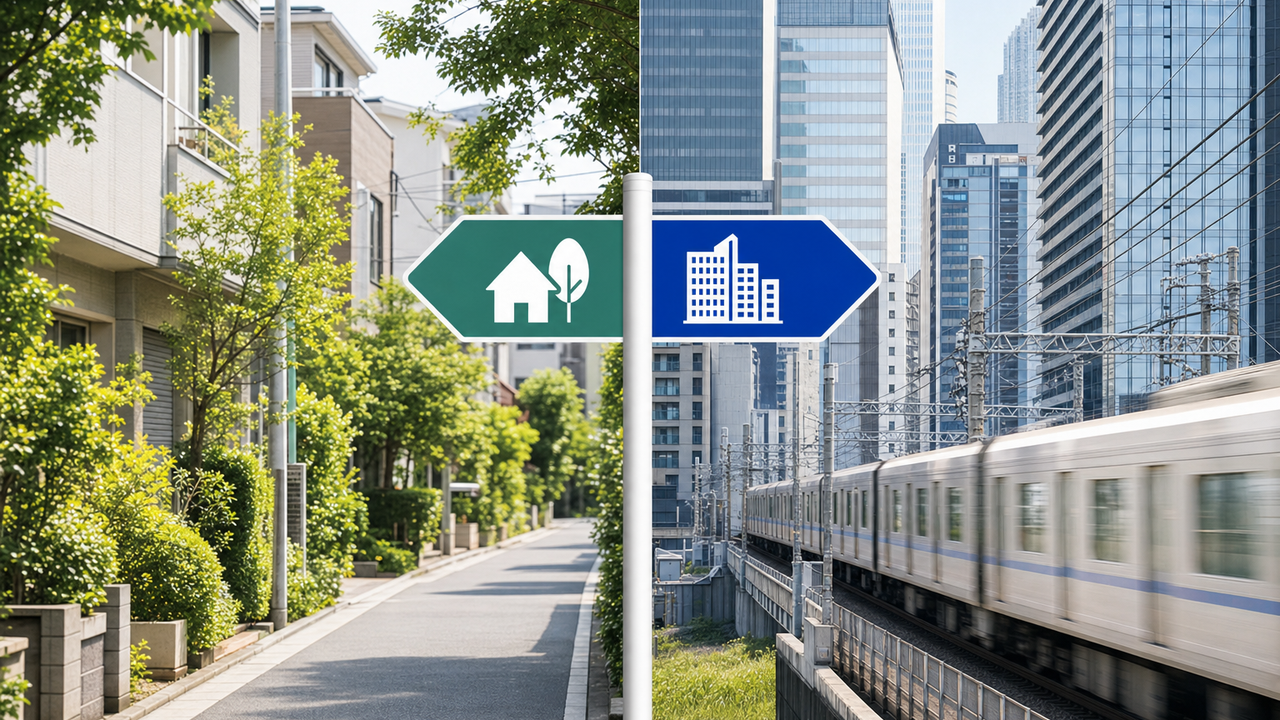
If you’re an expat relocating to Tokyo for work — whether it’s a role at Google, a Shibuya-based startup, or a regional headquarters near Daikanyama — one of the first questions that surfaces is deceptively simple: do I want a quiet neighborhood or a lively one? The honest answer, for most people new to Tokyo, is “I genuinely don’t know yet.” That uncertainty is completely normal, and it’s exactly what this guide is designed to resolve.
South Tokyo’s six wards — Meguro, Setagaya, Shibuya, Minato, Shinagawa, and Ota — span an extraordinary range of residential atmospheres, from the café-lined canal streets of Nakameguro to the deeply residential, almost village-like pockets of Setagaya. Each offers something real and livable. The challenge for expats is that the difference between these neighborhoods only becomes visible once you know what signals to look for — and that’s where local, bilingual guidance genuinely changes the outcome.
Who this article is for
- Expats in their 20s–40s who have accepted a job near Shibuya and are beginning their apartment search
- Foreign professionals who feel uncertain about whether they want an energetic urban neighborhood or a calm residential one
- Anyone comparing South Tokyo neighborhoods and wanting a structured, English-language breakdown before making a decision
What you’ll learn
- The practical difference between “quiet” and “lively” neighborhoods in the South Tokyo context
- A side-by-side comparison of the most relevant expat neighborhoods across both categories
- A lifestyle-based decision framework to help you identify which type genuinely suits your daily routine
What “Quiet” and “Lively” Actually Mean in South Tokyo
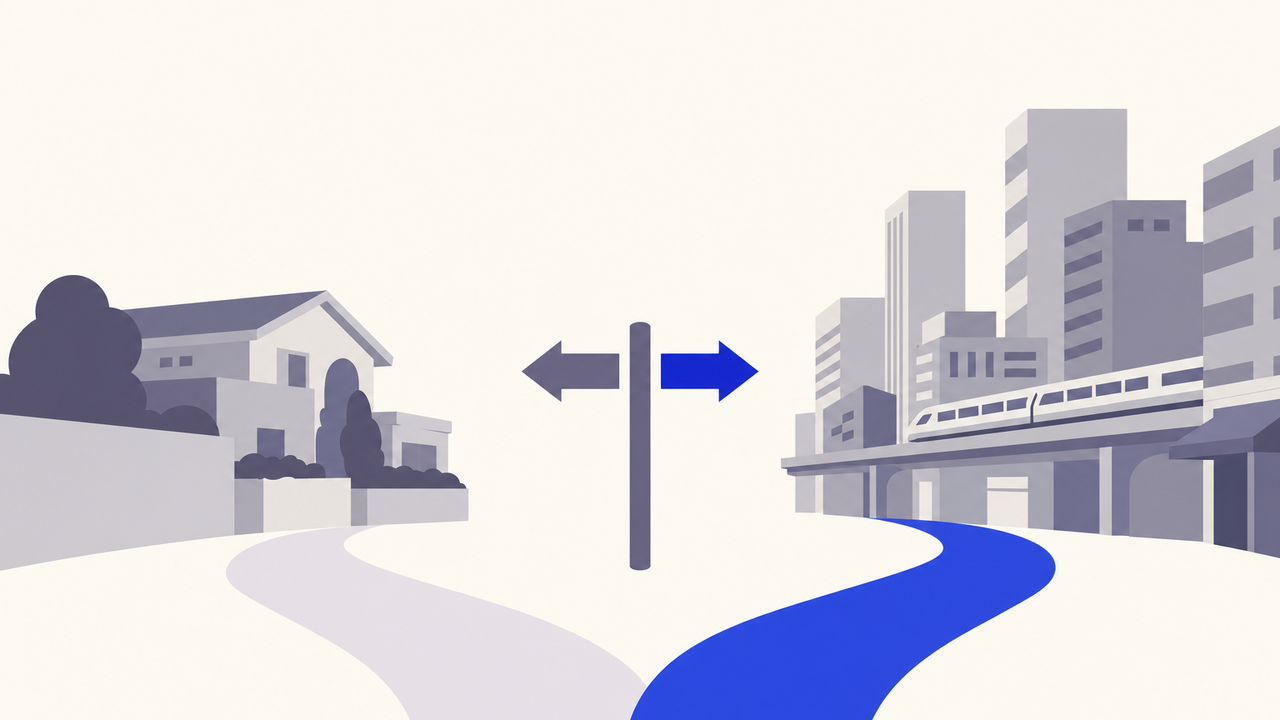
In Tokyo’s residential context, these two words carry more specific meaning than they might in Western cities. Understanding the distinction will save you from choosing a neighborhood based on the wrong criteria.
The Spectrum Is Narrower Than You Think
Even the “liveliest” residential neighborhoods in South Tokyo are not comparable to Manhattan’s Lower East Side or London’s Shoreditch. Tokyo’s urban planning traditions, strict noise ordinances, and deeply embedded cultural norms around residential courtesy mean that even vibrant areas like Nakameguro feel calm by 11pm. The real distinction is daytime and weekend energy — how many people are on the street, how dense the café and restaurant scene is, and whether the area feels like a destination or a place people simply live.
A quiet South Tokyo neighborhood typically features narrow residential backstreets with minimal foot traffic, a local shotengai (shopping street) rather than a branded retail strip, parks that serve the local community rather than attracting visitors, and a strong sense of everyday Japanese neighborhood life. Setagaya-ku’s interior wards — areas like Sangenjaya’s quieter pockets, Yoga, or Futako-Tamagawa — often fit this description.
A lively South Tokyo neighborhood, by contrast, features a recognizable “scene” — specialty coffee shops, wine bars, independent boutiques, weekend markets, or a canal that draws walkers. Nakameguro, Daikanyama, Shimokitazawa, and parts of Nishi-Azabu fall here. These areas have become destinations in themselves, which is both their appeal and their trade-off.
What Changes Between the Two — and What Doesn’t
Commute times to Shibuya are generally comparable across both categories — most South Tokyo neighborhoods sit within 10–25 minutes by train. The differences that matter for daily life include rent levels (lively areas typically command a premium of 10–20% for equivalent floor space, as a general tendency), morning noise levels, the density of English-friendly businesses, and the social texture of your weekends. Neither category is objectively better; they suit different life stages and working styles.
How Expats Typically Misread the Choice
The most common mistake is assuming that a lively neighborhood will feel more international and therefore more comfortable for an expat. In reality, the English-speaking support infrastructure — bilingual agents, international supermarkets, English-speaking clinics — is distributed fairly evenly across South Tokyo. What truly varies is lifestyle fit: whether your ideal Saturday involves walking to a specialty coffee roaster and browsing a bookshop, or cycling to a riverbank park and cooking at home with produce from a neighborhood market. Both are valid. Neither is more “expat-friendly” in any objective sense.
Why Expats Struggle to Choose — and Why That’s Reasonable

The difficulty in choosing between quiet and lively isn’t a sign of indecisiveness. It reflects a genuinely complex decision being made under significant information constraints.
You’re Deciding Before You Know Your Tokyo Routine
Most expats signing a lease in Tokyo are doing so before they’ve experienced a single Tokyo weekday commute, before they know which colleagues they’ll socialize with, and before they’ve discovered which neighborhood’s Saturday morning feels right. This is an inherently forward-looking decision, and the honest reality is that your preferences will evolve within the first three to six months. The goal, then, is not to find the “perfect” neighborhood — it’s to find one whose core characteristics are unlikely to become friction points once your Tokyo routine stabilizes.
Expats who work long hours at demanding tech or finance roles — common profiles in the Shibuya cluster of employers — often initially prioritize a lively, walkable neighborhood for its convenience and energy. After six months, a significant number find themselves gravitating toward quieter areas that provide genuine separation between work and home. This is a well-documented pattern among long-term Tokyo residents, though individual experiences naturally vary.
Tokyo’s Scale Makes Neighborhood Differences Invisible from the Outside
Japan-facing resources in English tend to treat neighborhoods at the ward level — Meguro-ku, Setagaya-ku — when the real variation happens at the chome level, often within a five-minute walk. Nakameguro’s canal-side street and a residential block three streets back are, in practical daily-life terms, two entirely different living experiences at similar price points. Without ground-level local knowledge, it’s extremely difficult to distinguish them from apartment listings alone.
This is one of the core reasons that working with a bilingual agent who knows South Tokyo at street level — rather than relying solely on portal listings — produces materially different outcomes for expats. The ability to say “this apartment is technically in Nakameguro but is actually more like a Yutenji residential block” is not something a listing aggregator can provide.
Rental Barriers Compound the Uncertainty
Japan’s rental market imposes additional friction on foreign nationals: guarantor requirements, key money conventions, documentation in Japanese, and landlord approval processes that can vary significantly by building. These barriers mean that expats often feel pressure to make a decision quickly once a suitable property is found — which further compresses the research window that would normally allow for a more considered neighborhood choice. The combination of information scarcity and time pressure is where well-informed guidance makes the clearest difference.
Quiet Neighborhoods in South Tokyo: What to Expect
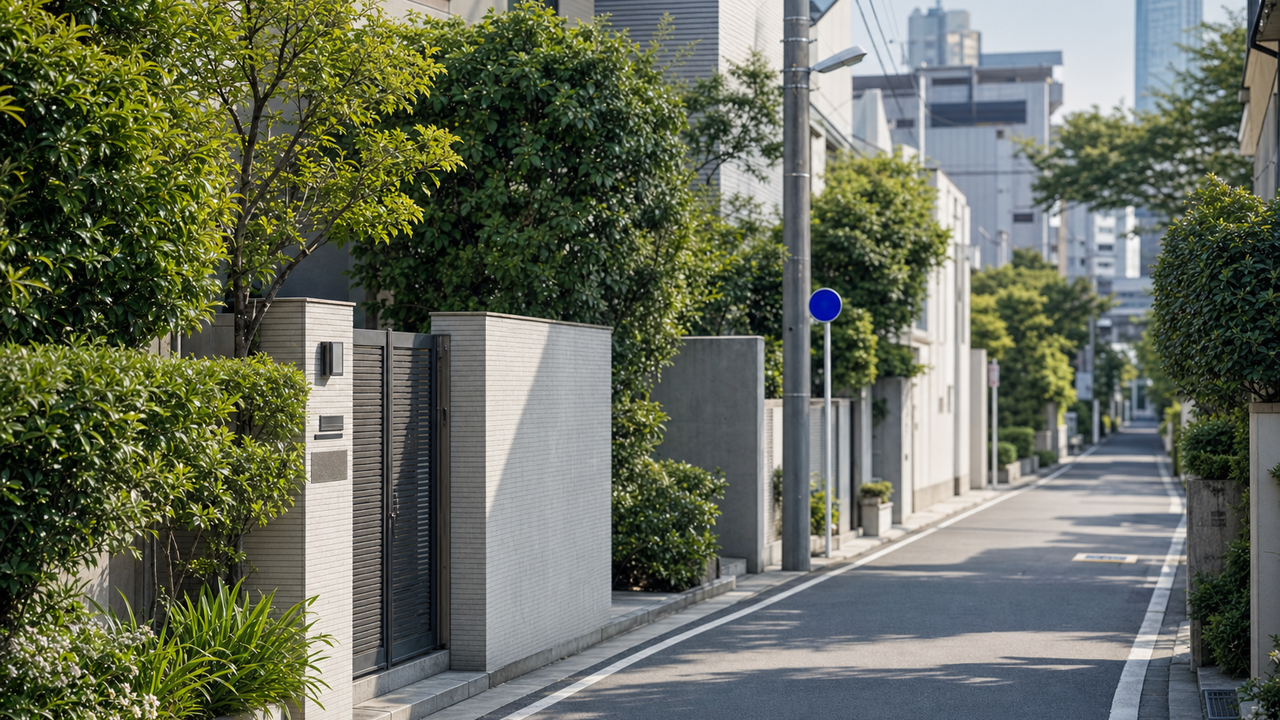
The quieter residential areas of South Tokyo offer a genuinely different quality of daily life — one that many expats come to value deeply, even if it wasn’t their initial preference.
Setagaya’s Interior: Yoga, Futako-Tamagawa, and Sangenjaya’s Back Streets
Setagaya-ku is Tokyo’s most populous ward, and its interior stretches — away from the main Tokyu lines’ commercial hubs — represent some of the most livable residential territory in the city. Yoga and Futako-Tamagawa both offer direct access to Shibuya via the Den-en-toshi Line (approximately 15–25 minutes), alongside genuinely quiet residential streets, proximity to the Tamagawa riverbank cycling path, and well-developed local retail that serves residents rather than visitors.
Futako-Tamagawa in particular has attracted considerable interest from expat professionals in recent years, partly because its riverside commercial development (the Futako-Tamagawa Rise complex) includes an international supermarket, English-friendly restaurants, and a scale of retail that makes weekly life convenient without generating the foot traffic density of a destination neighborhood. Weekend mornings here tend to involve cycling families and dog walkers rather than brunch queues.
Sangenjaya — often called “Sangen-jaya” or simply “Sanjō” by locals — occupies a middle position. Its main shopping streets around the station are genuinely lively, but a five-minute walk in almost any direction delivers quiet residential blocks that feel removed from the commercial centre. For expats who want occasional access to Sangenjaya’s bar and live-music scene without living in it, the surrounding residential streets represent a considered compromise. See our Tokyo neighborhood comparison guide for a broader breakdown of this ward’s internal variation.
| Pros of Quiet South Tokyo Neighborhoods | Cons of Quiet South Tokyo Neighborhoods |
|---|---|
|
|
Gotanda and Togoshi: The Shinagawa-ku Residential Option
Gotanda is frequently underestimated by expats who encounter it primarily as a transit point on the Yamanote Line. Its residential streets west of the station — particularly toward Togoshi and Nakanobu — offer a calm, deeply local atmosphere that is rare this close to central Tokyo. Rents in this area tend to be more moderate than comparable Meguro-ku addresses, partly because the neighborhood lacks the brand cachet of areas further north. For a thorough breakdown, our Gotanda living guide covers the practical details in full.
Togoshi Ginza — Japan’s longest shopping street — runs through this area and provides a remarkable cross-section of everyday Japanese neighborhood retail: fishmongers, tofu shops, hardware stores, and family restaurants that have operated for decades. It is the opposite of a curated lifestyle destination, which is precisely its appeal for expats seeking genuine neighborhood immersion rather than a Tokyo-as-backdrop experience.
What “Quiet” Means for Your Daily Commute and Weekend Life
In practical terms, living in a quieter South Tokyo neighborhood typically means a train commute of 15–30 minutes to Shibuya that involves a seat, rather than standing in a compressed carriage. It means weekends that are structurally self-directed — you choose when to seek out activity, rather than having activity ambient around you. It means knowing your local konbini staff by face within a month. For expats with partners or those who have found their Tokyo social group, this mode of living is frequently described as deeply satisfying. For recently arrived singles who are still building their network, it can feel quieter than desired in the first few months.
Lively Neighborhoods in South Tokyo: What to Expect
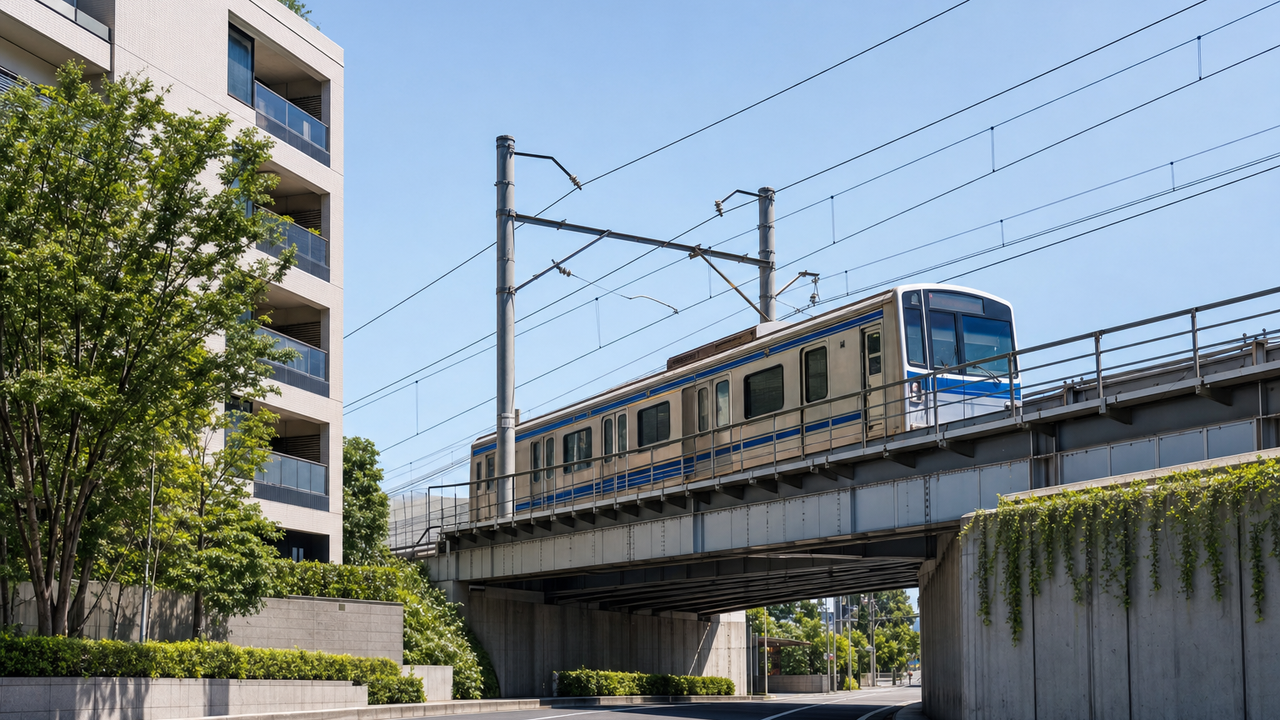
The liveliest residential neighborhoods in South Tokyo have earned international recognition — and for good reason. They offer a genuinely distinctive urban atmosphere that is difficult to replicate in most other cities.
Nakameguro and Daikanyama: The Benchmark for Expat Livability
Nakameguro’s canal-side street — the Meguro River — is probably the most photographed residential streetscape in Tokyo. It is also, genuinely, an exceptional place to live for the right profile of expat. The concentration of specialty coffee, independent retail, and international-quality restaurants within walking distance of residential apartments is unusual even by Tokyo standards. The Tokyu Toyoko Line provides a direct 10–12 minute journey to Shibuya, making the commute one of the most straightforward in South Tokyo.
Daikanyama, immediately adjacent, is smaller and arguably even more curated — its low-rise streets, Tsutaya Books complex, and fashion boutiques create an atmosphere that feels closer to a well-designed European residential neighborhood than to a conventional Tokyo commercial district. Both neighborhoods command rent premiums that reflect their desirability. For expats whose primary concern is quality of life within walking distance of home, and for whom the rent difference is manageable on a Tokyo tech salary, these areas consistently deliver on their reputation. Our detailed Nakameguro living guide covers current rents, transport options, and practical rental tips.
Shimokitazawa: Creative Energy at a Different Rhythm
Shimokitazawa operates on a different frequency from Nakameguro and Daikanyama. Its identity is built around live music venues, vintage clothing, theatre, independent coffee shops, and a creative community that has maintained its character despite significant redevelopment following the completion of the underground Odakyu Line routing. For expats in creative industries — design, media, gaming, film — Shimokitazawa can feel like a natural social home in a way that more polished neighborhoods do not.
The practical trade-off is that Shimokitazawa’s connection to Shibuya requires either the Keio Inokashira Line (direct to Shibuya, approximately 7 minutes) or the Odakyu Line with a transfer. Neither is onerous. Apartments in Shimokitazawa skew toward older stock with more character and irregular layouts — which appeals to some expats and frustrates others. The neighborhood is notably walkable internally, and its weekend atmosphere — particularly around the market streets north of the station — is among the most enjoyable in South Tokyo.
Ebisu and the Meguro Station Area: A Middle Ground
Ebisu and the streets surrounding Meguro Station occupy an interesting middle position. Both have genuine energy — Ebisu’s beer-hall heritage and Yebisu Garden Place complex give it a distinct identity, while Meguro’s restaurant strip is among the most consistently good in South Tokyo — without the full visitor-destination quality of Nakameguro. Rents in this corridor reflect their convenience rather than a full premium, making them worth serious consideration for expats who want urban amenity without committing fully to Nakameguro prices. The Toyoko and Meguro lines provide direct access to Shibuya in under 10 minutes.
| Pros of Lively South Tokyo Neighborhoods | Cons of Lively South Tokyo Neighborhoods |
|---|---|
|
|
The 10-Question Checklist: Which Type Actually Suits You?
Before scrolling to the comparison table, work through this checklist honestly. Your answers will make the table’s recommendations more actionable.
CHECK
Answer each question as you are now — not as you imagine your ideal self might be. The goal is to match a neighborhood to your actual patterns, not your aspirations.
- How do you typically decompress after a long work day? — Walking to a bar or café (lively) vs. cooking at home or going for a run (quiet)
- How important is it that your neighborhood has international grocery options within walking distance? — Essential (lively/mid-range areas have more) vs. not a priority (quiet areas are fine)
- Are you arriving alone or with a partner? — Arriving solo and new to Tokyo (lively areas ease social formation) vs. with a partner or established network (quiet is fine)
- How sensitive are you to ambient noise on Saturday mornings? — Prefer quiet weekends (quiet neighborhoods) vs. enjoy ambient life outside (lively neighborhoods)
- What does your ideal Sunday look like? — A market, a canal walk, brunch at a recommended spot (lively) vs. a park, a cycling route, grocery shopping at a local shotengai (quiet)
- How much does rent matter relative to lifestyle quality? — Rent is the binding constraint (consider quieter areas) vs. lifestyle fit is the priority within a generous budget (lively areas may justify the premium)
- Do you see yourself hosting guests in your neighborhood? — Frequently, and want to show them the area (lively) vs. rarely, or hosting at home (less relevant)
- How do you feel about longer commutes in exchange for more space? — Trade 10 extra commute minutes for a larger apartment and lower rent (quieter outer areas) vs. prefer a short commute even in a compact apartment (lively central areas)
- What’s your relationship with Japanese neighborhood life? — Want to immerse in local culture (quieter areas) vs. prefer a more international-facing neighborhood atmosphere (lively areas)
- How long is your likely contract? — Under 18 months (lively areas, lower adaptation cost) vs. over two years (quieter areas often suit long-term residents better)
If your answers cluster toward the first option in five or more questions, a lively neighborhood is likely the better starting point. Four or more second options suggest a quieter area will serve you better. A genuinely mixed result is common — and points toward the middle-ground neighborhoods discussed above.
South Tokyo Neighborhoods: Full Comparison Table
The table below compares the most relevant South Tokyo neighborhoods across the evaluation axes that matter most for expat professionals working near Shibuya. All neighborhoods are within the six Jonan wards.
| Neighborhood | Type | Shibuya Commute | Rent Level | English-Friendly Services | Weekend Atmosphere | Best For |
|---|---|---|---|---|---|---|
| Nakameguro | Lively | 10–12 min (Toyoko Line) | High | Excellent | Busy, canal-side buzz | Lifestyle-first expats, social singles |
| Daikanyama | Lively | 5–8 min (Toyoko Line) | High–Premium | Excellent | Curated, boutique energy | Design/creative professionals, couples |
| Shimokitazawa | Lively | 7 min (Keio Inokashira) | Moderate | Good | Creative, independent, music | Arts/media expats, younger professionals |
| Ebisu | Lively–Mid | 5–8 min (Hibiya Line) | High | Very good | Lively but contained | Professionals wanting urban amenity without peak premium |
| Meguro (station area) | Lively–Mid | 8–10 min (Toyoko/Meguro) | Moderate–High | Good | Active but not destination-heavy | Balanced lifestyle, couples or individuals |
| Sangenjaya | Mid (zone-dependent) | 12–15 min (Den-en-toshi) | Moderate | Moderate | Lively near station, quiet 5 min away | Budget-conscious expats wanting flexibility |
| Futako-Tamagawa | Quiet | 22–25 min (Den-en-toshi) | Moderate | Good (Rise complex) | Riverside, family-friendly, calm | Couples, those prioritizing space and nature access |
| Yoga | Quiet | 18–20 min (Den-en-toshi) | Moderate | Moderate | Calm, local neighborhood feel | Long-term residents, those seeking residential immersion |
| Gotanda | Quiet | 12–15 min (Yamanote) | Low–Moderate | Moderate | Local, everyday Japanese life | Value-conscious expats, those wanting authentic neighborhood life |
For a deeper dive into the Toyoko Line vs. Den-en-toshi Line trade-off — which underlies many of these neighborhood choices — our Toyoko Line vs Den-en-toshi Line guide covers the practical differences in detail. For a walkability-focused ranking across these same neighborhoods, see our guide to walkable Tokyo neighborhoods for tech workers near Shibuya.
Which Should You Choose? A Decision Framework for Expats
The table above provides the data. This section translates it into a practical recommendation framework based on the most common expat profiles in South Tokyo.
If You’re Arriving Alone and Building Your Tokyo Social Life
The single most underestimated factor in neighborhood choice for recently arrived solo expats is social infrastructure — the degree to which your neighborhood generates organic opportunities to meet people. Lively neighborhoods, particularly Nakameguro, Shimokitazawa, and Ebisu, have a significantly higher density of the kinds of spaces — coffee shops with communal seating, neighborhood bars, weekend markets — where casual social contact happens. If you’re new to Tokyo and don’t yet have an established network outside your workplace, this matters more than you might initially think.
The recommendation for this profile is a lively or mid-range neighborhood for the first contract period, with the option to reassess when the lease renews. Starting in a quiet area when you don’t yet have a Tokyo social life can extend the adjustment period unnecessarily. This is not a permanent choice — it’s a strategic first step.
- Budget allows for Nakameguro or Shimokitazawa — both provide excellent organic social density
- Moderate budget but still want energy — consider Sangenjaya’s station-side or Meguro area
- Shorter contract (under 18 months) — prioritize a lively neighborhood; the social ROI is higher on a short timeline
If You’re Arriving as a Couple or with an Established Social Circle
Couples arriving in Tokyo together face a genuinely different decision. The social formation pressure is lower, and the priority typically shifts toward shared quality of life — apartment size, proximity to parks or outdoor space, a neighborhood that feels like a home rather than a venue. Quieter areas like Futako-Tamagawa, Yoga, and Gotanda consistently deliver better value on this dimension.
The Den-en-toshi Line corridor — from Sangenjaya through Yoga to Futako-Tamagawa — is particularly well-suited for couples where both partners are comfortable building a Tokyo routine without relying on ambient neighborhood energy for social stimulation. The riverbank access, larger apartment footprints for comparable rent, and genuinely residential atmosphere make this corridor one of the most consistently well-regarded among long-term expat residents of South Tokyo.
| Prioritize space and nature access | Futako-Tamagawa or Yoga on the Den-en-toshi Line |
| Want moderate energy with quieter home environment | Sangenjaya back streets or Meguro Station area |
| Value-first approach | Gotanda’s residential west side — often overlooked, consistently livable |
For High-Income Professionals at Tokyo Tech Companies
Expats in senior roles at Google, ByteDance, Rakuten, or similar Shibuya-cluster employers are often navigating a specific tension: the desire for a neighborhood whose quality matches their professional environment, against a practical preference for not spending their limited downtime managing a difficult commute. Daikanyama and Ebisu represent the clearest answer to this tension — they offer a residential quality that can stand comparison with premium neighborhoods in any global city, with commutes to Shibuya that rarely exceed 10 minutes.
For this profile, the key decision variable is usually apartment type rather than neighborhood: whether to prioritize a newer high-specification apartment in a quieter position within a lively neighborhood, or to accept an older building with more character in a prime location. Bilingual agents who specialize in this market segment — and who can navigate landlord approval processes for foreign nationals — produce meaningfully better outcomes than self-directed portal searches. For expats specifically near the Google Japan office, our guide to living near Google Japan offers directly relevant detail.
- Want bilingual support for every step — from initial neighborhood consultation to lease signing
- Are navigating Japan’s rental process as a foreign national for the first time
- Want access to central Tokyo properties searchable in English by area and train line
- Value 25 years of real-estate consulting experience to avoid common mistakes
What to expect from a consultation
Common Regrets — and How to Avoid Them
Understanding the patterns of neighborhood regret among expats in South Tokyo is one of the most practically useful inputs to this decision. These are not invented scenarios — they reflect the kinds of experiences that surface repeatedly in conversations among long-term Tokyo residents.
Choosing a Lively Neighborhood When You Actually Needed Quiet
The most frequently reported version of this regret sounds like: “I chose Nakameguro because I wanted to be in the most interesting part of Tokyo, but I ended up working long hours, barely using the neighborhood, and paying a significant rent premium for something I wasn’t actually accessing.” This profile is most common among expats in demanding roles who overestimated how much they would engage with their neighborhood in the first year of a new Tokyo job.
The risk is highest for people who made their neighborhood choice based on one or two impressive weekends in the area, before they understood what their actual working week in Tokyo would look like. The honest question to ask yourself is not “would I enjoy living here?” but “will I be home enough to use this neighborhood?” If the answer is uncertain, a quieter area that delivers a lower rent and more space for the same budget is likely the more rational choice.
- Choosing a neighborhood based on one Saturday visit without experiencing a weekday commute from that location
- Selecting the most expensive area your budget can reach, leaving no financial buffer for the higher cost of living in premium neighborhoods
- Prioritizing neighborhood “brand” (Nakameguro, Daikanyama) over apartment quality or size
- Not asking your agent about the specific block, street, and immediate surroundings — listings obscure enormous variation within the same neighborhood name
- Assuming a quiet neighborhood will feel isolating — many expats report that a strong workplace social life makes neighborhood energy largely irrelevant
Choosing a Quiet Neighborhood Without a Ready Social Network
The reverse regret is less common but real: choosing a quiet neighborhood without an established social life in Tokyo and finding that the low ambient social density extends the adjustment period meaningfully. This is most often reported by solo expats who chose a quiet area partly on budget grounds and partly on the assumption that they would build their social life through work. When that assumption doesn’t hold — as it often doesn’t in the first few months of a demanding new role — the quiet neighborhood can amplify the sense of isolation.
The mitigation is straightforward: if you’re arriving solo and uncertain about your social prospects, choose a lively neighborhood for the first lease period, even if the budget is tighter. The social infrastructure of a lively neighborhood is genuinely useful in that first year, and the financial cost of it is easier to absorb than the psychological cost of an extended adjustment period in a neighborhood that’s too quiet for your current situation.
Underestimating the Variation Within a Single Neighborhood Name
Perhaps the most practically important piece of knowledge for expats searching independently: the neighborhood name in an apartment listing tells you almost nothing about the actual living environment of the specific property. A one-room apartment listed as “Nakameguro” might sit 200 metres from the canal — or 1.5 kilometres away, near a elevated highway, with a morning noise profile that bears no resemblance to the area’s reputation. Without local knowledge, this variation is nearly impossible to assess from a listing alone.
This is one of the clearest arguments for working with a bilingual agent who knows South Tokyo at street level. The difference between a good and a poor apartment within the same neighborhood name — same price, same floor area — often comes down to information that only exists on the ground.
Frequently Asked Questions
Is it possible to live in a quiet area and still have easy access to lively neighborhoods when I want them?
Yes — and this is one of the most underrated features of South Tokyo’s train network. Living in Yoga or Futako-Tamagawa puts you 15–25 minutes from Nakameguro or Shibuya on the Den-en-toshi Line. Many experienced Tokyo expats describe this as the optimal configuration: a genuinely quiet home environment with easy access to lively areas when desired, rather than constant ambient energy you didn’t choose.
Are lively neighborhoods in South Tokyo actually noisier at night?
In most cases, the noise difference is more significant during daytime and early evening than late at night. Tokyo’s general noise culture and municipal regulations mean that even popular nightlife areas quiet down considerably after midnight. The more practical noise consideration for many expats is morning foot traffic, construction activity, and proximity to elevated roads or rail lines — none of which are exclusive to lively areas.
Do quieter neighborhoods have English-friendly services like international supermarkets and English-speaking doctors?
South Tokyo’s quieter neighborhoods generally have access to English-friendly services, though the density varies. Futako-Tamagawa has an international supermarket within its commercial complex. Across Setagaya-ku and Shinagawa-ku, international clinics and pharmacies with English-speaking staff are reachable by short train journeys even from quieter residential areas. The gap between quiet and lively areas on this dimension has narrowed considerably compared to a decade ago.
How much of a rent difference should I expect between a lively and a quiet neighborhood for a similar apartment?
As a general tendency, lively branded neighborhoods like Nakameguro and Daikanyama command a premium over comparable quieter areas — the specific difference varies significantly by property type, floor area, building age, and precise location. Rather than relying on general estimates, consulting a bilingual agent with current knowledge of the specific market segment you’re targeting will produce a more accurate picture. Rent information in Japan can be specific to individual buildings and is best confirmed through a direct search or agent consultation.
What if I genuinely can’t decide? Is there a “both” option in South Tokyo?
Yes — and it’s arguably the most rational starting point for expats who are genuinely uncertain. Neighborhoods like Sangenjaya, the Meguro Station surrounds, and Ebisu occupy the middle ground: enough neighborhood energy to ease social formation and make daily life convenient, without the full premium or visitor-density of the top-tier lively areas. Starting in a mid-range neighborhood and reassessing at lease renewal — once you know your actual Tokyo routine — is a well-established expat strategy in South Tokyo.


