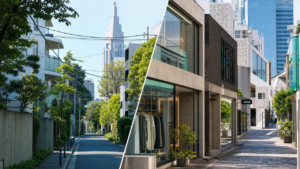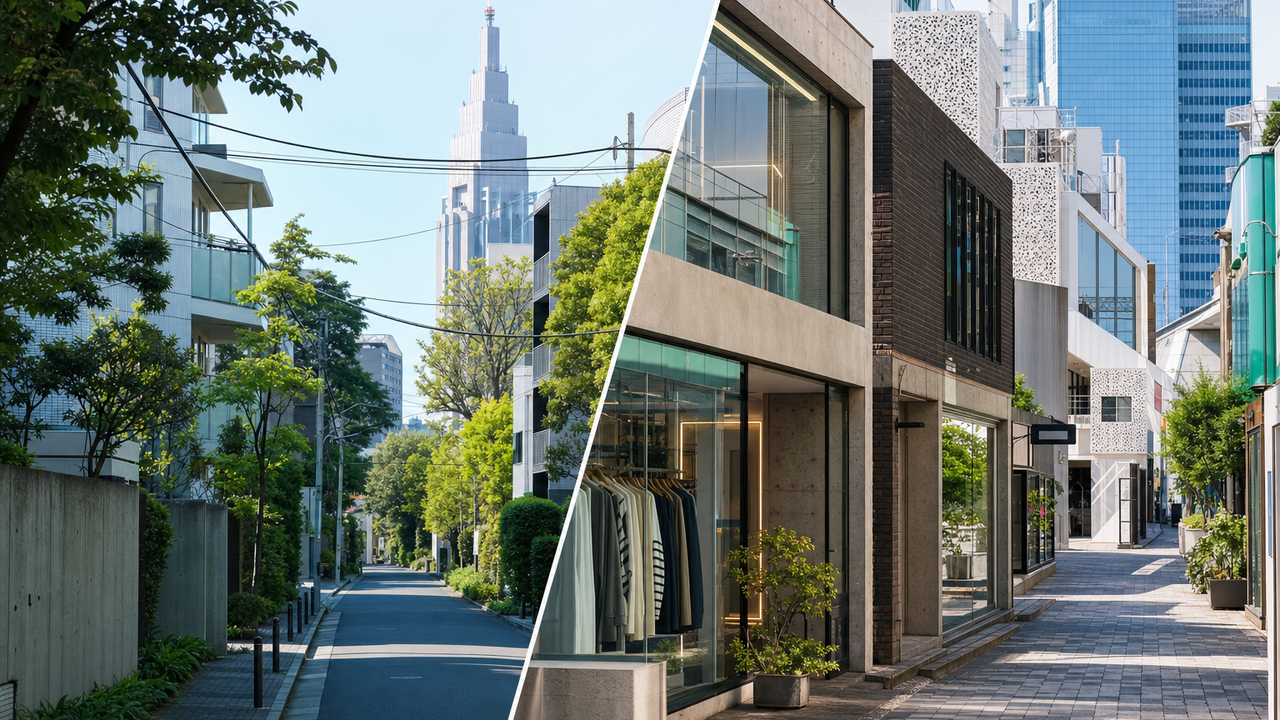
If you’re an expat working near Shibuya and trying to decide where to live, the choice between Yoyogi and Harajuku is one that comes up more often than you might expect. Both neighborhoods sit within easy reach of Shibuya Station, both carry a sense of energy and identity that feels a long way from the anonymous convenience of a purely transit-oriented suburb — and yet they are genuinely different places to call home. The rent gap between the two is real, the lifestyle tradeoffs are real, and the practical experience of living in one versus the other as a foreign resident can diverge in ways that don’t show up in a standard property search.
This guide was written specifically for foreign professionals working in the Shibuya area — whether you’re at Google Japan, a ByteDance office, a Shibuya-based startup, or any of the international firms that have anchored themselves in this part of Tokyo. It breaks down both neighborhoods across the axes that actually matter for expat daily life in 2026: commute convenience, average rent levels, English-language accessibility, neighborhood character, and long-term liveability. By the end, you’ll have a clear picture of which neighborhood suits your situation — and which one is worth paying a premium for.
Who this article is for
- Foreign professionals in their 20s–40s working near Shibuya Station who are actively comparing rental options
- Expats relocating to Tokyo for the first time who want a realistic breakdown of two popular Shibuya-adjacent neighborhoods
- Couples or single renters with a higher budget who want to understand whether the Harajuku premium is justified
What you’ll learn
- How Yoyogi and Harajuku compare across rent, commute, lifestyle, and English accessibility in 2026
- Which neighborhood tends to suit which type of expat professional — and why
- Practical caveats for foreign renters navigating either neighborhood without a Japanese-speaking support network
How to Choose Between Two Shibuya-Adjacent Neighborhoods
Before looking at numbers and maps, it helps to be clear about what you’re actually optimizing for. Expats relocating to Tokyo for professional roles near Shibuya tend to weigh the same handful of factors — but in very different priority orders depending on their lifestyle, household situation, and budget.
What Expat Renters Near Shibuya Actually Prioritize
Most foreign professionals settling near Shibuya rank commute time and English accessibility above almost everything else in the first year. After that, the priorities tend to split: some renters place the highest weight on neighborhood character and walkability; others focus tightly on rent-per-square-meter value and use savings to invest in furnishings or travel.
Understanding this split is important because Yoyogi and Harajuku represent fairly clear answers to different parts of that spectrum. Yoyogi tends to reward renters who want more space, quieter surroundings, and better value for money. Harajuku rewards renters who want to be in the middle of a distinctive neighborhood culture, are willing to pay for that proximity, and don’t mind slightly smaller floor plans at higher price points.
Neither answer is wrong. But they are genuinely different, and the choice becomes clearer once you’re honest about which tradeoffs you’ll actually notice in daily life after the initial excitement of a new city wears off.
The Five Axes That Matter Most for This Comparison
This article evaluates Yoyogi and Harajuku across five axes that consistently surface as decision-drivers for expat renters in the Shibuya corridor. These are the same dimensions that bilingual real estate consultants working with foreign professionals tend to use when helping clients narrow down a shortlist.
- Commute to Shibuya — door-to-door travel time and train line options
- Rent level — approximate monthly rent for a standard 1LDK or 2LDK in 2026
- English accessibility — availability of English-speaking services, international supermarkets, and English-friendly landlords
- Neighborhood character — everyday atmosphere, green space, restaurant density, and walkability
- Long-term liveability — noise levels, weekend crowd patterns, and how the area feels beyond the initial novelty
Why These Two Neighborhoods Are Being Compared
Yoyogi and Harajuku are not obvious competitors in the way that, say, Nakameguro and Daikanyama are. They attract somewhat different profiles of resident even within the expat community. But they frequently appear on the same shortlist for one straightforward reason: both are reachable from Shibuya in under ten minutes, both sit inside or adjacent to Shibuya Ward, and both feel meaningfully different from the denser, louder residential zones immediately surrounding Shibuya Station itself.
For a foreign professional trying to find a liveable base within striking distance of their office, that combination makes both neighborhoods worth a serious look — which is exactly why a direct comparison is useful.
Yoyogi vs Harajuku: Side-by-Side Comparison

The table below summarizes how each neighborhood performs across the five evaluation axes. Figures represent general market conditions as of 2026 and are intended as orientation rather than guaranteed rental quotes — actual rents vary by building age, floor, and specific street location within each neighborhood.
| Evaluation Axis | Yoyogi | Harajuku |
|---|---|---|
| Commute to Shibuya | ~5–8 min by JR Yamanote Line | ~4–6 min by JR Yamanote Line |
| 1LDK Monthly Rent (approx.) | ¥150,000–¥210,000 | ¥175,000–¥260,000 |
| English Accessibility | Moderate — improving steadily | Good — higher international footfall |
| Neighborhood Character | Quiet, green, residential | Stylish, active, culturally distinctive |
| Weekend Crowd Levels | Low to moderate | High (especially Takeshita-dori area) |
| Green Space Access | Excellent — Yoyogi Park on doorstep | Very good — adjacent to Yoyogi Park |
| Best Suited For | Value-conscious renters wanting space and quiet | Lifestyle-driven renters willing to pay for character |
Yoyogi: The Case for Better Value and More Space
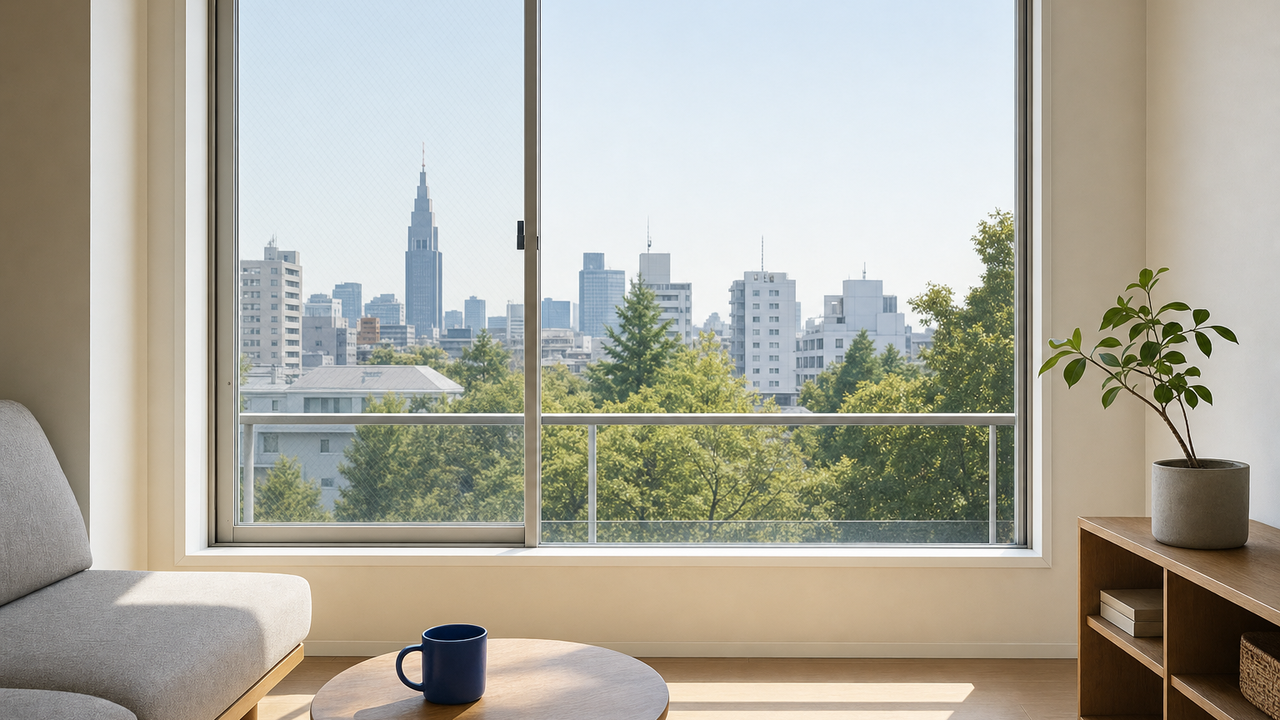
Yoyogi is consistently underrated in conversations about where to live near Shibuya — particularly among expats who arrive in Tokyo with Harajuku or Daikanyama at the top of their list. Once renters spend time actually walking the neighborhood, many reconsider. The combination of Yoyogi Park proximity, quieter residential streets, and noticeably lower rents than its neighbors makes it a genuinely compelling option for professionals who want more living space without sacrificing a short commute.
Commute and Transport Links from Yoyogi
Yoyogi Station places you on the JR Yamanote Line, one of the most reliable and frequently serviced train lines in Tokyo. Shibuya is a single stop south, meaning a typical door-to-door commute to Shibuya Station from a Yoyogi apartment runs in the range of 5 to 8 minutes. The station is also served by the Toei Oedo Line, which provides useful connections to Shinjuku and the broader Tokyo network for days when you need to travel beyond Shibuya.
Practically, this means that commuting from Yoyogi feels almost trivially easy. The Yamanote Line runs every two to three minutes during peak hours, and the single-stop journey makes overcrowding a less painful experience than multi-stop commutes on busier corridors. For professionals whose offices are physically close to Shibuya Station itself — as many tech company offices in this area are — the commute from Yoyogi is about as simple as it gets.
- Expats who prioritize floor space and want a 1LDK or 2LDK at a more manageable rent
- Professionals who prefer a quiet, residential neighborhood for unwinding after long work days
- Runners, cyclists, and outdoor enthusiasts who want immediate access to Yoyogi Park
Rent Levels and Value for Money in Yoyogi
Yoyogi offers meaningfully better rent-to-space ratios than Harajuku or Daikanyama for comparable building quality. In 2026, a well-maintained 1LDK in Yoyogi typically falls in the ¥150,000 to ¥210,000 per month range, though higher-spec buildings in premium locations can push above this. A 2LDK — practical for couples or for single renters who want a dedicated home office — is generally available in the ¥200,000 to ¥280,000 range, depending on building age and exact street location.
These figures represent general market conditions rather than guaranteed availability, and actual rents will vary based on floor level, building age, proximity to the station, and specific landlord terms. What the numbers illustrate, though, is that Yoyogi consistently allows renters to get one room more — or meaningfully more floor space within the same room count — than they would find at equivalent price points in Harajuku or the immediately surrounding neighborhoods.
For expats who are paying their own rent without employer housing subsidies, this difference compounds quickly. The gap between a Yoyogi 1LDK and a Harajuku 1LDK at similar quality levels can easily run to ¥30,000–¥60,000 per month — money that many professionals would rather put toward travel, food, or savings.
Daily Life and Neighborhood Feel in Yoyogi
Yoyogi’s residential character is its most underappreciated quality. The streets west and south of Yoyogi Station are genuinely quiet on weekday evenings — a meaningful advantage for professionals who spend full days in the energy of Shibuya’s office corridors and want their home environment to feel restorative rather than stimulating. There are local cafes, an adequate range of supermarkets, and enough independent restaurants to make the neighborhood feel lived-in without becoming a destination in itself.
The proximity to Yoyogi Park is a major lifestyle asset that is easy to underestimate until you’re actually living next to one of Tokyo’s best urban green spaces. The park serves as a venue for morning runs, weekend markets, outdoor picnics, and the kind of casual social activity that can be surprisingly hard to find in dense Tokyo neighborhoods. For expats building a social life in a new city, a large walkable park provides a low-pressure meeting point that doesn’t require a booking or a budget.
English accessibility in Yoyogi is improving steadily, though it remains somewhat behind Harajuku or the more internationally established pockets of the Jonan area. Supermarkets near the station carry a reasonable international food selection, and the general level of English signage and service in the area has grown noticeably over the past several years. Foreign residents who want English-speaking real estate support for the apartment search process itself will generally need to rely on a bilingual agent rather than walking into local shops and expecting English fluency.
| Pros of Living in Yoyogi | Cons of Living in Yoyogi |
|---|---|
|
|
Harajuku: The Case for Lifestyle, Culture, and Prestige
Harajuku carries a strong identity — stronger, arguably, than almost any other residential neighborhood in Tokyo at this price point. For expats who want their address to feel like a genuine statement about how they live, and who are prepared to pay for the privilege, Harajuku delivers something that Yoyogi does not: the experience of being woven into one of Tokyo’s most culturally layered neighborhoods from the moment you step outside your front door.
What the Harajuku Address Actually Gives You
Harajuku Station sits on the JR Yamanote Line between Shibuya and Shinjuku, placing it a single stop from Shibuya — comparable to Yoyogi in commute terms, though the direction is reversed (Harajuku is north of Shibuya, Yoyogi is northwest). Door-to-door commute times to Shibuya are typically in the 4 to 6 minute range from apartments near Harajuku Station, making the commute effectively negligible.
What the address adds beyond commute convenience is character. The area around Harajuku Station gives renters walking access to Omotesando — one of Tokyo’s premier upscale shopping and dining corridors — as well as to a dense concentration of internationally recognized cafes, independent concept stores, and well-regarded restaurants. For professionals who use their neighborhood as a genuine extension of their lifestyle rather than simply a place to sleep, this matters.
Harajuku also borders Yoyogi Park, so the green space advantage that Yoyogi residents cite is largely available to Harajuku residents as well — at least for those whose apartments are on the park-facing side of the neighborhood. The question is whether the additional rent premium for a Harajuku address buys you enough incremental lifestyle value over what Yoyogi already offers.
Rent Levels in Harajuku: What the Premium Costs
Harajuku commands a consistent rent premium over Yoyogi that reflects both the address prestige and the higher density of desirable amenities within walking distance. In 2026, a 1LDK in Harajuku typically falls in the ¥175,000 to ¥260,000 per month range, with newer or higher-spec buildings in particularly sought-after sub-locations pushing toward and sometimes beyond the upper end of this range. A 2LDK in Harajuku tends to start at around ¥240,000 and can rise considerably depending on the building.
For context, the premium over a comparable Yoyogi property can range from roughly ¥20,000 to ¥60,000 per month, depending on the specific buildings being compared. Over the course of a two-year lease — a standard initial term in Tokyo — that represents a total additional outlay somewhere between ¥480,000 and ¥1,440,000. Whether that figure buys sufficient lifestyle value is a personal judgment, but it is worth making the calculation explicitly rather than absorbing the premium without thinking through what it purchases.
Foreign renters should also be aware that Harajuku — like all of Shibuya Ward — applies standard Tokyo rental practices around guarantors, key money, and deposit structures. Having a bilingual agent who can navigate these requirements on your behalf is particularly important in a competitive market where desirable properties move quickly.
- Expats who prioritize neighborhood character and walkable lifestyle amenities
- Professionals with employer housing subsidies or higher discretionary budgets
- Renters who want strong English accessibility and international retail within easy walking distance
Lifestyle and Long-Term Liveability in Harajuku
The main liveability caveat for Harajuku is one that many expats discover only after moving in: the neighborhood’s popularity as a tourist and weekend destination means that certain streets — particularly around Takeshita-dori — become genuinely crowded on weekends and public holidays. For residents whose apartments are adjacent to these high-traffic areas, this translates into elevated noise levels, reduced pavement space, and a weekend atmosphere that can feel more like a theme park than a residential neighborhood.
This is not a universal Harajuku experience. The neighborhood is large enough that apartments even a few streets removed from the commercial core can feel genuinely quiet. But it is worth asking a bilingual agent specifically about the weekend noise environment for any property you’re seriously considering — this is exactly the kind of nuance that doesn’t appear in a standard property listing and makes local knowledge valuable.
English accessibility in Harajuku is among the better in the broader Shibuya area, driven by the neighborhood’s international reputation and the concentration of international brands along Omotesando. Foreign residents will find more incidental English-language support here than in many comparable Tokyo neighborhoods — though this still means an English-speaking real estate agent is important for navigating the actual rental process, which remains primarily conducted in Japanese regardless of neighborhood.
| Pros of Living in Harajuku | Cons of Living in Harajuku |
|---|---|
|
|
Which Neighborhood Should You Choose? A Practical Guide by Situation
The honest answer is that neither Yoyogi nor Harajuku is objectively better — they are different answers to different questions about how you want to live near Shibuya. What follows is a situation-by-situation breakdown that should help clarify which direction makes sense for your specific circumstances.
If You’re Paying Your Own Rent Without a Subsidy
Yoyogi is likely the stronger choice for expats funding their own rent independently. The value-for-money difference at equivalent quality levels is meaningful enough to affect quality of life in ways that go beyond the apartment itself — the monthly savings can fund an additional dinner out, a weekend trip, or simply reduce the financial pressure that comes with an already expensive city. The Harajuku premium is real, and it’s worth being honest with yourself about whether you will actively use the lifestyle amenities it provides enough to justify the cost every single month.
This doesn’t mean Yoyogi is a compromise destination. It is genuinely comfortable, well-connected, and notably pleasant — particularly for professionals who want a restorative home environment rather than a continuation of Shibuya’s energy. Many expats who initially aimed for Harajuku end up in Yoyogi and report being very happy with the decision after six months of actual living.
If Neighborhood Character and Lifestyle Amenities Are the Priority
If you’re at a stage of your career where housing costs are partially or fully covered by your employer — which is common for senior hires at Google Japan, ByteDance, and similar international firms operating in the Shibuya area — then Harajuku’s premium becomes easier to absorb, and the lifestyle calculus shifts.
In that context, Harajuku’s proximity to Omotesando’s restaurant and retail scene, its stronger English accessibility, and its cultural distinctiveness all become genuine advantages that Yoyogi doesn’t match. The neighborhood will feel more immediately like the “Tokyo lifestyle” that many professionals moving to Japan have in mind, and the weekend crowds, while real, are manageable if you’re thoughtful about which part of the neighborhood you choose to live in.
If this profile describes you, it’s also worth exploring the broader Jonan area — neighborhoods like Nakameguro, which sits just south of Daikanyama and offers a similar lifestyle-focused appeal at price points that can sometimes compete favorably with Harajuku. You can explore that comparison in our Nakameguro Living Guide for Expats.
A Note on the Apartment Search Process for Foreign Renters
Whichever neighborhood you choose, the practical reality of renting in Tokyo as a foreign national deserves mention. The standard rental process involves documentation requirements, guarantor arrangements, and landlord approval processes that are conducted almost entirely in Japanese — and that have historically caused significant friction for foreign renters without Japanese-language support. This is true in both Yoyogi and Harajuku, regardless of how internationally oriented the neighborhoods feel on the street.
Working with a bilingual real estate consultant who understands the specific requirements for foreign renters — and who has existing relationships with landlords who are open to international tenants — substantially reduces this friction. It is not a luxury; for most expats arriving in Tokyo without an existing support network, it is effectively a prerequisite for a smooth search process. Bilingual services like Balleggs global, which specializes in central Tokyo rentals for foreign residents and offers English-language support backed by over two decades of experience in the Tokyo market, are well positioned to help with exactly this kind of search.
For a broader look at how to navigate the Tokyo rental process as a foreign national, the Complete Foreigner’s Guide to Renting an Apartment in Tokyo covers the full process in practical detail.
- Need English-language support throughout the entire apartment search and application process
- Want access to vetted central Tokyo properties searchable by area and train line
- Value working with a real estate consultant with over 25 years of Tokyo market experience
About the consultation process
Summary: Yoyogi and Harajuku as Expat Home Bases in 2026
Both Yoyogi and Harajuku are genuinely good places to live as a foreign professional working near Shibuya. They are close to each other geographically, share access to the same train line and the same green space, and both deliver the short commute that makes the Shibuya-adjacent zone appealing in the first place.
The real difference between them comes down to a straightforward tradeoff. Yoyogi gives you more space for your money and a quieter residential experience — it’s the better choice for independent renters, for people who work from home and need dedicated workspace, and for anyone who genuinely values calm evenings and easy access to one of Tokyo’s best parks. Harajuku gives you a more culturally distinctive neighborhood and stronger walkable amenities — it’s the better choice for lifestyle-driven renters with subsidy support, for people who will actively use Omotesando’s dining and retail scene, and for expats who want their Tokyo address to reflect where they are in their career.
Neither neighborhood is wrong. The decision is really about which version of your daily life you want to build — and being honest with yourself about which tradeoffs you’ll notice most in six months’ time. For more comparisons of neighborhoods in the Shibuya-adjacent and Jonan area, the Tokyo Neighborhood Comparison guide covers a broader range of options across the full Jonan corridor.
If you’re at the point of starting an active apartment search and want English-language support for the process, reaching out to a bilingual real estate consultant early — before your shortlist is finalized — tends to produce the best results. Properties in both Yoyogi and Harajuku move quickly when priced well, and having a consultant in place means you can move quickly when the right unit appears.
Is Yoyogi or Harajuku closer to Shibuya Station?
Both are a single stop from Shibuya on the JR Yamanote Line, so the difference is minimal. Harajuku Station is typically around 4–6 minutes door-to-door to Shibuya; Yoyogi Station runs slightly longer at around 5–8 minutes depending on where in each neighborhood your apartment is located. In practical terms, both commutes are negligibly short.
How much more expensive is Harajuku than Yoyogi for a 1LDK?
As a general orientation for 2026, a 1LDK in Harajuku typically starts around ¥175,000–¥260,000 per month, while a comparable property in Yoyogi is more likely to fall in the ¥150,000–¥210,000 range. The gap varies significantly by building age, floor, and exact street location, so specific properties can overlap. Working with a bilingual agent will give you the most accurate current picture for your target budget and specification.
Is Harajuku too noisy and crowded to live in as a resident?
It depends heavily on which part of Harajuku your apartment is in. Streets close to Takeshita-dori and the station’s Omotesando exit can be notably busy on weekends and public holidays. Areas several blocks away from the tourist-facing commercial core tend to be much quieter and genuinely comfortable for everyday residential life. A bilingual real estate agent familiar with the neighborhood can help you identify which specific sub-areas to prioritize based on your noise tolerance.
Can foreign nationals rent apartments in Yoyogi and Harajuku without a Japanese guarantor?
Japan’s rental market has become more accommodating of foreign renters over the past several years, and guarantor companies (hoshō gaisha) have largely replaced the requirement for a Japanese personal guarantor in many properties. That said, landlord acceptance of foreign applicants still varies, and having a bilingual agent who can identify foreign-friendly landlords and handle the documentation process in Japanese significantly increases your chances of a smooth application — especially for well-priced properties in competitive neighborhoods like these two.
Are there English-speaking grocery stores and services near Yoyogi and Harajuku?
Both neighborhoods have supermarkets with international food selections, and the broader Shibuya area has several international-leaning grocery options within a short distance. Harajuku’s proximity to Omotesando generally gives it a slight edge in international retail density. For specialized import groceries, residents of either neighborhood will likely find themselves visiting National Azabu (Hiroo) or similar international-focused supermarkets for a wider range. English-language services in daily life — pharmacies, clinics, administrative support — are available but generally require some advance research to locate in either neighborhood.