Why Getting Internet in a Tokyo Apartment Feels So Complicated

You’ve signed your lease, moved your boxes in, and finally have an apartment in Tokyo — but when you try to get internet connected, you hit a wall. The provider’s website is entirely in Japanese. The installation technician calls ahead in Japanese. The contract options are confusing even by international standards. For foreign professionals moving to central Tokyo, internet setup is consistently one of the most frustrating first-week experiences.
The good news is that Japan actually has some of the fastest and most reliable internet infrastructure in the world. Once you understand how the system works, getting connected is straightforward. This guide breaks everything down in plain English — from choosing the right type of connection to navigating the installation visit without speaking Japanese.
Who this guide is for
- ●Foreign professionals who have just moved or are about to move into a Tokyo apartment
- ●Expats who need reliable home internet for remote work or video calls
- ●Anyone who has tried to set up internet in Japan and found the process confusing
What you’ll learn
- ●The difference between Japan’s internet options and which suits your situation
- ●Exactly how to apply, what to prepare, and what to expect on installation day
- ●Backup options if you need internet before your permanent connection is active
Understanding Japan’s Internet Infrastructure: The Basics Every Foreigner Needs to Know
Before you choose a plan, it helps to understand how Japan’s internet market is structured. The setup is different from most Western countries, and knowing the landscape will save you from making an expensive mistake on a long-term contract.
The two-layer system: ISPs and line providers
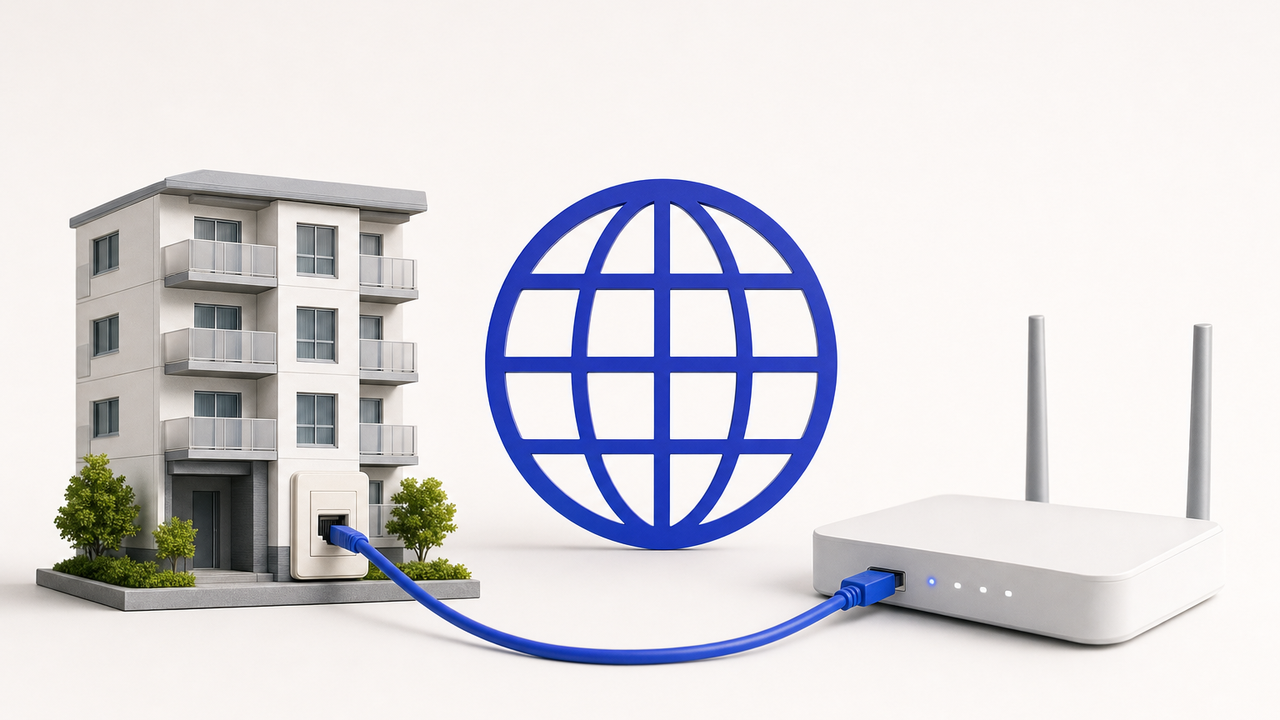
In Japan, internet service is typically split between a line provider (who owns and maintains the physical fiber-optic infrastructure) and an ISP (Internet Service Provider, who sells you the actual internet connection). You often need to sign up with both separately, which is one reason the process feels more complicated than in other countries.
The dominant fiber-optic network in Japan is operated by NTT East (in Tokyo) under the brand name FLET’S Hikari. Many ISPs — including OCN, So-net, BIGLOBE, and IIJmio — run their service over this NTT infrastructure. You pay NTT a line fee and the ISP a separate service fee, which typically combined run between ¥5,000 and ¥7,000 per month.
Fiber vs. pocket WiFi vs. home router SIM: what’s actually available to you
There are three realistic options for a foreign resident renting in central Tokyo. Each has a different setup timeline, contract structure, and performance level.
Fixed-line fiber (FLET’S or NURO) gives you the fastest and most consistent speeds — commonly 1 Gbps download in fiber-equipped buildings — and is the best long-term option for anyone working from home or streaming regularly. The downside is the installation wait: typically one to three weeks after you apply.
Pocket WiFi (a portable LTE or 5G device) can be set up in as little as one to two business days. It’s a useful bridge solution while you wait for your fiber installation, or a viable main connection if you’re on a short-term lease.
Home router SIM (a SIM card inserted into a fixed home router) sits between the two in terms of setup speed and performance. Several English-friendly providers offer these with straightforward online sign-up.
Step-by-Step: How to Set Up Internet in Your Tokyo Apartment
- Confirm your building’s internet situation
Before applying for any service, contact your landlord or building management company and ask whether the building already has a contracted internet provider. Some buildings have a single contracted provider for all units — you may simply need to activate the service rather than arrange a new installation.
- Choose your provider and plan
If you need internet quickly, order a pocket WiFi device or home router SIM first. This can usually be delivered within one to two business days. Simultaneously, apply for your long-term fiber service. You can cancel the pocket WiFi once your permanent line is active.
- Apply online with the documents you’ll need
Most providers now allow online applications in English. You’ll typically need: your residence address in Japanese, your phone number, your payment method, and your residence card (Zairyu Card).
- Schedule and prepare for the installation visit
Once your application is processed, the provider will contact you to arrange an installation visit. If you’re not comfortable with Japanese phone conversations, contact the provider in advance by email to request written communication.
- Connect your router and test your connection
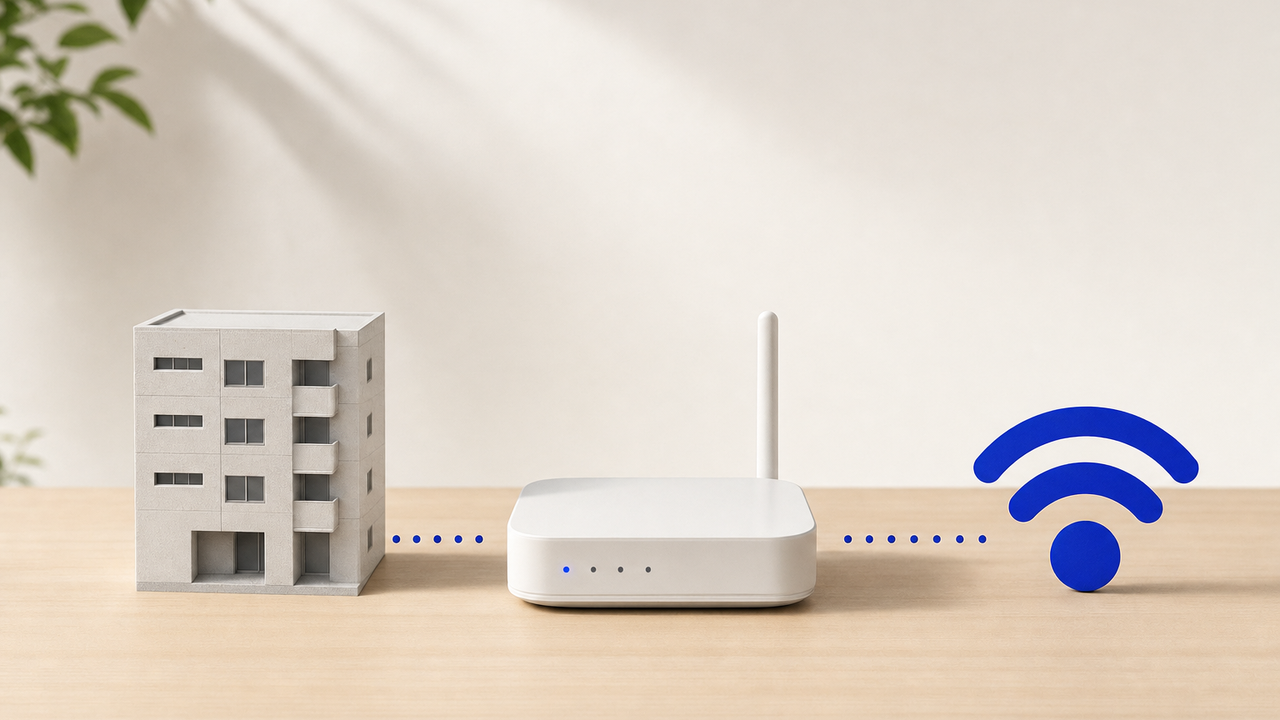
Once the technician leaves, connect your WiFi router to the ONU. ISP credentials arrive separately via a welcome letter or email — enter these into your router’s PPPoE settings to activate your connection.
POINT
Apply for your fiber internet on the same day you sign your lease — or ideally before you move in. The one-to-three-week installation wait is the single biggest cause of frustration for newly arrived expats in Tokyo.
Choosing the Right Internet Plan: A Practical Comparison for Tokyo Expats
| Option | Setup Time | Typical Monthly Cost | Best For |
|---|---|---|---|
| FLET’S Hikari + ISP (fiber) | 1–3 weeks | ¥5,000–¥7,500 | Long-term residents, remote workers |
| NURO Hikari (fiber bundle) | 2–4 weeks | ¥4,900–¥5,700 | Fast speeds at lower price in covered areas |
| Pocket WiFi (LTE/5G) | 1–2 business days | ¥3,000–¥5,500 | Short-term stays, interim use while waiting for fiber |
| Home router SIM | 2–5 business days | ¥3,500–¥5,000 | Medium-term residents wanting faster setup than fiber |
| Mansion-included internet | Immediate | Often included in rent | Anyone lucky enough to have it — check before applying elsewhere |
- ●You’re a foreign professional relocating to central Tokyo and need English-language support throughout the process
- ●You want help navigating practical details like building specs, utility setup, and landlord communication
- ●You’re looking for an apartment in Meguro, Shinagawa, Setagaya, or the broader Jonan area near Shibuya
Q: Can I set up internet in a Tokyo apartment without speaking Japanese?
A: Yes, though it requires some preparation. Several providers offer English-language online applications, and a short note card in Japanese can help during the installation visit.
Q: How long does it take to get internet set up in a Tokyo apartment?
A: For fiber connections, typically one to three weeks from the time you apply to the installation visit. Pocket WiFi devices can be delivered in one to two business days. Apply for fiber on the same day you sign your lease to minimize the gap.
Q: Do I need a Japanese bank account to apply for internet in Japan?
A: Most major providers accept international credit cards for payment, so a Japanese bank account is generally not required to sign up. Having a Japanese bank account does simplify the process.
Q: What is the difference between FLET’S Hikari and NURO Hikari?
A: FLET’S Hikari is NTT’s fiber network accessed through a separate ISP — you pay two fees. NURO Hikari is an all-in-one bundled service that can be slightly cheaper and faster in covered areas, but availability is more limited than FLET’S.
Ready to find your Tokyo apartment?
Bilingual consultants guide you so foreign residents can find a home with confidence.