If you’ve just moved to Japan — or you’re about to — one of the first things that will catch you off guard is the garbage system. Unlike most countries where you simply toss everything into one bin, Japan’s waste sorting rules are detailed, ward-specific, and strictly enforced. Miss the collection day, use the wrong bag, or mix recyclables incorrectly, and your trash may be left behind with a rejection sticker attached.
This guide covers everything a foreign resident needs to know: the core categories, how rules differ across Tokyo’s Jonan area (Meguro, Setagaya, Shibuya, Minato, Shinagawa, and Ota wards), where to buy the right garbage bags, and the step-by-step process for disposing of bulky items. Whether you’ve just signed a lease or you’re planning your move, understanding this system early will save you from confusion and neighborly friction.
Who this article is for
- Foreign professionals who have recently moved to Tokyo’s Jonan area and are confused by garbage sorting rules
- Expats preparing to rent an apartment in Meguro, Setagaya, Shibuya, Minato, Shinagawa, or Ota ward
- Anyone who has received a rejection sticker on their trash and wants to understand what went wrong
What you’ll learn
- The four main garbage categories used across Tokyo and how to sort correctly
- Ward-by-ward differences in collection schedules, bag rules, and special disposal procedures
- How to dispose of large items (sodai gomi) step by step, including how to book a collection
Why Japan’s Garbage Sorting System Exists — and Why It Matters to You
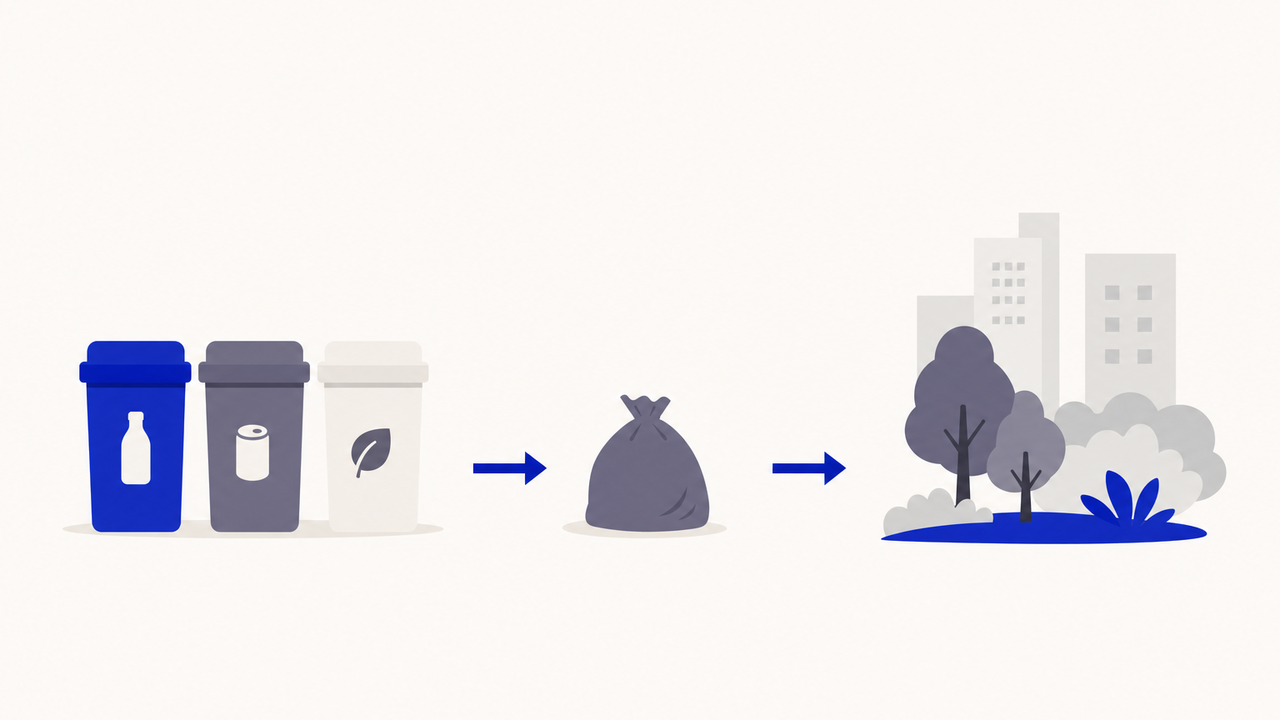
Japan’s garbage sorting system is one of the most thorough in the world, and it exists for practical environmental reasons: landfill space in a densely populated country is extremely limited. Recycling rates are kept high by separating materials at the source — meaning residents, not processing plants, do the sorting work. For foreign residents, this can feel overwhelming at first, but the logic behind the categories becomes intuitive within a few weeks.
The Four Main Categories Explained
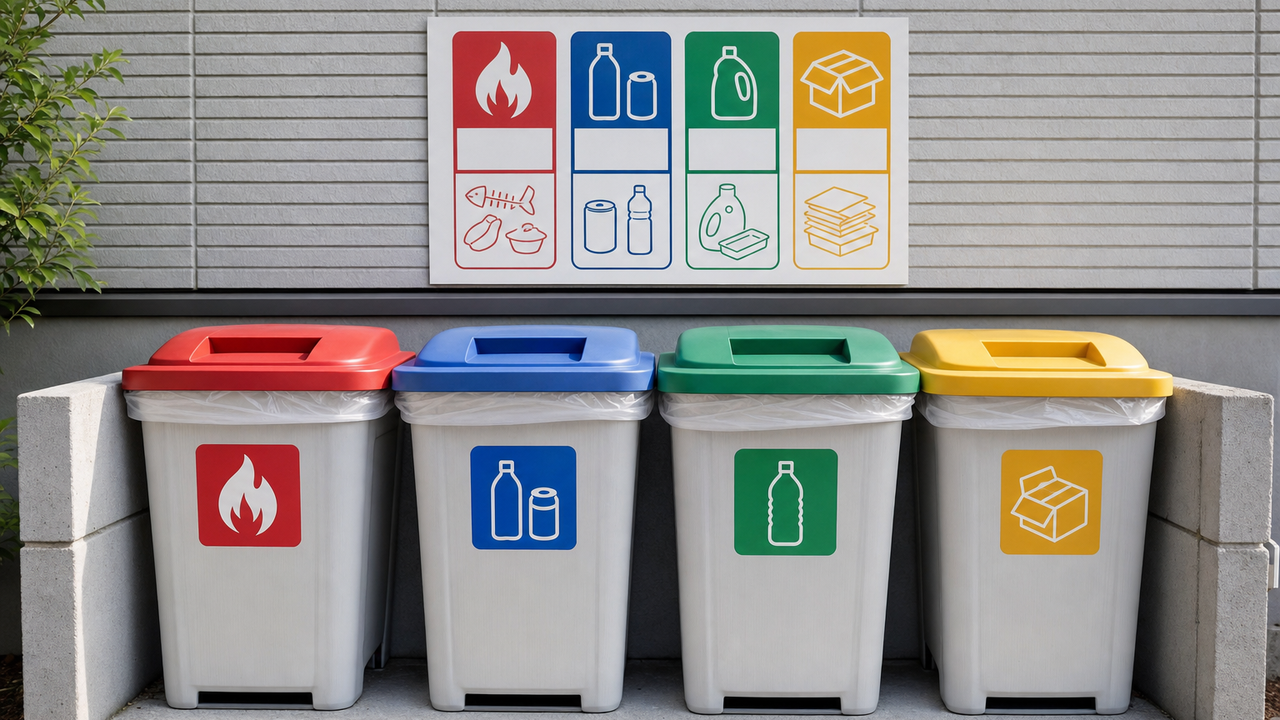
Burnable waste (moeru gomi) is the most frequently collected category — typically two or three times per week in most Jonan wards. It includes food scraps, cooking waste, tissue paper, paper towels, soiled wrapping, small pieces of wood, rubber items, and leather goods. Importantly, items that could be recycled but are dirty or contaminated (like a greasy pizza box) generally go here, not in the recycling bin.
Non-burnable waste (moenai gomi) covers items that cannot be incinerated safely: broken ceramics, small glass fragments, mirrors, metal cookware, umbrellas, small electric fans, and similar items. Collection is typically once or twice per month, depending on the ward. These items must be placed in a designated bag or, in some wards, wrapped securely.
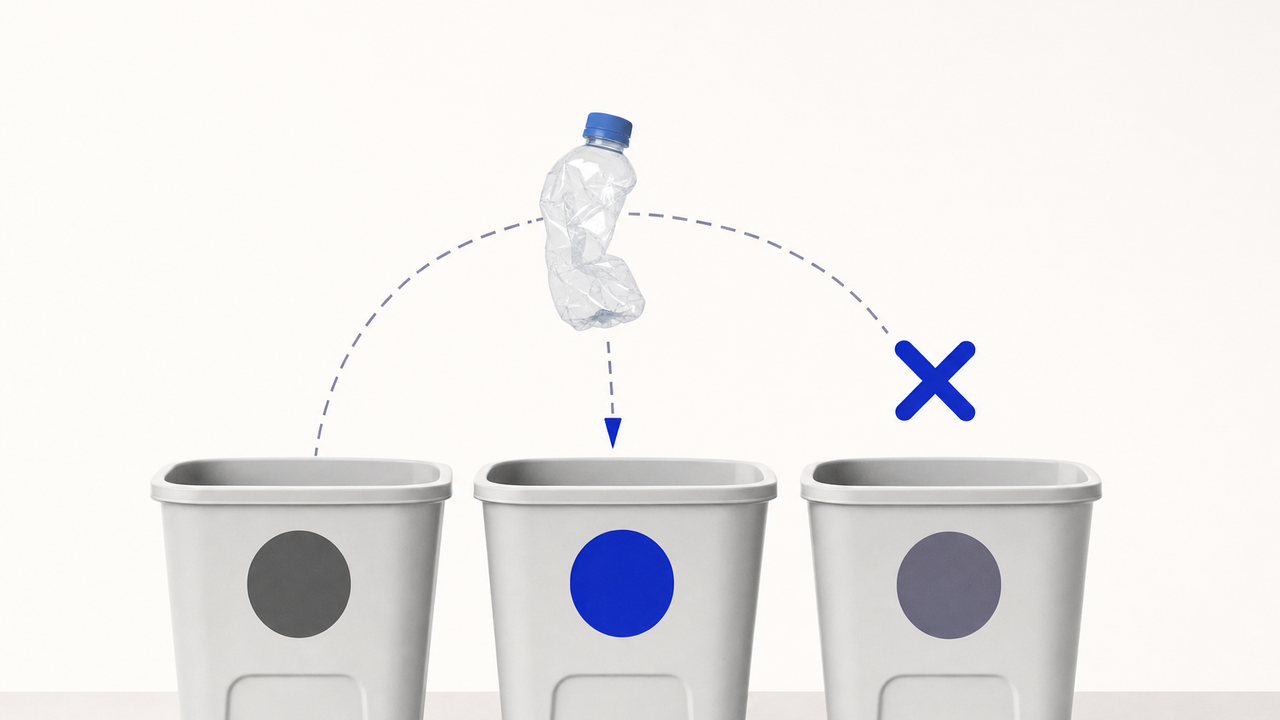
Recyclables are collected separately and further subdivided. The most common subcategories are: PET bottles (with caps and labels removed and rinsed), aluminum and steel cans (rinsed), glass bottles (rinsed, sorted by color in some wards), cardboard and paper (bundled with string), and plastic packaging (marked with a プラ symbol). The specific collection day for each subcategory varies by ward, so checking your local ward schedule is essential.
What Does Not Belong in Regular Trash
Several categories of waste require special handling and cannot be placed in standard garbage bags. Batteries, fluorescent bulbs, and spray cans all require designated collection bins, which are typically located at convenience stores, supermarkets, or designated ward collection points. Electronics such as televisions, air conditioners, refrigerators, and washing machines fall under Japan’s Home Appliance Recycling Law and must be returned to retailers or taken to certified collection points — they cannot be put out as regular trash under any circumstances.
Important
Spray cans and lighters must be fully emptied before disposal. In some wards, they go with non-burnable waste; in others, they require a separate drop-off. Puncturing spray cans is not required — just empty them completely and follow your ward’s instructions.
The Rejection Sticker System
If your garbage is sorted incorrectly or put out at the wrong time, collection staff will leave a brightly colored sticker (usually yellow or red) on the bag explaining why it was not collected. This is not a fine — it is a notice. You are expected to take the bag back, correct the sorting, and put it out on the next correct collection day. Leaving rejected bags at the collection point is considered poor etiquette and can create friction with neighbors and building management.
Ward-by-Ward Garbage Rules Across the Jonan Area

Tokyo’s garbage system is administered at the ward level, which means the rules — collection days, required bag types, and specific procedures — differ meaningfully between Meguro, Setagaya, Shibuya, Minato, Shinagawa, and Ota. Understanding your specific ward’s requirements is not optional; it is the foundation of living smoothly in your neighborhood.
| Ward | Designated Bag Required? | Where to Buy Bags | Burnable Collection Frequency | English Resources |
|---|---|---|---|---|
| Meguro-ku | No (any transparent/semi-transparent bag) | Supermarkets, 100-yen stores, convenience stores | 2× per week | Multilingual PDF guide on ward website |
| Setagaya-ku | No (any transparent/semi-transparent bag) | Supermarkets, home centers, convenience stores | 2× per week | English sorting guide available via ward office |
| Shibuya-ku | No (any transparent/semi-transparent bag) | Convenience stores, supermarkets | 2× per week | English guide on Shibuya ward website |
| Minato-ku | No (any transparent/semi-transparent bag) | Supermarkets, convenience stores | 2× per week | Multilingual information at ward office |
| Shinagawa-ku | No (any transparent/semi-transparent bag) | Supermarkets, convenience stores, 100-yen stores | 2× per week | PDF guides in multiple languages |
| Ota-ku | No (any transparent/semi-transparent bag) | Supermarkets, convenience stores, home centers | 2× per week | English-language guide on Ota ward website |
A Note on Garbage Bags in the Jonan Area
Unlike some Japanese cities (such as Kyoto or Nagoya) that require residents to purchase special ward-designated garbage bags sold at a premium price, all six Jonan-area wards in Tokyo use the Tokyo Metropolitan system, which does not require paid designated bags. You simply need transparent or semi-transparent bags so collection staff can verify contents without opening them. Standard plastic bags from supermarkets, convenience store carrier bags, or bags purchased at a 100-yen shop (Daiso, Seria, Can Do) are all acceptable as long as they are see-through.
Where to buy bags: any supermarket (Precce, Tokyu Store, Life, Maruetsu), any convenience store (FamilyMart, Lawson, 7-Eleven), home centers (Tokyu Hands, Joyful Honda), or 100-yen shops. A pack of 30–50 bags typically costs between ¥100 and ¥300. Keep a stock of small, medium, and large sizes — small bags for kitchen waste, medium for general burnable trash, and large for bulkier non-burnables.
Recycling Differences by Ward
While the broad categories are consistent across all six wards, the collection schedule for specific recyclable subcategories can vary significantly by neighborhood, even within the same ward. In Setagaya, for instance, the ward is divided into multiple collection zones, and each zone has its own weekly timetable. The same applies in Ota, where the ward’s large geographic area means collection days differ by street block. When you move into a new apartment, your building management company or real estate agent should provide a local garbage schedule (ゴミ収集カレンダー). If you do not receive one, you can download it from your ward’s website — most Jonan-area wards now offer at least a basic English version.
Plastic Packaging: The Most Commonly Confused Category
Plastic packaging — trays, wrappers, bags, cups, and film marked with the プラ (plastic) recycling symbol — is collected separately from burnable waste in all six Jonan wards as part of Tokyo’s container and packaging recycling program. Items must be rinsed clean of food residue before disposal; soiled plastic goes into burnable waste instead. Soft drink bottle caps are usually made of a different plastic from the bottle itself. In most Jonan wards, caps and labels should be removed from PET bottles and disposed of with plastic packaging, while the bottle goes with PET recyclables. Check the specific guidance printed on your ward’s sorting chart, as minor variations exist.
How to Dispose of Bulky Waste (Sodai Gomi) Step by Step
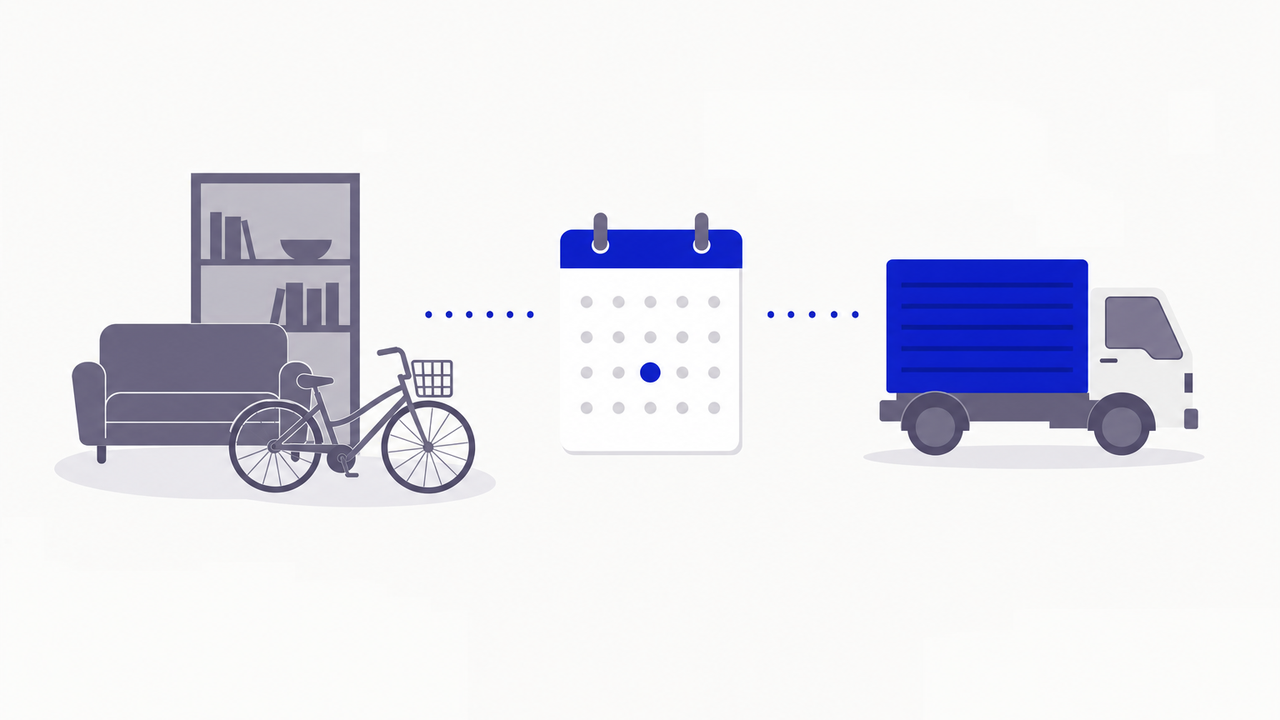
Bulky waste disposal is the process that confuses most newcomers — and for good reason. You cannot simply leave a sofa, bookshelf, bicycle, or microwave oven at the garbage collection point. All six Jonan-area wards require you to follow a specific advance-booking procedure. The good news is that it is straightforward once you know the steps, and the cost is generally low (typically ¥400–¥2,400 per item, depending on size).
Step-by-Step: Booking a Bulky Waste Collection
Confirm the item qualifies as bulky waste
In all six Jonan wards, an item is generally classified as sodai gomi if it exceeds 30 cm in any single dimension and does not fall under the Home Appliance Recycling Law (which covers TVs, air conditioners, refrigerators, and washing machines). Common examples: sofas, beds and mattresses, dining tables, bookshelves, bicycles, small fans, microwave ovens, and large suitcases. If you are unsure whether your item qualifies, call your ward’s general inquiry line and describe the item.
Contact your ward’s sodai gomi reception center
Each ward operates its own reception system. Most now offer both telephone booking and online booking. The staff member (or online form) will ask you to describe the item and its dimensions, then confirm the disposal fee and assign a collection date. Collection dates are typically one to three weeks out, so plan ahead if you are moving out or clearing furniture. In Meguro, Setagaya, and Ota, online booking is available in Japanese; phone lines may have limited English support, so if needed, ask a Japanese-speaking friend or your real estate agent to assist.
Purchase sodai gomi payment stickers
Once you have your collection date and fee confirmed, purchase the exact fee amount in sodai gomi stickers (粗大ごみ処理券) from any convenience store (FamilyMart, Lawson, or 7-Eleven). These stickers are sold at the checkout counter — ask staff for 粗大ごみ処理券 (sodai gomi shori-ken). Fees typically range from ¥400 to ¥2,400 per item, with exact amounts depending on item size and your ward’s schedule. You may need to combine multiple stickers to reach the required total.
Attach the sticker and put the item out on collection morning
Write your name (or apartment number) and collection date clearly in the space provided on the sticker. Affix the sticker to the item where it is clearly visible. On the morning of your collection date, place the item at the designated collection point for your building or street — this is usually the same spot where regular garbage is collected. Items should be placed before the stated cut-off time (generally 8:00 AM). Do not put the item out the night before, as this is against ward rules in most Jonan wards.
Special Cases: Home Appliances and Electronics
Certain large appliances — specifically televisions, air conditioners, refrigerators/freezers, and washing machines/dryers — fall under Japan’s Home Appliance Recycling Law (家電リサイクル法) and cannot be disposed of through the sodai gomi system. You have two main options. First, if you purchased the appliance from a retailer, you can return it to that retailer for recycling (they are legally required to accept it, though a recycling fee applies). Second, if the retailer is unavailable, you can contact your ward’s sodai gomi center, which will refer you to a certified collection service. Recycling fees for these items vary by appliance type and typically range from ¥1,000 to ¥5,000 or more, not including transport costs.
For smaller electronics — laptops, smartphones, tablets, printers — many manufacturers operate collection programs, and electronics retailers such as Yodobashi Camera and Bic Camera accept items for recycling. Batteries and fluorescent tubes have dedicated drop-off boxes at most convenience stores and supermarkets.
Moving Out: Timing Your Sodai Gomi Wisely
If you are leaving your apartment and need to dispose of furniture, book your sodai gomi collection at least two to three weeks before your move-out date. Collection slots fill up quickly, particularly at end-of-month periods when many leases end. If you leave items in the apartment or at the garbage point without proper stickers, your building management company may charge you directly for disposal — fees in this case tend to be significantly higher than the ward’s standard rates. Living in Jonan’s bilingual consultants often remind clients of this timeline during the move-out support process, as it is one of the most commonly overlooked logistics when leaving an apartment in central Tokyo.
Common Mistakes and How to Avoid Them
Even residents who have lived in Japan for years occasionally make sorting errors. The rules have enough nuance that mistakes are understandable — but knowing the most common ones in advance will help you avoid rejection stickers, neighbor complaints, and the inconvenience of carrying unsorted trash back to your apartment.
- Putting out trash on the wrong collection day — burnable, non-burnable, and recyclable categories each have their own assigned days, and mixing them up is the single most common error
- Using opaque black bags — all Jonan wards require transparent or semi-transparent bags; opaque bags will be rejected regardless of contents
- Leaving PET bottle caps and labels on the bottle — caps and labels must be removed and disposed of separately as plastic packaging
- Putting cooking oil down the drain — used cooking oil should be absorbed with newspaper or paper towels and placed in burnable waste, or taken to designated oil collection points at supermarkets
- Attempting to put a large appliance (TV, refrigerator) out as sodai gomi — these items require the home appliance recycling procedure and will not be collected through the standard sodai gomi system
- Putting trash out the night before collection — in most Jonan wards, garbage must be placed at the collection point on the morning of collection day, not the previous evening
Handling Food Waste Correctly
Food scraps are among the highest-volume items in burnable waste for most households. One practical tip: drain as much liquid as possible from food waste before bagging it. Wet waste is heavier, smells more in warm weather, and can cause bag leaks. Many Jonan-area residents keep a small lidded container under the sink to collect food scraps throughout the day, then transfer to the garbage bag on collection morning. Meat packaging trays, if clean, go with plastic packaging recyclables; if food-contaminated, they go with burnable waste.
Sorting Cardboard and Paper
Cardboard and paper are valuable recyclables, but they must be dry and clean. Pizza boxes contaminated with grease go into burnable waste, not paper recycling. Clean cardboard from deliveries and packaging should be flattened, bundled, and tied with string for recycling day. In Setagaya and Ota — both large wards with high delivery volumes — paper and cardboard recycling collection is typically once per week. Newspapers and magazines should also be bundled separately. Shredded paper, however, is generally placed in burnable waste in most Jonan wards, as it cannot be handled by standard paper recycling equipment.
What to Do When You Are Unsure
When in doubt about a specific item, the safest approach is to contact your ward office directly. Most Jonan-area ward websites now have English-language sorting guidance and, in some cases, searchable databases where you can type in an item name and find out which category it belongs to. The Tokyo Metropolitan Government also publishes a general English guide to waste sorting that covers the city-wide framework. For residents who are entirely new to Japan and navigating not just garbage rules but the full range of setup tasks — utility registration, ward office procedures, apartment rules — working with a bilingual real estate service like Living in Jonan can significantly reduce the stress of the early settlement period.
How Living in Jonan Helps Foreign Residents Get Settled
Understanding Japan’s garbage rules is just one part of setting up a home in Tokyo as a foreign resident. For many professionals relocating to work near Shibuya — at companies like Google, ByteDance, or the startups clustered in the area — the administrative and practical details of daily life can feel just as daunting as the apartment search itself. This is where the bilingual support offered by Living in Jonan becomes genuinely useful.
Living in Jonan is backed by 25 years of experience as a real estate consulting firm, with bilingual consultants who guide foreign residents through every stage of the rental process — from property search and contract explanation to understanding building rules, setting up utilities, and, yes, explaining the garbage sorting system for your specific ward. The service specializes in the Jonan area’s six wards: Meguro, Setagaya, Shibuya, Minato, Shinagawa, and Ota — precisely the neighborhoods where Shibuya commuters tend to settle.
If you are planning your move to central Tokyo and want support from consultants who communicate clearly in English and understand the practical questions foreign professionals actually ask, exploring the neighborhoods around Shibuya and their rental options is a good starting point. For those still weighing which ward to prioritize, a neighborhood comparison by lifestyle and budget can help narrow down the choice before the apartment search begins.
Summary: Your Garbage Sorting Checklist for Jonan Wards
Japan’s garbage sorting system has a learning curve, but it becomes second nature within a few weeks of moving in. The fundamentals are consistent across Tokyo’s Jonan area: sort into burnable, non-burnable, recyclables, and bulky waste; use transparent bags; follow your street’s specific collection schedule; and always book sodai gomi in advance. The ward-level differences — collection days, recyclable subcategories, specific local guidance — are worth checking directly on your ward’s website when you first move in.
- A foreign professional who has recently moved to or is planning to move to Meguro, Setagaya, Shibuya, Minato, Shinagawa, or Ota ward
- Someone setting up a home in Japan for the first time and navigating daily life logistics alongside an apartment search
- An expat who wants bilingual support to understand not just garbage rules, but the full range of practical living requirements in central Tokyo
About Living in Jonan’s bilingual rental support
For those also thinking about the logistics of commuting from the Jonan area, the Toyoko Line vs Den-en-toshi Line guide covers how to choose a neighborhood based on your commute route to Shibuya. And if you are looking for a walkable neighborhood close to tech offices, the walkable Tokyo neighborhoods for tech workers article maps out the best options across the Jonan area.
Frequently Asked Questions
Do I need to buy special garbage bags in Tokyo’s Jonan area?
No. Unlike some Japanese cities, all six Jonan-area wards (Meguro, Setagaya, Shibuya, Minato, Shinagawa, and Ota) do not require designated paid garbage bags. You simply need transparent or semi-transparent bags so collection staff can see the contents. Standard supermarket bags, convenience store bags, or bags from a 100-yen shop are all acceptable.
What should I do if my garbage is left behind with a rejection sticker?
Take the bag back to your apartment, read the sticker to identify the problem (wrong day, wrong bag, incorrect sorting), correct the issue, and put the bag out again on the next appropriate collection day. Do not leave rejected bags at the collection point — this is considered poor etiquette and may create problems with building management or neighbors.
How far in advance do I need to book a sodai gomi (bulky waste) collection?
It is advisable to book at least two to three weeks in advance, particularly if you are planning around a move-out date. Collection slots can fill up quickly, especially at the end of the month. Contact your ward’s sodai gomi reception center by phone or via their online booking system. After booking, purchase the required payment stickers at any convenience store.
Can I throw away a television or refrigerator as bulky waste?
No. Televisions, air conditioners, refrigerators/freezers, and washing machines/dryers fall under Japan’s Home Appliance Recycling Law and cannot be disposed of through the standard sodai gomi system. You must either return the appliance to the retailer where you purchased it or contact your ward office for referral to a certified collection service. A recycling fee applies.
Where can I find the garbage collection schedule for my specific address in the Jonan area?
Your building management company or real estate agent should provide a local garbage collection calendar when you move in. If you do not receive one, visit your ward’s official website — all six Jonan-area wards provide downloadable collection calendars, and most offer at least basic English guidance. You can also visit the ward office in person, where staff can assist with multilingual materials.