If you’re an expat working near Shibuya and searching for a neighborhood that balances genuine residential calm with effortless city access, Tomigaya and Yoyogi-Uehara consistently appear at the top of every shortlist — and for good reason. These two adjacent neighborhoods in Shibuya Ward offer something genuinely rare in central Tokyo: low-rise streets, strong international community presence, and a walkable lifestyle that high-income professionals at companies like Google Japan, ByteDance, and Shibuya-based startups tend to value highly.
Yet “I’ve heard they’re nice” and “I’m ready to sign a lease” are separated by a significant gap of practical information. How do rent levels compare across the two neighborhoods? Which one suits a single professional versus a couple? What are the language barriers in daily life, and how do you actually navigate the rental process as a foreign resident? This guide answers all of those questions with facts, comparisons, and the kind of on-the-ground detail that search results rarely surface.
Who this article is for
- Foreign professionals working around Shibuya Station who are actively evaluating neighborhoods in the Jonan area
- Expats relocating to Tokyo in 2026 who need English-language, practical information about Tomigaya and Yoyogi-Uehara
- Couples or single residents with a budget of roughly ¥150,000–¥300,000/month seeking a quiet yet well-connected base
What you’ll learn
- The concrete differences between Tomigaya and Yoyogi-Uehara across rent, lifestyle, access, and expat infrastructure
- A side-by-side comparison table covering the key axes that matter most for foreign residents
- Which neighborhood fits which type of expat, with clear persona-based recommendations
Understanding Tomigaya and Yoyogi-Uehara: The Basics
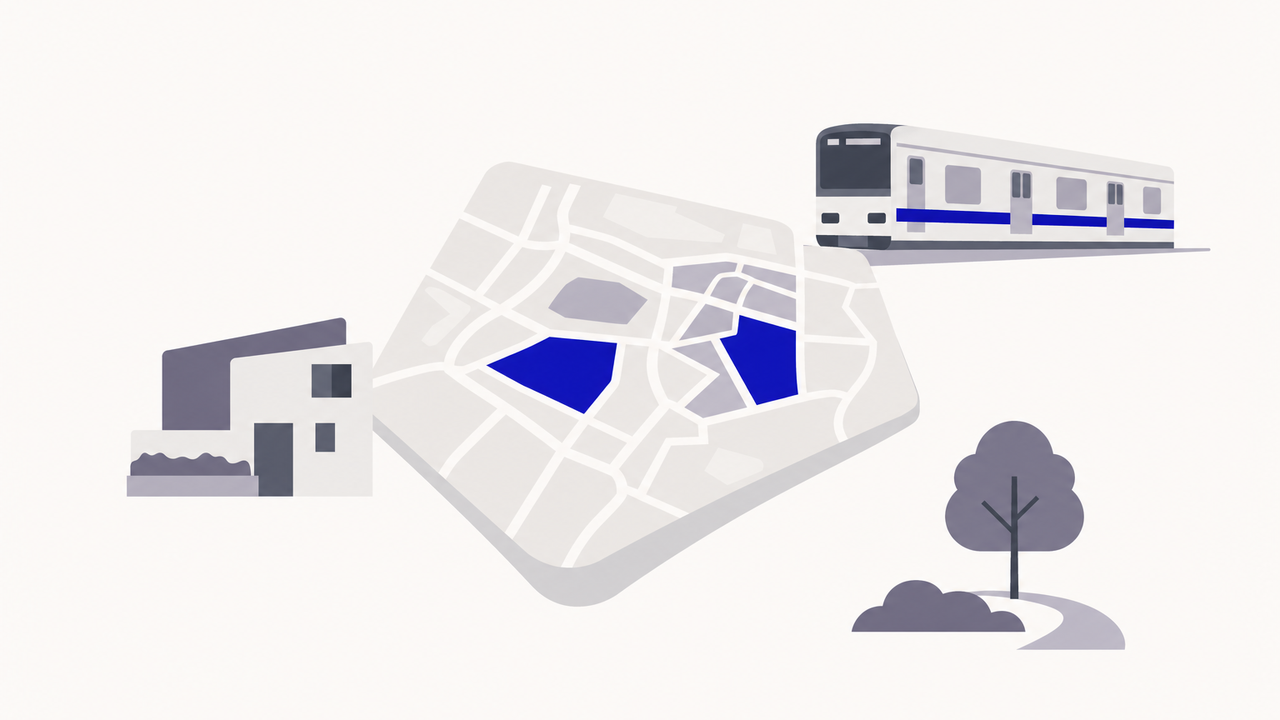
Before comparing the two neighborhoods directly, it helps to understand what makes this corner of Shibuya Ward distinct from the rest of Tokyo’s central residential market. Both Tomigaya and Yoyogi-Uehara sit within a 15-minute walk of Shibuya Station yet manage to feel remarkably removed from its commercial intensity.
What is Tomigaya, and why do expats gravitate toward it?
Tomigaya is a quiet residential pocket that stretches between Yoyogi Park to the north and the Daikanyama / Aobadai area to the south. It is one of the few central Tokyo neighborhoods where a two- or three-story building is the norm rather than the exception, giving the streets a human scale that high-rise districts simply cannot replicate. The area has developed a reputation for independent cafés, small restaurants, and design-oriented shops — the kind of neighborhood infrastructure that tends to attract creative professionals and internationally minded residents.
For expats specifically, Tomigaya offers proximity to Yoyogi Park, one of Tokyo’s largest green spaces, which functions as a genuine community hub: weekend markets, outdoor fitness, and informal social gatherings happen there regularly. The nearest train station is Yoyogi-Koen on the Tokyo Metro Chiyoda Line, which connects directly to central Shibuya in a few minutes. The neighborhood itself is primarily accessed on foot or by bicycle; many residents who work in Shibuya simply walk or cycle rather than taking the train at all.
Rent in Tomigaya sits at a premium relative to Tokyo’s broader market, as is generally the case with any address that combines central location with low-rise character. A one-bedroom unit of 35–50 sqm in a modern building tends to fall in the range of approximately ¥180,000–¥280,000 per month, though this varies by floor, building age, and precise sub-location. It is important to note that real estate markets fluctuate, and individual properties will differ; these figures are general reference points rather than guarantees.
What defines Yoyogi-Uehara as a neighborhood?
Yoyogi-Uehara sits immediately to the west of Tomigaya and is anchored by its train station of the same name, which serves both the Odakyu Odawara Line and the Tokyo Metro Chiyoda Line. This dual-line access is arguably the neighborhood’s single greatest practical advantage: residents can reach Shinjuku in roughly 7 minutes, Shibuya in about 12 minutes by train, and have a direct connection to Omotesando and Otemachi via the Chiyoda Line.
The neighborhood is well known within Tokyo’s expat community for its unusually high concentration of international residents, international schools within commuting distance, and a restaurant scene that reflects genuine multicultural diversity — Middle Eastern, French, Italian, Korean, and Ethiopian restaurants all coexist within a short walk of the station. This density of international infrastructure is not accidental; the area has historically attracted foreign nationals working in the arts, media, and technology sectors, and that community has built supporting services around itself over time.
Rent at Yoyogi-Uehara is broadly comparable to Tomigaya but tends to have a slightly wider range due to the greater variety of building stock near the station. Compact studio units closer to ¥150,000 per month exist in older buildings, while larger two-bedroom apartments in newer constructions can exceed ¥350,000 per month. As with any Tokyo neighborhood, the exact figure depends on building age, floor level, proximity to the station, and current market conditions — risks of fluctuation should always be considered.
How does the expat community differ between the two areas?
Both neighborhoods attract international residents, but the community character differs in meaningful ways. Tomigaya’s expat population tends to skew toward individuals who prioritize lifestyle aesthetics and neighborhood character — people who discovered the area through its café culture or creative community and chose it deliberately for its atmosphere. It is a neighborhood where “I live near Yoyogi Park” functions as a shorthand for a certain kind of urban sensibility.
Yoyogi-Uehara’s international community is larger in absolute terms and more functionally organized around shared practical needs: multilingual services, international food shopping, language exchange, and community events are all more formally established here. Expats who are new to Tokyo and need to build a support network quickly, or who place particular value on being able to conduct daily life primarily in English or their native language, often find Yoyogi-Uehara the more immediately navigable option.
Tomigaya vs Yoyogi-Uehara: Side-by-Side Comparison

The table below compares both neighborhoods across the evaluation axes that matter most for foreign professionals relocating to Tokyo. Use this as a quick reference before diving into the detailed analysis that follows.
| Evaluation Axis | Tomigaya | Yoyogi-Uehara |
|---|---|---|
| Nearest Station | Yoyogi-Koen (Chiyoda Line) | Yoyogi-Uehara (Odakyu + Chiyoda) |
| Train Access to Shibuya | ~5 min (Yoyogi-Koen → Yoyogi-Park → Shibuya, or walk ~15 min) | ~12 min by Chiyoda Line; ~7 min to Shinjuku by Odakyu |
| Approximate 1BR Rent Range | ¥180,000–¥280,000/mo (general reference) | ¥150,000–¥350,000/mo (general reference) |
| English-Language Services | Moderate — available but not the primary commercial focus | Strong — multilingual shops, restaurants, and services well established |
| International Community Density | Moderate — lifestyle-oriented international residents | High — one of central Tokyo’s most internationally diverse neighborhoods |
| Green Space Access | Excellent — Yoyogi Park walkable from most addresses | Good — parks accessible but slightly further from station area |
| Neighborhood Atmosphere | Quiet, low-rise, café-culture, design-conscious | Lively station area, diverse dining, cosmopolitan residential streets |
| Supermarket / Daily Shopping | Adequate — several options within cycling distance | Strong — multiple supermarkets near station, international food stores |
| Rental Market for Foreigners | Can be challenging without Japanese-language support | Can be challenging without Japanese-language support |
| Best Fit | Lifestyle-first expats who value calm, parks, and aesthetic character | Community-oriented expats who want multicultural infrastructure and dual-line access |
NOTE
Rent figures in this article are general reference ranges only. Actual rents vary by building age, floor, layout, and current market conditions. Real estate markets fluctuate, and individual properties will differ from any published range. Always verify current pricing with a licensed agent before making a decision.
Tomigaya in Depth: Lifestyle, Access, and What to Expect Day-to-Day
Tomigaya’s defining characteristic is the quality of its street-level experience. The neighborhood was not built around a major train station, which means its retail and hospitality offering evolved to serve people who live there rather than commuters passing through. The result is a concentration of independent cafés, small restaurants, florists, and specialty food shops that would be commercially unviable anywhere with higher foot traffic — and that is precisely what makes it appealing.
For a foreign professional accustomed to cities like London, Paris, or San Francisco, Tomigaya will feel familiar in a way that many Tokyo neighborhoods do not. The human-scale buildings, the weekend market culture at Yoyogi Park, and the presence of other international residents create an environment where being foreign does not feel remarkable. That said, the commercial layer of the neighborhood — the cafés, the small shops — is mostly Japanese-language only. Day-to-day administration (ward office procedures, utilities, lease negotiation) requires either Japanese ability or professional bilingual support.
Practically speaking, Tomigaya suits residents who are comfortable navigating the city primarily on foot or by bicycle, and who work either in Shibuya itself or at companies easily accessible from the Chiyoda Line. The Yoyogi-Koen station is a 10–20 minute walk from most Tomigaya addresses, which is worth factoring in if you will commute by train daily. For residents of companies near Google Japan’s office in Roppongi Hills, the Chiyoda Line connection is genuinely convenient.
| Axis | Tomigaya Assessment |
|---|---|
| Train access | Good — single Chiyoda Line; walking/cycling also viable to Shibuya |
| Expat community | Present but informal — lifestyle-focused rather than institutionally organized |
| Green space | Excellent — Yoyogi Park is a genuine neighborhood amenity |
| English infrastructure | Moderate — bilingual support needed for housing and admin |
| Rent range (1BR) | ¥180,000–¥280,000/mo (general reference only; subject to market fluctuation) |
- Single professionals or couples who prioritize neighborhood atmosphere and green space over community infrastructure
- Expats working in Shibuya or along the Chiyoda Line who plan to walk or cycle to work
- Residents comfortable navigating daily life in Japanese, or working with a bilingual agent for the initial setup
Yoyogi-Uehara in Depth: Access, Community, and Practical Living
Yoyogi-Uehara’s practical case rests almost entirely on its dual-line station and the depth of its international community. The station itself serves both the Odakyu Odawara Line and the Tokyo Metro Chiyoda Line, giving residents two separate rail networks with different routing options. Shinjuku is approximately 7 minutes away by the Odakyu Line; Omotesando, Akasaka, and Otemachi are accessible on the Chiyoda Line. For professionals whose work takes them to multiple parts of the city, this flexibility has genuine daily value.
The area around the station has a noticeably international character that goes beyond the presence of a few foreign residents. The restaurant cluster within a five-minute walk of the station includes well-regarded Middle Eastern, Indian, Italian, Korean, and specialty coffee establishments — and many of these operate in English as standard, not as a special accommodation. There is a general acceptance and familiarity with foreign customers that newer residents often find immediately reassuring when they first arrive in Tokyo.
Housing stock near Yoyogi-Uehara ranges from older standalone apartment buildings within a five-minute walk of the station to newer condominium developments slightly further out. As with all of central Tokyo, the rental process for foreign nationals carries specific challenges: many landlords require a Japanese guarantor, some still decline applications from non-Japanese nationals, and lease documentation is exclusively in Japanese. These are systemic features of the Tokyo rental market rather than area-specific issues — but they are worth understanding before beginning a search. A bilingual real estate consultant with experience placing foreign residents is often the most efficient path through this process.
| Axis | Yoyogi-Uehara Assessment |
|---|---|
| Train access | Excellent — Odakyu + Chiyoda Lines; Shinjuku 7 min, Shibuya 12 min |
| Expat community | High density — multilingual services, international dining, community events |
| Green space | Good — parks accessible; not as immediately adjacent as Tomigaya’s Yoyogi Park proximity |
| English infrastructure | Strong — many daily needs manageable in English; bilingual support still advisable for housing |
| Rent range (1BR) | ¥150,000–¥350,000/mo (general reference only; subject to market fluctuation) |
- Expats arriving in Tokyo for the first time who want to plug into an established international community quickly
- Professionals who commute to multiple locations across the city and need flexible rail access
- Couples or individuals who want to be able to handle most daily shopping and dining without Japanese language ability
The Rental Process for Foreign Nationals: What Both Neighborhoods Share
Regardless of which neighborhood you choose, renting an apartment in Tokyo as a foreign national involves several structural challenges that are worth understanding before you begin. The Japanese rental market operates on norms that differ significantly from those in the UK, US, Australia, or most European countries — and these norms apply to both Tomigaya and Yoyogi-Uehara equally.
Initial costs are typically substantial: in addition to the first month’s rent, it is common to pay a security deposit (shikikin) of one to two months’ rent, key money (reikin) of zero to two months depending on the property, and a real estate agency fee. The total upfront cost on a ¥200,000/month apartment can therefore reach ¥600,000–¥800,000 or more. It is essential to clarify all of these fees before agreeing to a viewing, as they vary considerably by property.
A guarantor requirement is common, and many Japanese landlords historically preferred a Japanese national as guarantor. This has become somewhat more flexible with the widespread adoption of professional guarantee companies (hoshō gaisha), but navigating this system requires knowledge of which companies are accepted by which landlords, and the entire application and approval process is conducted in Japanese. For a detailed walkthrough of the Tokyo rental process as a foreigner, the Complete Foreigner’s Guide to Renting an Apartment in Tokyo covers each step systematically.
Which Neighborhood Is Right for You? Persona-Based Recommendations
Both Tomigaya and Yoyogi-Uehara are genuinely excellent choices for foreign professionals working near Shibuya — but they are not interchangeable. The right choice depends primarily on what you value most in a residential neighborhood. The following persona-based breakdowns are intended to help you identify which profile most closely matches your situation.
Choose Tomigaya if: You prioritize lifestyle quality over logistics
Tomigaya is the stronger fit if you already have a working knowledge of Japanese (or are planning to develop one), if you work specifically in Shibuya or within easy reach of the Chiyoda Line, and if what you most want from your neighborhood is an aesthetically pleasing, calm residential environment with excellent access to green space. The area rewards people who enjoy exploring a neighborhood on foot — discovering the café that opens only on weekends, the bakery that sells out by 10am, the park path that is somehow never crowded even on a Sunday morning.
It is also worth noting that Tomigaya’s relative quietness translates to slightly lower noise levels and a more genuinely residential atmosphere than you will find within a few minutes of Yoyogi-Uehara station. If you work from home on some days and the quality of your immediate environment matters to your productivity, this is a meaningful consideration.
The main trade-off is practical: daily life in Tomigaya requires more Japanese language ability or more proactive use of bilingual support services than Yoyogi-Uehara. This is not a reason to rule it out, but it is a factor to plan for. If you want to understand how Tokyo’s major rail lines compare for Shibuya-based commuters more broadly, the Toyoko Line vs Den-en-toshi Line guide provides useful context for thinking about your overall access options.
Choose Yoyogi-Uehara if: You want community infrastructure from day one
Yoyogi-Uehara makes the most sense if you are arriving in Tokyo without an established local network, if you want to be able to handle the majority of your daily life without Japanese language ability, or if your work requires flexible rail access across multiple city destinations. The neighborhood’s combination of a large, active international community, dual-line access, and strong commercial infrastructure near the station means you can be functionally settled — grocery routine established, a few regular restaurant spots identified, a gym found — within the first two weeks of arrival.
For couples or individuals who are new to Tokyo entirely, the social dimension of Yoyogi-Uehara is also worth weighting. Building a life in a new country is easier when the infrastructure for meeting people with similar experiences already exists around you. The neighborhood’s established expat community creates informal networks — recommendations passed between residents, language exchange meet-ups, shared experience of navigating Japanese bureaucracy — that are difficult to manufacture from scratch in a quieter residential pocket.
The trade-off here is that the station area, while vibrant, is livelier than Tomigaya’s residential streets. If you are sensitive to urban noise or prefer a neighborhood that feels fully residential rather than commercially active, the blocks immediately around Yoyogi-Uehara station may feel more intense than you expect. Many residents resolve this by prioritizing apartments a 5–10 minute walk from the station, where the character becomes much quieter.
If you are still undecided: a practical framework for choosing
If the two personas above do not cleanly describe you, the following three questions can help sharpen the decision. First: how much Japanese can you currently use for daily tasks? If the honest answer is “very little,” Yoyogi-Uehara’s greater English infrastructure gives you more runway while you build that ability. Second: how important is outdoor/park access to your daily routine? If Yoyogi Park proximity is genuinely motivating — not just appealing in theory — Tomigaya’s location makes it worth the premium. Third: will you commute to a fixed location every day, or do you travel across the city regularly? If you regularly need Shinjuku, Omotesando, and Shibuya all in the same week, Yoyogi-Uehara’s dual-line access has compounding daily value.
For context on how these neighborhoods compare to other expat-popular areas in the Jonan region, the Tokyo neighborhood comparison guide maps out the full picture across lifestyle, budget, and commute axes. And if you are weighing Nakameguro as an alternative to either neighborhood, the Nakameguro Living Guide covers that area’s specific character in comparable depth.
- Need English-language support throughout the search and application process
- Want access to foreigner-friendly properties in Shibuya Ward’s most desirable residential neighborhoods
- Prefer working with a consultant who understands both the local market and the specific challenges foreign nationals face
About bilingual rental support in the Jonan area
Summary: Tomigaya and Yoyogi-Uehara for Expats in 2026
Both Tomigaya and Yoyogi-Uehara represent some of the most livable residential territory available to foreign professionals working near Shibuya. They share the core characteristics that make the western Shibuya Ward corridor appealing — low-rise streets, genuine neighborhood character, and a manageable distance from one of Tokyo’s most important employment hubs — while differing in ways that are meaningful enough to warrant a deliberate choice rather than a coin flip.
Tomigaya offers a quieter, more aesthetically cohesive residential experience centered on Yoyogi Park and an independent local commercial scene. It suits expats who are already comfortable in Tokyo or who are moving with a clear intention to build their Japanese language ability. Yoyogi-Uehara offers greater practical infrastructure for foreign residents who are new to Tokyo: dual-line rail access, a high-density international community, and a commercial environment where English is routinely accommodated. It suits expats who need to be functional quickly and who value flexibility in how they move around the city.
The one challenge that applies equally to both neighborhoods is the Japanese rental market itself. Lease documentation, guarantor requirements, upfront cost structures, and application screening processes are all conducted in Japanese and can be opaque to newcomers. Working with a bilingual consultant who has experience placing foreign nationals in central Tokyo properties is generally the most efficient way to navigate this — and can meaningfully expand the pool of properties you are actually able to apply for.
Is Yoyogi-Uehara or Tomigaya better for expats who don’t speak Japanese?
Yoyogi-Uehara is generally considered the more accessible option for expats with limited Japanese ability. The area has a larger established international community, more English-language dining and retail options, and greater general familiarity with foreign residents. That said, both neighborhoods require bilingual support for the rental process itself, as lease documentation and applications are handled in Japanese regardless of the area.
What is the typical rent for a one-bedroom apartment in Tomigaya or Yoyogi-Uehara?
As a general reference, one-bedroom apartments (roughly 35–50 sqm) in modern buildings in both neighborhoods tend to range from approximately ¥150,000 to ¥300,000 per month, with significant variation depending on building age, floor level, exact location, and current market conditions. Real estate markets fluctuate, and these figures are indicative only — always verify current pricing with a licensed agent. Please note that real estate market conditions carry inherent risk and no price trend can be guaranteed.
How do I get from Yoyogi-Uehara to Shibuya by train?
Yoyogi-Uehara Station is served by the Tokyo Metro Chiyoda Line and the Odakyu Odawara Line. The Chiyoda Line connects directly to Omote-sando, with interchange options for Shibuya; typical journey time to the Shibuya area is approximately 10–15 minutes depending on your specific destination. The Odakyu Line connects efficiently to Shinjuku (approximately 7 minutes), from which Shibuya is two stops on the Yamanote Line. For a detailed comparison of commute lines in this area, see the Toyoko Line vs Den-en-toshi Line guide.
Can foreigners rent apartments in Tomigaya and Yoyogi-Uehara without a Japanese guarantor?
It is increasingly possible to rent in these areas without a Japanese individual guarantor, as many landlords now accept professional guarantee companies (hoshō gaisha) instead. However, the availability of foreigner-friendly properties varies significantly by building and landlord, and navigating the approval process requires Japanese-language documentation. A bilingual agent experienced in placing foreign nationals is typically the most practical route to accessing the full range of available properties.
Are there good coworking spaces or cafés for remote work in these neighborhoods?
Yes — both neighborhoods have a strong café culture that supports informal remote work, and Tomigaya in particular is well known for high-quality independent coffee shops with a working-friendly atmosphere. For a more comprehensive overview of English-friendly remote work options across the Jonan area, the guide to coworking cafés and remote work spots covers the wider region in detail.