Why Tokyo’s Obvious Choices Often Disappoint High Earners

Relocating to Tokyo with a strong salary and a clear set of priorities sounds like it should make apartment hunting easier. In practice, many high-earning expats in tech and finance discover the opposite: more budget means more options, but the “premium” areas that real estate sites surface first are not always the ones that match the way a senior professional actually lives.
The mismatch typically shows up within the first few months. Commutes that looked fine on a map turn out to involve two transfers at peak hour. Neighborhoods marketed as “international” lack the quiet, walkable residential character that makes unwinding after a demanding workday feel possible. Finding bilingual support throughout the leasing process — someone who can explain guarantor requirements, contract clauses, and building rules in plain English — proves harder than expected. Understanding which areas genuinely suit a professional lifestyle near Shibuya requires going beyond price per square metre.
This guide is designed to close that gap. It draws on practical knowledge of Tokyo’s central residential market to map the neighborhoods that consistently work well for professionals earning 10 million yen or above, working in tech or finance, and commuting primarily through or around Shibuya.
This article is written for you if you are:
- ●A foreign professional in your 20s to 40s working at a tech company, investment firm, or financial institution in or near Shibuya
- ●Earning a household income of 10 million yen or more and expecting your accommodation to reflect that
- ●Looking for genuinely bilingual support to navigate the Japanese rental market with confidence
By the end of this article you will know:
- ●Which five neighborhoods offer the best combination of commute, lifestyle, and residential quality for your profile
- ●What to look for — and what to watch out for — when evaluating premium rentals in central Tokyo
- ●How to approach the search process in a way that avoids the most common and costly mistakes
The Real Criteria That Matter for High-Earning Expats

Before comparing specific neighborhoods, it is worth establishing what actually drives satisfaction for senior professionals in Tokyo’s rental market. The criteria that matter most are not always the ones that get the most space on listing sites.
Commute efficiency over commute length
A 25-minute commute on a single direct line is meaningfully different from a 20-minute commute involving two transfers during peak hour. For professionals who may start early calls with European or American time zones, or who leave the office late, the stress of a complicated commute compounds quickly. The best neighbourhoods for this profile sit within one or two stops of a direct Shibuya connection, or offer an express service that dramatically shortens real journey times. Walking to the office entirely — possible from parts of Daikanyama, Nakameguro, and Ebisu — remains the most-valued option among those who have experienced it.
Residential scale and privacy
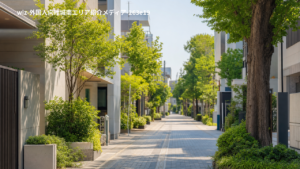
Many expats arrive expecting that spending more will automatically secure more space and quiet. Tokyo’s premium market does not always work that way. Some of the city’s most sought-after postcodes — particularly those adjacent to commercial or entertainment districts — combine high rents with dense foot traffic, narrow streets, and buildings that sit very close together. Areas like Shirokanedai, Hiroo, and the quieter pockets of Setagaya offer a different register: tree-lined streets, larger setbacks between buildings, and a residential scale that feels genuinely private.
International infrastructure that works in practice
International infrastructure in Tokyo is sometimes used as a marketing term that means “close to one foreign supermarket.” In practice, what matters is a cluster of services that work together: a grocery store with reliable imported products, a pharmacy where staff can communicate in English, a gym that does not require a Japanese guarantor, and — critically — access to a property consultant who can explain the full leasing process in English.
The Five Neighbourhoods That Consistently Work

| Neighbourhood | Ward | Approx. commute to Shibuya | Character | Typical rent range (1LDK–2LDK) |
|---|---|---|---|---|
| Daikanyama | Shibuya | Walk or 1 stop (5–15 min) | Boutique, low-rise, very walkable | 230,000–450,000 JPY/mo |
| Nakameguro | Meguro | 1–2 stops (8–15 min) | Canal-side, creative, lively street scene | 200,000–400,000 JPY/mo |
| Hiroo / Minami-Azabu | Minato | 2 stops or 20–25 min by Hibiya line | Embassy district, established expat community | 250,000–600,000 JPY/mo |
| Shirokanedai | Minato | Via Mita line or Namboku line, 20–30 min | Quiet, tree-lined, residential and refined | 230,000–500,000 JPY/mo |
| Yoga / Sangenjaya (west Setagaya) | Setagaya | Den-en-toshi line express, 10–18 min | Spacious, green, excellent value per sq. m. | 160,000–320,000 JPY/mo |
INFO
Rent ranges shown are approximate and reflect general market conditions as of 2026. Actual rents vary significantly based on building age, floor level, unit size, and included facilities. Always verify current pricing with a specialist.
Daikanyama: the most walkable premium option
Daikanyama is the closest premium residential option to Shibuya station, with many apartments genuinely within walking distance of major tech offices on the Shibuya-Ebisu axis. The neighbourhood is low-rise by Tokyo standards and the combination of independent cafés, international restaurants, and design-conscious retail gives it a distinctly liveable character without the tourist-facing energy of neighbouring Harajuku.
Nakameguro: canal life and creative energy
Nakameguro sits one or two stops from Shibuya on the Toyoko line, with the Meguro River canal providing an unusually pleasant residential streetscape for inner Tokyo. The area has developed a strong concentration of internationally oriented cafés, restaurants, and independent shops over the past decade.
Hiroo and Minami-Azabu: established international infrastructure
Hiroo has been home to Tokyo’s expat community for decades, and the infrastructure shows it. The National Azabu supermarket, multiple international schools, a concentration of embassies, and a density of English-speaking residents make it the area where practical daily life in English is genuinely easiest.
Shirokanedai: refined quiet close to the city
Shirokanedai is less internationally prominent than Hiroo but offers a residential character that many professionals come to prefer after living in more active neighbourhoods. The streets are wider, tree-lined, and genuinely quiet.
Yoga and Sangenjaya: the value case in west Setagaya
For professionals whose priority is square footage, green space, and a genuine neighbourhood character at a lower price per metre than inner Shibuya or Minato, the Den-en-toshi line corridor offers a compelling alternative. Yoga and Sangenjaya sit 10 to 18 minutes from Shibuya on the express service.
What the Leasing Process Actually Looks Like for High-Earning Expats
Guarantor requirements and how they apply to foreign nationals
Japanese landlords have traditionally required a personal guarantor as a condition of renting. For foreign nationals without established Japanese family connections, this requirement has historically been a significant barrier. The market has shifted: many landlords in central Tokyo’s premium segment now accept institutional guarantor companies in place of personal guarantors.
Contract documents and what to look for
Japanese tenancy contracts are typically 10 to 20 pages of dense Japanese text, often including a separate building rules document that specifies restrictions on noise, guests, pet ownership, and the use of common areas. Having a consultant who can read and explain the original Japanese document is meaningful protection.
Initial costs and how to budget accurately
The initial cost of renting in central Tokyo — covering key money, security deposit, agent commission, guarantor fees, and fire insurance — typically amounts to four to six months of rent paid upfront at signing. For a unit at 250,000 yen per month, this implies initial outlay of roughly 1,000,000 to 1,500,000 yen.
Common Mistakes High-Earning Expats Make When Searching Independently
- ●Relying exclusively on English-language listing portals
- ●Viewing properties without confirming that the building accepts foreign nationals
- ●Committing to an area based on a weekend visit rather than a weekday commute-time assessment
- ●Signing a contract before having the Japanese-language original reviewed in full
- ●Underestimating initial costs and being forced to downgrade at the last stage
How Living in Jonan Approaches the Premium Rental Search
Living in Jonan is built on 25 years of experience as a real estate consulting firm operating in Tokyo, with a specific focus on helping international residents find homes in the central wards. The team works in English throughout — from the first conversation about area preferences through to contract review and move-in support.
- ●Need English-speaking support throughout the entire rental process
- ●Are working near Shibuya and want expert guidance on which areas suit your commute and lifestyle
- ●Want access to a broader inventory than English-language listing sites alone provide
- ●Prefer to have contracts and building rules explained clearly before you sign
Frequently Asked Questions
Which Tokyo neighbourhood offers the best commute to Shibuya for tech workers?
Daikanyama and Nakameguro offer the shortest commutes, with many addresses within walking distance or one stop of Shibuya station. Hiroo connects via the Hibiya line in around 20 minutes.
Can foreign nationals rent premium apartments in central Tokyo without a Japanese guarantor?
Yes, increasingly so. Many landlords in central Tokyo’s premium segment now accept institutional guarantor companies in place of personal guarantors.
What is the realistic initial cost of renting a premium apartment in Tokyo in 2026?
Initial costs typically total four to six months of the monthly rent. For a 250,000 yen per month apartment, budget roughly 1,000,000 to 1,500,000 yen upfront.
Is Hiroo still the best area for expats in Tokyo?
Hiroo remains the area with the most established English-language infrastructure. Nakameguro, Shirokanedai, and the Setagaya corridor have all developed strong international amenity and may offer better value depending on your priorities.
Ready to find your Tokyo apartment?
Bilingual consultants guide you so foreign residents can find a home with confidence.