Choosing between Daikanyama and Ebisu is one of the most common dilemmas for foreign professionals relocating to Tokyo’s Jonan area. Both neighborhoods sit within walking distance of each other, both offer refined urban living, and both attract a high concentration of international residents working in Shibuya’s tech and creative industries — yet they deliver meaningfully different day-to-day experiences.
If you are searching for an apartment near Shibuya and have narrowed your shortlist to these two addresses, the decision rarely comes down to commute time alone. Lifestyle fit, rental budget, neighborhood character, and access to English-friendly services all play a role. This guide breaks down every major dimension so you can make an informed choice before you start scheduling viewings.
Who this article is for
- Foreign professionals in their 20s–40s commuting to Shibuya, Daikanyama, or nearby Jonan-area offices
- Singles or couples without children looking for a design-forward, walkable neighborhood in Tokyo
- Anyone comparing rental options in central Tokyo who needs English-language guidance on area differences
What you’ll learn
- How Daikanyama and Ebisu differ in terms of atmosphere, rent levels, and daily convenience
- Which neighborhood is the better fit depending on your lifestyle priorities and budget
- Practical tips on renting in either area as a foreign resident, including bilingual support options
What to Consider When Choosing Between Daikanyama and Ebisu

Before diving into neighborhood specifics, it helps to set the right evaluation framework. Both areas are genuinely desirable — the question is which one aligns with your particular priorities as an expat renter in Tokyo.
Location and Commute to Shibuya
Both Daikanyama and Ebisu offer exceptional access to Shibuya, but the mechanics differ. Daikanyama Station sits on the Tokyu Toyoko Line, putting Shibuya one stop away — typically a two-to-three minute train ride. Ebisu Station, served by the JR Yamanote Line and the Tokyo Metro Hibiya Line, connects to Shibuya in one stop on the Yamanote Line (approximately three minutes).
In practical terms, the commute difference between the two is negligible if your destination is Shibuya. Where Ebisu gains a clear advantage is in broader network access: the Yamanote Line gives you direct, transfer-free connections to Shinjuku, Harajuku, Meguro, Osaki, and beyond. The Hibiya Line, meanwhile, runs northeast through Roppongi to Ginza and central business districts. For professionals at companies like Google Japan (Shibuya Stream), ByteDance, or international startups clustered around Daikanyama and Nakameguro, Daikanyama’s single-stop simplicity can be equally compelling.
If you travel frequently to multiple parts of Tokyo for work or social life, Ebisu’s multi-line access is a meaningful practical advantage. If Shibuya is essentially your sole destination, Daikanyama’s proximity is perfectly sufficient.
Rental Market and Budget Expectations
Rent in both neighborhoods is among the highest in the Jonan area, which itself encompasses some of Tokyo’s most sought-after residential districts across Meguro-ku, Setagaya-ku, Shibuya-ku, Minato-ku, Shinagawa-ku, and Ota-ku. As a general tendency, Ebisu commands a slight premium over Daikanyama for comparable unit types, reflecting its proximity to major transport infrastructure and the Minato-ku border.
For a one-bedroom or 1LDK apartment (roughly 35–55 square meters) in either neighborhood, monthly rent in the range of ¥180,000–¥280,000 is common, though prices vary significantly depending on building age, floor level, and specific block. Two-bedroom or 2LDK units suitable for couples can reach ¥300,000–¥500,000 per month in prime locations. These are indicative figures based on general market conditions and should be verified with a licensed real estate consultant, as the rental market is subject to change. Note that advertised rent does not include initial move-in costs such as shikikin (security deposit, 敷金), reikin (key money, 礼金), agency fees, and guarantor fees, which can add two to four months’ rent to upfront costs.
Neighborhood Character and Daily Life
Atmosphere is arguably the most subjective dimension, yet it matters enormously for long-term satisfaction. Daikanyama is consistently described by residents as a village-within-a-city: low-rise, quiet on side streets, with a strong concentration of independent boutiques, concept cafés, and design studios. T-Site (Daikanyama Tsutaya Books) has become a cultural landmark and a genuine gathering point for design-conscious residents. Streets here feel personal and unhurried.
Ebisu carries a slightly more polished, cosmopolitan energy. Yebisu Garden Place, the redeveloped Sapporo Brewery complex, anchors the neighborhood with restaurants, a museum, a cinema, and seasonal events. The restaurant and bar scene around Ebisu Station is broader and more varied than Daikanyama’s, making it a natural base for professionals who entertain frequently or value immediate access to a wide dining selection. Both neighborhoods are internationally welcoming, but Ebisu’s higher foot traffic means more businesses with English-capable staff as a general tendency.
Daikanyama vs Ebisu: Side-by-Side Comparison

The table below summarizes how each neighborhood scores across the dimensions most relevant to foreign professionals relocating to the Jonan area. Use it as a quick reference before reading the detailed breakdowns that follow.
| Evaluation Axis | Daikanyama | Ebisu |
|---|---|---|
| Train access (to Shibuya) | Toyoko Line, 1 stop (~2–3 min) | Yamanote Line, 1 stop (~3 min) |
| Number of train lines | 1 line (Tokyu Toyoko) | 2 lines (JR Yamanote + Hibiya) |
| Typical 1BR rent range | ~¥180,000–¥260,000/mo (general tendency) | ~¥200,000–¥280,000/mo (general tendency) |
| Neighborhood character | Quiet village, boutique, design culture | Cosmopolitan, lively dining and bar scene |
| Supermarket / daily shopping | Good (several options within walk) | Very good (wider variety, Atré Ebisu mall) |
| Dining and café scene | Curated independent spots, quieter evenings | Broad range, active evenings, Yebisu Garden Place |
| English-language friendliness | Good — many international residents | Very good — high expat density, English menus common |
| Noise / street atmosphere | Calm, low traffic on residential streets | Moderate buzz around station, quieter inland |
| Best suited for | Design lovers, creatives, those wanting calm city life | Social professionals, frequent travelers, broader commute needs |
* Rent figures are indicative based on general market observations and are subject to change. Real estate markets have variability risks. Always confirm current prices with a licensed professional.
Living in Daikanyama: A Detailed Look

Daikanyama is one of those rare Tokyo neighborhoods that manages to feel simultaneously central and unhurried. For foreign professionals who want city convenience without urban noise, it consistently ranks among the most desirable addresses in the Jonan area.
The Daikanyama Lifestyle: What Daily Life Actually Looks Like
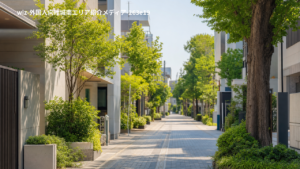
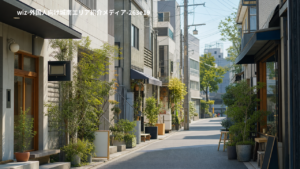
Day-to-day life in Daikanyama revolves around its distinctive low-rise streetscape, which is unusual by Tokyo standards. Building height restrictions in much of the neighborhood preserve an open-sky feeling that residents frequently cite as a primary reason for choosing the area. Morning walks to the local bakery or a specialty coffee shop feel genuinely pleasant, not merely functional.
The neighborhood is anchored culturally by Daikanyama T-Site, a complex built around Tsutaya Books and surrounded by café spaces, design shops, and a carefully curated lifestyle offering. It has become a legitimate community space for the neighborhood’s international population — a place where you are likely to hear English, French, and other languages on any given day. The surrounding streets contain a high density of independent fashion boutiques, furniture studios, florists, and restaurants that would hold their own in any major global city.
For daily necessities, there are supermarkets within comfortable walking distance, and the area connects naturally on foot or by bicycle to Nakameguro’s riverside café strip — a walk of roughly 10–15 minutes. Residents who enjoy cycling find Daikanyama particularly well-suited, as the terrain is mostly flat and distances to Shibuya, Nakameguro, and Ebisu are all manageable without public transit.
- Creative professionals, designers, and those in the fashion or media industries who appreciate a curated aesthetic environment
- Singles or couples who prioritize neighborhood character and a calm, walkable lifestyle over transport network breadth
- Those whose primary commute destination is Shibuya or along the Toyoko Line corridor (Nakameguro, Jiyugaoka, Yokohama)
Renting in Daikanyama as a Foreign Resident
Finding an apartment in Daikanyama as a non-Japanese renter comes with challenges common across central Tokyo: many landlords historically preferred Japanese nationals as tenants, though this tendency has been easing in recent years, particularly in buildings managed by larger property companies. The area’s high demand means that desirable units move quickly — typically within days of listing.
The building stock in Daikanyama leans toward older, low-rise structures with character, along with a smaller number of newer high-spec boutique buildings. If you require specific facilities such as a dishwasher, in-unit washer-dryer, or full English-language property management support, your options narrow considerably. Working with a bilingual real estate consultant who has existing relationships with Daikanyama property managers meaningfully increases your chances of securing the right unit — and of navigating the initial move-in cost structure (shikikin/reikin/guarantor fees) without confusion.
For context on how the Tokyu Toyoko Line serves Daikanyama and connects to other Jonan-area neighborhoods, the Toyoko Line vs Den-en-toshi Line guide offers useful background on line characteristics and commuting patterns.
Community, Cafés, and Green Spaces
Daikanyama’s international community is well-established and self-sustaining. Several cafés function as de facto expat gathering points, and there are yoga studios, pilates facilities, and wellness-oriented businesses with English-capable instructors. Proximity to Nakameguro means residents can easily access the canal-side running and cycling paths — a meaningful quality-of-life asset for active professionals.
Green space within Daikanyama itself is modest by comparison with larger parks, but Saigoyama Park and several pocket gardens provide adequate outdoor breathing room. Those who place high value on large park access may find the broader Jonan area — including the Meguro River corridor — a better frame of reference than the neighborhood boundary alone.
Living in Ebisu: A Detailed Look

Ebisu sits at the intersection of convenience and sophistication. It offers a slightly more energetic urban environment than Daikanyama while maintaining the refined character that defines the southern half of Shibuya-ku and the northern edge of Meguro-ku.
The Ebisu Lifestyle: Breadth and Connectivity
The defining characteristic of Ebisu as a residential base is its combination of immediate local amenity and network reach. At street level, the neighborhood delivers a complete urban living experience: Atré Ebisu (a commercial complex directly connected to the station) provides supermarket, pharmacy, apparel, and dining under one roof. Beyond the station, the streets fan out into restaurant clusters, wine bars, and cafés that cater to an internationally minded clientele.
Yebisu Garden Place, a roughly seven-minute walk from the station, remains one of central Tokyo’s more successful urban regeneration projects. The complex includes multiple restaurants, the Tokyo Metropolitan Museum of Photography, a cinema (Yebisu Garden Cinema), seasonal illuminations, and the Yebisu Beer Museum — making it a genuine destination both for residents and visitors. Having this kind of curated leisure space within walking distance of home is a quality-of-life asset that Daikanyama does not replicate in quite the same way.
Noise levels vary significantly by block. Streets immediately adjacent to Ebisu Station can be busy through the evening, but residential streets 5–10 minutes from the station are notably quieter. Choosing an apartment one or two blocks off the main commercial spine typically delivers a much calmer living environment while retaining full walkability to station amenities.
- Professionals who commute in multiple directions across Tokyo (Roppongi, Ginza, Shinjuku, Osaki) and value multi-line access
- Those who socialize frequently and want immediate access to a broad dining, bar, and entertainment scene
- Couples or individuals who want strong daily convenience with minimal planning — supermarket, pharmacy, café all within 5 minutes on foot
Renting in Ebisu as a Foreign Resident
Ebisu’s rental market is competitive and supply-constrained. The neighborhood has a well-established international population — many long-term expat residents work in finance, consulting, media, or the tech industry — and landlords in higher-spec buildings are generally accustomed to foreign tenants. That said, the standard Japanese rental requirements apply: a reliable income source, a guarantor (or guarantor company), and complete documentation are essential. For those on company-sponsored housing allowances, Ebisu is frequently within the approved budget range for senior employees at international firms.
Building types in Ebisu are more varied than in Daikanyama. You will find genuine high-rise options closer to the Minato-ku border, a selection of newer mid-rise buildings with concierge services, and older low-rise structures offering larger footprints at relatively lower per-square-meter rents. This variety makes Ebisu a viable option across a wider range of unit-type preferences.
Initial move-in costs follow the same structure as elsewhere in central Tokyo: expect shikikin of one to two months’ rent, reikin of zero to two months (varies by building), agency fee of one month, and first month’s rent. Some newer, larger-company-managed buildings have moved away from reikin, but this is not universal. Verifying these costs in advance with a bilingual consultant prevents unpleasant surprises.
Access to English-Language Services and the Expat Community
Ebisu has one of the higher concentrations of English-friendly services of any Jonan-area neighborhood. Multiple clinics offer English consultations, international supermarket options are accessible within a short taxi or train ride (National Azabu in Hiroo is approximately 10 minutes by foot), and the presence of several international schools in the broader Minato-ku and Hiroo areas makes Ebisu a natural consideration for families — though this article focuses primarily on the singles and couples demographic.
For professionals working near Google Japan’s Shibuya Stream office or other Jonan-area tech campuses, the neighborhood guide for living near Google Japan provides additional context on how Ebisu fits within the broader commuting and lifestyle landscape.
Daikanyama or Ebisu? Making the Right Choice for You
Neither neighborhood is objectively superior — each is genuinely excellent by central Tokyo standards. The decision comes down to how you weigh the specific trade-offs against your lifestyle, daily commute pattern, and budget.
Choose Daikanyama If Your Priorities Look Like This
Daikanyama is the stronger choice when neighborhood atmosphere and walkability are your primary values. If you are a design professional, someone working in fashion or media, or simply a person who wants to feel embedded in a curated, quiet residential community rather than a buzzing urban hub, Daikanyama will likely feel like home faster.
It also works particularly well if your commute is straightforward — primarily to Shibuya or along the Tokyu Toyoko Line toward Nakameguro, Jiyugaoka, or Yokohama. For those working remotely or from coworking spaces, the neighborhood’s café culture and quiet streets provide an excellent work-life environment. The guide to English-friendly coworking cafés in the Jonan area includes several options within and around Daikanyama worth bookmarking.
Budget-wise, Daikanyama can offer a marginal cost advantage over comparable Ebisu units, though the difference is not dramatic and varies significantly by specific property. If you find a well-maintained, characterful apartment on a quiet Daikanyama side street, you are unlikely to feel you have compromised.
| Pros of Daikanyama | Cons of Daikanyama |
|---|---|
|
|
Choose Ebisu If Your Priorities Look Like This
Ebisu is the stronger choice when network access and immediate daily convenience are non-negotiable. Professionals who commute in multiple directions — combining Shibuya with Roppongi, Ginza, Osaki, or Shinjuku throughout the week — will feel the benefit of two independent train lines every day. If your social life is active and you want restaurants, bars, and entertainment genuinely walkable from your front door (not just nearby by Tokyo standards), Ebisu delivers this more comprehensively than Daikanyama.
It is also the more practical choice if you expect to rely heavily on daily convenience infrastructure — an integrated mall attached to the station, a wide supermarket selection, and broadly English-capable commercial services. For those whose employer provides a housing allowance at the upper end of the Jonan-area range, Ebisu’s slightly higher rents are typically manageable and the additional access is generally worth the premium.
| Pros of Ebisu | Cons of Ebisu |
|---|---|
|
|
Practical Next Steps: Finding an Apartment in Either Neighborhood
Whichever neighborhood you choose, the mechanics of renting in Tokyo as a foreign national require careful preparation. Standard documentation includes proof of income (employment contract, pay stubs, or company letter), residence card (Zairyu Card), passport, and in many cases a Japanese guarantor or guarantor company. Many landlords require proof that your income meets a minimum multiple of monthly rent — typically 30–36 times the monthly rent in annual income, though this varies by building and landlord.
Working with a bilingual consultant significantly reduces friction at every stage: searching listings, communicating requirements to landlords, negotiating lease terms, and understanding the full breakdown of initial costs. For a comprehensive overview of how the Tokyo rental process works for foreign residents, the complete guide to renting as a foreigner in Tokyo covers each step in detail.
Both Daikanyama and Ebisu fall within the Jonan area’s core rental market. For broader context on how these neighborhoods compare to other walkable Shibuya-adjacent areas, the walkable Tokyo neighborhoods guide for tech workers provides a useful wider frame of reference.
- Foreign professionals in the Jonan area who need a bilingual consultant to navigate landlord requirements in Japanese
- Those wanting to search Daikanyama and Ebisu listings online by area and train line before committing to in-person viewings
- Renters who value 25 years of real estate consulting experience and safe, verified property information
How bilingual support changes the rental experience
Summary: Two Exceptional Neighborhoods, One Clear Decision Framework
Daikanyama and Ebisu are both genuinely compelling addresses for foreign professionals in Tokyo’s Jonan area. They sit adjacent to each other, share the same premium market tier, and both offer the proximity to Shibuya that makes them natural choices for the city’s international workforce. The key differences come down to atmosphere, network coverage, and daily convenience breadth.
Choose Daikanyama if you value a quiet, design-forward neighborhood character, a relatively straightforward commute primarily to Shibuya or along the Toyoko Line, and the kind of walkable boutique-and-café lifestyle that makes everyday life feel considered rather than merely efficient.
Choose Ebisu if you need broader train network access across multiple Tokyo business districts, want immediate access to a wide dining and entertainment scene, and are willing to pay a modest rent premium for the convenience that a dual-line station and integrated mall provide.
Either way, navigating the Tokyo rental market as a non-Japanese speaker is considerably smoother with bilingual support from a consultant who understands both the local property landscape and the specific documentation requirements for foreign renters. The broader Tokyo neighborhood comparison guide can help if you are still weighing additional areas before committing to a shortlist.
Frequently Asked Questions
Is Daikanyama or Ebisu better for a single professional on a company housing allowance?
Both neighborhoods are within the budget range typical for international company housing allowances at senior-level positions. Ebisu tends to offer slightly higher-spec building options and multi-line access, which many companies and their employees prefer for the added flexibility. Daikanyama is often a better personal fit for professionals who prioritize neighborhood atmosphere and a calmer lifestyle. The right choice depends on whether your allowance comfortably covers the Ebisu premium and how much you value commute routing flexibility.
Can foreigners rent apartments in Daikanyama and Ebisu without a Japanese guarantor?
Yes, in many cases. Most newer buildings and those managed by larger property companies accept guarantor companies (hoshō gaisha, 保証会社) in lieu of a personal Japanese guarantor. This is increasingly the standard practice in both neighborhoods. The guarantor company charges a fee, typically equivalent to 30–100% of one month’s rent paid upfront, with a smaller annual renewal fee. A bilingual consultant can advise on which properties accept this arrangement and which require additional documentation.
How walkable is it between Daikanyama and Ebisu?
The two neighborhoods are directly adjacent and comfortably walkable between their stations — typically 15–20 minutes on foot, though the specific walking time depends on your origin and destination addresses. Many residents of Daikanyama regularly walk to Ebisu for its broader restaurant and shopping options, and vice versa. By bicycle the journey takes roughly 5–8 minutes. This proximity means that choosing one neighborhood does not meaningfully limit your access to the other’s amenities.
Are there English-language property listings specific to Daikanyama and Ebisu?
Some Tokyo-focused property platforms offer English-language search interfaces and allow filtering by train line and station, which covers both areas. However, the most effective approach for high-demand neighborhoods like Daikanyama and Ebisu is to work directly with a bilingual real estate consultant who has active relationships with local property managers. Many units in these neighborhoods are filled quickly — sometimes before they appear on public listing platforms — and a consultant with local market knowledge can access a wider inventory on your behalf.
What are the main initial costs I should budget for when renting in either neighborhood?
Initial move-in costs in central Tokyo typically include: shikikin (security deposit, 敷金) of one to two months’ rent; reikin (key money, 礼金) of zero to two months’ rent depending on the building; agency fee of approximately one month’s rent plus consumption tax; guarantor company fee of roughly 30–100% of one month’s rent; and first month’s pro-rated rent. For a ¥200,000/month apartment, total upfront costs can realistically reach ¥600,000–¥900,000 or more. Always confirm the specific fee structure for any property before proceeding, as these vary significantly between buildings. Note that real estate markets carry variability risks; current prices and conditions should be verified with a licensed professional.