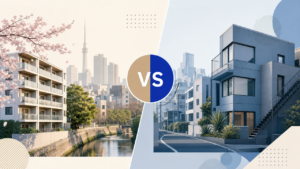
If you are a foreign professional working in Shibuya and searching for a neighborhood to call home in Tokyo, the sheer number of options can feel overwhelming — especially when every area looks appealing on a map but tells a completely different story in real life. Nakameguro and Shimokitazawa are two neighborhoods that consistently appear at the top of expat shortlists, yet they attract very different kinds of people. Choosing between them without the right information could mean signing a lease that does not match your actual lifestyle.
This guide is built specifically for internationals working in or around Shibuya who want to understand what daily life in each neighborhood genuinely looks and feels like — from commute times and rent budgets to the coffee shops, supermarkets, and English-speaking services that make a real difference when you are building a new life in Tokyo. By the time you finish reading, you will have a clear, evidence-based framework for deciding which neighborhood fits your priorities best.
Who this article is for
- Foreign professionals in their 20s to 40s working in or near Shibuya who need English-friendly housing support
- Expats considering their first Tokyo apartment and weighing lifestyle fit against commute distance
- Couples or singles relocating to Japan from overseas who want honest, practical neighborhood intelligence
What you’ll learn
- A side-by-side comparison of Nakameguro and Shimokitazawa across rent, commute, lifestyle, and expat infrastructure
- The specific type of resident each neighborhood suits best, backed by real-world context
- Practical tips for navigating the Tokyo rental market as a foreign national in 2026
Why Tokyo Neighborhood Choices Go Wrong for Expats

Most expats who end up unhappy with their Tokyo neighborhood made their decision based on aesthetics rather than infrastructure. A weekend visit during cherry blossom season is a notoriously poor predictor of what Tuesday morning at 8:10 a.m. will feel like on that neighborhood’s train platform.
The commute trap: looking great on Google Maps but painful in reality
Both Nakameguro and Shimokitazawa are genuinely close to Shibuya in distance, but the rail experience between them differs considerably. Nakameguro sits on the Tokyo Metro Hibiya Line and Tokyu Toyoko Line, giving riders a direct, uncrowded connection to Shibuya in roughly 5 to 8 minutes. Shimokitazawa, served by the Odakyu and Keio Inokashira lines, typically requires one transfer, adding 10 to 15 minutes to a Shibuya-bound commute under normal conditions.
That gap may sound trivial, but for a professional who commutes five days a week and values recovery time, 20 additional minutes daily adds up to more than 80 hours per year. Factor in platform crowding on the Odakyu Line during peak hours and the difference becomes qualitative as well as quantitative. Before deciding, it is worth walking through the actual morning journey on a weekday, not on a Sunday afternoon.
For a broader look at how Tokyo’s southern rail lines compare for Shibuya-bound commuters, the Toyoko Line vs Den-en-toshi Line guide offers a useful side-by-side breakdown of the two primary corridors.
Rent expectations vs. market reality in 2026
Nakameguro commands a noticeable premium over Shimokitazawa, largely because of its proximity to central Shibuya, its reputation as one of Tokyo’s most photographed neighborhoods, and the concentration of international-facing businesses along the Meguro River. A one-bedroom (1K or 1LDK) apartment in Nakameguro typically ranges from around ¥120,000 to ¥200,000 per month, depending on age of the building, floor, and distance from the river. Shimokitazawa sits meaningfully lower on the same unit type, with many comparable apartments available in the ¥85,000 to ¥140,000 range.
Neither figure includes the upfront costs that come standard with Tokyo leases — deposits (shikikin, 敷金), key money (reikin, 礼金), agency fees, and guarantor arrangements. These can add two to four months’ rent to initial outlay. Working with a bilingual agent who understands what foreign nationals can and cannot negotiate is one of the most practical steps a new expat can take before signing anything. General market trends in Tokyo’s residential market carry normal fluctuation risk, and individual property values depend on many factors; it is always advisable to consult a specialist before committing.
English-language infrastructure: the detail most guides skip
Access to English-speaking healthcare, internationally stocked supermarkets, and English-language administrative support is not a luxury for expats — it is a baseline requirement for functioning day-to-day. Nakameguro and the broader Meguro Ward have historically attracted a higher density of international residents, which has translated into more English-friendly clinics, dental offices, and local government resources. National Azabu, the beloved supermarket chain serving foreign communities, has stores within a short taxi or bike ride of Nakameguro.
Shimokitazawa is more homogeneously Japanese in its retail and service infrastructure, which some expats find charming and others find frustrating when trying to read a lease agreement or explain a prescription refill. The neighborhood’s character is deeply local and proudly so, which is part of its appeal — but it requires a higher tolerance for navigating daily life primarily in Japanese, at least initially.
Nakameguro vs. Shimokitazawa: Side-by-Side Comparison

The table below compares both neighborhoods across the five factors most relevant to foreign professionals choosing a base in Tokyo’s Jonan area. Use it as a quick reference before diving into each neighborhood’s detail section.
| Factor | Nakameguro | Shimokitazawa |
|---|---|---|
| Commute to Shibuya | 5–8 min (direct, Toyoko/Hibiya) | 15–25 min (1 transfer required) |
| 1BR Rent Range (approx.) | ¥120,000–¥200,000/mo | ¥85,000–¥140,000/mo |
| English-Friendly Services | Strong (clinics, international supermarkets nearby) | Limited (primarily Japanese-language environment) |
| Neighborhood Character | Polished, design-forward, internationally visible | Bohemian, local, artistic, village-like |
| Expat Community Density | High | Moderate |
| Nightlife & Food Scene | Upscale restaurants, trendy bars along the canal | Live music venues, indie cafés, vintage izakayas |
| Best Fit Persona | Tech/corporate expat, design professional, couple | Creative freelancer, music enthusiast, adventurous single |
Nakameguro: Environment Analysis for Expat Residents

Nakameguro is a neighborhood that has successfully balanced genuine local identity with international visibility. The Meguro River, lined with independent cafés, architecture studios, and boutique restaurants, has been described by Go Tokyo as “a bustling bastion of cool” — and while that framing leans toward tourism, it reflects something real about the area’s daily atmosphere. For expats, the practical appeal goes deeper than aesthetics.
Rail access and daily commute realities
Nakameguro’s commute advantage is its clearest differentiator from Shimokitazawa. The Tokyu Toyoko Line connects Nakameguro station directly to Shibuya in approximately 5 minutes, and the Tokyo Metro Hibiya Line provides an additional direct route, including a through service that continues into central Tokyo toward Roppongi and Ginza. This dual-line access is genuinely useful for expats whose professional networks extend beyond Shibuya — attending client meetings in Marunouchi or Toranomon becomes considerably easier when you live on the Hibiya Line.
The station area itself is well-organized and manageable in scale. Morning rush is present but not aggressively crowded in the way some larger Shinjuku- or Shibuya-facing lines can be. For a detailed look at the Toyoko Line corridor specifically, the Toyoko vs Den-en-toshi Line comparison on this site provides route-by-route analysis relevant to Jonan-based commuters.
What Nakameguro actually looks and feels like day to day
The Meguro River corridor — running roughly 2 kilometers through the heart of the neighborhood — serves as both a social spine and a daily walking route for residents. On a weekday morning, it functions as a peaceful, tree-lined commuter path. On weekend evenings it fills with residents and visitors moving between the small restaurants and bars that occupy the canal-side ground floors. According to Go Tokyo’s official area guide, the area is known for the cafés and restaurants that line the river — a description that undersells how dense and genuinely high quality the food and café scene has become over the past decade.
Street-level walkability is excellent. Most daily errands — convenience stores, pharmacy, dry cleaning, bank ATMs — are achievable within a ten-minute walk of any apartment in the central Nakameguro area. The Tokyu Store near the station covers routine grocery shopping, and more specialized international food options are accessible from neighboring Daikanyama, which sits a comfortable fifteen-minute walk to the north.
Expat community and English-language support
Meguro Ward has long attracted a relatively high proportion of foreign residents compared to adjacent wards, and that concentration has produced a visible infrastructure of English-friendly services. Several clinics in and around Nakameguro list English-speaking staff, and the ward office (区役所) maintains multilingual support for registration and administrative procedures. For expats unfamiliar with the jūminhyō (住民票) registration process or navigating guarantor requirements for a new lease, this practical language support is meaningful.
The expat community in Nakameguro tends to skew toward professionals in tech, finance, creative industries, and international business — a demographic that reflects the area’s relatively high rent floor and its design-oriented commercial character. If building a social network of internationally mobile professionals is a priority, Nakameguro provides a natural density of that population.
| Pros | Cons |
|---|---|
|
|
Shimokitazawa: Analysis for the Creative and Independent Expat

Shimokitazawa operates on a completely different frequency from Nakameguro, and that is precisely its appeal. Where Nakameguro has become increasingly polished and internationally legible, Shimokitazawa has successfully maintained an authentically local, slightly unruly character that resists the kind of Instagram-led gentrification that has transformed some other Tokyo neighborhoods. For the right expat profile, this is not a drawback — it is the entire point.
The neighborhood character: what makes Shimokitazawa different
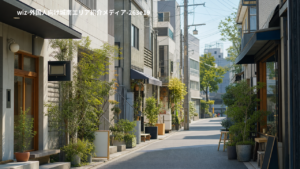
Shimokitazawa is built around a dense network of narrow pedestrian lanes, vintage clothing shops, live music venues, used bookshops, and independent izakayas that have been operating in the same spot for decades. The shotengai (商店街) shopping streets feel genuinely community-run rather than curated for visitors. Residents here tend to have a strong attachment to the neighborhood’s identity and a mild pride in the fact that it has not become more tourist-facing.
For an expat who is fluent or near-fluent in Japanese, or who is actively trying to immerse in Japanese daily life, Shimokitazawa provides a richness of local experience that is harder to find in more internationally-oriented areas. The food culture alone — from basement jazz bars with improbably good curry to open-front coffee roasters — rewards the resident who has time to explore slowly rather than optimize for efficiency.
Commute and transport practicalities
Shimokitazawa is served by two lines: the Odakyu Line (connecting to Shinjuku in roughly 10 minutes) and the Keio Inokashira Line (connecting to Shibuya in about 15 minutes via Shimokitazawa to Inokashira-kōen to Shibuya). In practice, reaching Shibuya from Shimokitazawa typically requires either a transfer or a slightly longer journey than the direct Toyoko/Hibiya connection from Nakameguro. The total door-to-door time from a Shimokitazawa apartment to a Shibuya office is realistically 20 to 30 minutes for most residents.
This is still a perfectly workable commute by most international standards. The question is whether the trade-off — lower rent, more authentic neighborhood character, slightly longer journey — aligns with your personal priorities. For expats who work flexible hours, have a short walking commute within Shibuya, or place high value on neighborhood livability over transit speed, Shimokitazawa makes a strong case.
Rent, apartment types, and value for space
The rent advantage in Shimokitazawa is real and consistent. A comparable apartment to what might cost ¥160,000 per month in Nakameguro can often be found in Shimokitazawa for ¥110,000 to ¥120,000, with the difference becoming more pronounced for larger units. This matters for expats who are funding the move independently, managing currency exchange risk, or simply want to direct more of their Tokyo budget toward experiences rather than rent.
The apartment stock in Shimokitazawa tends to skew slightly older than in Nakameguro, reflecting the area’s longer residential history and lower turnover rate. Newer builds exist, particularly toward the Setagaya Ward side of the neighborhood, but the average building age is higher and insulation standards in older units can vary. This is worth factoring into viewing decisions, particularly if arriving from a climate with strong temperature swings.
| Pros | Cons |
|---|---|
|
|
NOTE
Shimokitazawa straddles the boundary between Setagaya Ward and, in parts, the Meguro Ward adjacent area. When registering your address, confirm the exact ward boundary for your specific apartment — ward-level services and ward office locations differ, which affects your administrative registration process.
Which Neighborhood Is Right for You? Case-by-Case Recommendations
The right answer depends less on which neighborhood is objectively “better” and more on which one fits the specific combination of your work schedule, budget, Japanese-language ability, social priorities, and tolerance for trade-offs. The following profiles are intended to help you identify your own scenario.
Nakameguro is the stronger choice if…
You are a tech professional at Google, a large financial institution, or a Shibuya-based startup, and your job requires consistent early morning or late evening presence at the office — Nakameguro’s 5-minute direct train removes friction from the single daily activity you repeat most. The time saved is genuinely recoverable for sleep, exercise, or language study.
You are arriving in Japan for the first time, have limited Japanese, and need to be able to handle healthcare, administrative tasks, and daily shopping in English or with minimal Japanese. Nakameguro and adjacent Daikanyama give you a higher density of English-facing services than most areas in the Jonan region. The ward’s multilingual resources are also more developed than those in Setagaya-based neighborhoods.
You are part of a couple, and one or both partners will be working in central Tokyo. The Hibiya Line from Nakameguro serves Roppongi, Toranomon, Ginza, and Akihabara directly, making it one of the more flexible base stations for dual-commute households in southern Tokyo. For more area context, the dedicated Nakameguro Living Guide for Expats on this site goes deeper into everyday practicalities.
- Tech and finance professionals commuting daily to Shibuya or central Tokyo
- First-time arrivals in Japan who need English-language service infrastructure
- Couples with dual-office commutes across different Tokyo districts
Shimokitazawa is the stronger choice if…
You are a creative professional, freelancer, or work flexible hours, and your commute is manageable rather than punishing. The 20-to-30-minute journey to Shibuya matters far less when you are not riding at 8:05 a.m. five days a week. In exchange, you gain access to a neighborhood that has a genuine sense of community and cultural depth that Nakameguro, for all its charms, can feel too curated to fully provide.
You are on a more constrained housing budget and want to maximize apartment size or quality per yen spent. The consistent ¥30,000 to ¥50,000 monthly saving versus comparable Nakameguro units adds up to ¥360,000 to ¥600,000 over the course of a year — meaningful money that could fund language lessons, travel, or simply a financial buffer during the transition period of an international relocation.
You have conversational Japanese, are actively building it, or have a partner who does. The richest version of the Shimokitazawa experience — developing genuine relationships with local shop owners, navigating the ward’s administrative processes independently, getting a haircut without pointing at a photo — is substantially more accessible to residents with Japanese ability. If language immersion is part of your Tokyo plan, Shimokitazawa rewards that investment more visibly than a more English-optimized area would.
- Creative professionals, musicians, writers, and freelancers with flexible schedules
- Budget-conscious expats seeking more space or financial runway
- Expats with Japanese-language ability who want genuine local immersion
Finding the Right Apartment: Where Living in Jonan Can Help
Understanding which neighborhood suits you is the first step. Finding an apartment that matches your preferences within that neighborhood — navigating guarantor requirements as a foreign national, interpreting lease clauses written entirely in Japanese, and identifying landlords willing to rent to non-Japanese tenants — is where the process often stalls for expats, particularly those who have just arrived in Japan.
Renting as a foreigner in Tokyo involves documentation requirements and procedural steps that differ from most Western markets. Working with agents who understand those requirements and can communicate clearly in English makes a material difference to the outcome and the experience.
- Foreign professionals who need a bilingual consultant to guide them through Tokyo’s rental process
- Expats searching for apartments in Nakameguro, Shimokitazawa, or anywhere in central Tokyo
- Anyone who wants to search available listings online by area or train line before making decisions
About Balleggs Global’s approach to foreign national rentals
Frequently Asked Questions
Is Nakameguro or Shimokitazawa better for someone who has never lived in Japan before?
Nakameguro is generally the more accessible starting point for first-time Tokyo residents. The higher density of English-friendly clinics, international supermarkets within reach, multilingual ward support, and the established expat community make the practical transition smoother. Shimokitazawa is an excellent choice once you have some foundation in Japanese daily-life navigation — or if you are arriving with conversational Japanese already in place.
Can foreign nationals rent apartments in Nakameguro and Shimokitazawa without a Japanese guarantor?
Yes, though it depends on the specific landlord and property. Both neighborhoods have a mix of landlords with varying policies toward foreign tenants. In recent years, the availability of rent-guarantee companies (hoshō gaisha, 保証会社) has largely replaced the personal guarantor requirement in many leases, including for foreign nationals. Working with a bilingual real-estate agent who has experience placing foreign tenants significantly increases the number of accessible properties.
Which neighborhood has better access to other Tokyo districts beyond Shibuya?
Nakameguro has a broader multi-directional network. The Hibiya Line provides direct access to Roppongi, Toranomon, Ginza, and Tsukiji without transferring, while the Toyoko Line connects northward to Shinjuku via Jiyūgaoka and south toward Yokohama. Shimokitazawa’s Odakyu Line connects effectively to Shinjuku and westward suburban areas, while the Keio Inokashira Line offers a pleasant route to Shimokitazawa’s quieter surrounding neighborhoods and Kichijoji. For Shibuya-centric commuters, both are functional; for pan-Tokyo flexibility, Nakameguro holds an advantage.
Are there other walkable neighborhoods in southern Tokyo worth comparing to these two?
Yes. The Jonan area — covering Meguro, Setagaya, Shibuya, Minato, Shinagawa, and Ota wards — contains a range of neighborhoods suited to different expat profiles. Gotanda offers excellent transport connections and a more business-oriented environment, while areas closer to Daikanyama or Hiroo sit between Nakameguro’s character and more diplomatic-district services. The 5 Walkable Tokyo Neighborhoods guide and the central Tokyo neighborhood comparison on this site offer useful further comparisons across the region.
How do I start the apartment search process if I am still outside Japan?
Beginning your search before arrival is increasingly feasible and advisable, especially in competitive rental markets. Bilingual agencies like Balleggs Global allow you to search listings online by area and train line, and their consultants can answer questions about specific properties, lease terms, and documentation requirements before you land. Arriving in Japan with a shortlist and a relationship with a bilingual agent already established significantly reduces the stress and time pressure of finding housing in the first weeks of a new posting.