Jiyugaoka has a reputation that precedes itself — leafy streets, European-style patisseries, boutique wine bars, and an almost impossibly photogenic shopping district. But if you have arrived in Tokyo as a foreign professional and started searching for practical English-language information about actually living here, you may have noticed that the charm is real while the guidance is surprisingly scarce.
This guide exists to close that gap. Whether you are weighing up Jiyugaoka against Nakameguro or Daikanyama, trying to understand how the commute to Shibuya actually works, or simply wondering what a realistic rent budget looks like in 2026, the information below is built around the questions that expats working in central Tokyo genuinely ask before signing a lease.
Who this article is for
- ●Foreign professionals in their 20s to 40s working near Shibuya or in Tokyo’s tech and startup scene
- ●Singles or couples without children who want a stylish, well-connected residential base
- ●Expats who need English-language support to navigate Japan’s rental market with confidence
By the end of this article you will know···
- ●What daily life in Jiyugaoka actually looks like for an international resident
- ●Which train lines serve the area and how long the commute to Shibuya takes
- ●Realistic rent ranges and neighborhood sub-areas to consider
- ●The practical challenges expats face in Tokyo’s rental market and how bilingual support can help
What kind of neighborhood is Jiyugaoka?

Jiyugaoka sits at the border of Meguro and Setagaya wards, roughly six kilometers southwest of Shibuya. It consistently ranks as one of Tokyo’s most desirable residential areas — not because of nightlife or urban density, but because it manages to feel genuinely livable without feeling remote.
The residential character of the area
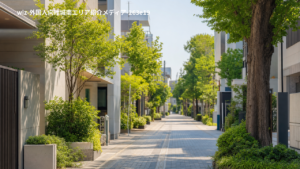
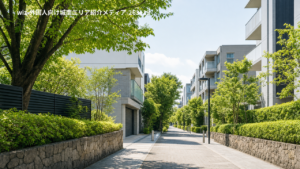
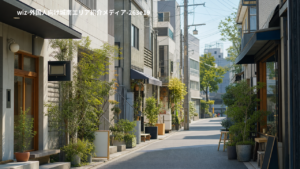
Jiyugaoka is quiet by Tokyo standards. The streets around the station are lively with specialty food shops, wine merchants, and an unusually high concentration of French patisseries, but within a five-minute walk you enter calm residential blocks lined with low-rise apartment buildings and detached houses. This balance — easy access to amenities without the noise of a major commercial hub — is precisely why the neighborhood tends to attract professionals who value both convenience and quality of life.
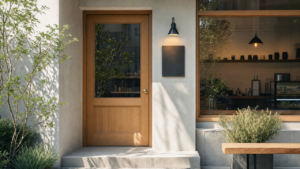
The area’s identity is shaped partly by its long history as a gathering point for interior design studios, imported goods shops, and food-focused boutiques. La Vita, a small shopping enclave built around a Venetian canal motif, is the most photographed corner of the neighborhood and gives a sense of the European aesthetic that has defined the area’s retail scene for decades. For expats accustomed to European or North American city living, the aesthetic feels recognizable in a way that many Tokyo neighborhoods do not.
Who actually lives here?
The resident mix tends toward established professionals, dual-income couples, and families with children who attend international or private schools in the wider Setagaya and Meguro area. The foreign resident population is smaller than in neighborhoods like Hiroo or Azabu, which means you will not find the dense expat social infrastructure of those areas, but you will also find a calmer, more integrated daily life. Cafés and restaurants in the area are increasingly comfortable with English orders, and the local service culture is generally patient and welcoming.
The typical renter here is someone who has lived in Tokyo for at least a year, knows what they want, and is willing to pay a modest premium for a neighborhood that delivers consistently on quality of life. It is not a starter neighborhood in terms of budget, but it is one that foreign professionals working near Shibuya tend to return to when they decide to upgrade their living situation.
Micro-neighborhoods within Jiyugaoka
The immediate station area offers the densest mix of shops and restaurants, with the highest rents to match. Moving east toward Midorigaoka, buildings tend to be slightly older and rents softer, while the streetscape shifts toward quieter residential lanes. The area north of the Tokyu Toyoko line, toward Toritsu-Daigaku, is popular with renters who want lower density and slightly lower price points while remaining within walking distance of Jiyugaoka station. Understanding these sub-zones before you start viewing apartments will help you calibrate your expectations and avoid the common mistake of anchoring on a single rent figure that may not reflect the full range available.
Getting around — train lines and commuting to Shibuya
One of Jiyugaoka’s clearest practical advantages for professionals working near Shibuya is the commute. Two train lines serve the station, and both are operated by Tokyu Corporation. Understanding how they work — and where they connect to the rest of Tokyo — matters more than it might seem when you are deciding where to live.
Tokyu Toyoko Line — the primary commuter route
The Tokyu Toyoko Line connects Jiyugaoka directly to Nakameguro (two stops) and Shibuya (three stops), with an express journey taking roughly twelve minutes. At Shibuya, the Toyoko Line connects to the Tokyo Metro Fukutoshin Line, which continues north toward Shinjuku, Ikebukuro, and beyond. For professionals working at companies in the Shibuya or Omotesando area, this line makes Jiyugaoka genuinely convenient — the commute is shorter than from many neighborhoods perceived as being closer to central Tokyo.
The Toyoko Line also connects at Yokohama, which matters for expats whose work occasionally takes them south, or who value having a major international city easily accessible on weekends. Frequent train services, particularly during peak hours, mean waits are rarely longer than a few minutes.
Tokyu Oimachi Line — added flexibility
The Oimachi Line runs from Jiyugaoka northeast to Oimachi, where it connects to the JR Keihin-Tohoku Line. This line is less relevant for a typical Shibuya commute but adds flexibility for reaching Shinagawa or connecting to JR services running south toward Yokohama or north toward Akihabara and Ueno. For expats whose offices are not directly on the Toyoko Line, this second line occasionally provides a more efficient routing than changing trains at Shibuya.
Cycling and walking
Jiyugaoka’s flat terrain and relatively quiet residential streets make cycling practical for local errands and for reaching neighboring stations. The area is within comfortable cycling distance of Nakameguro and Gakugeidaigaku, both of which are popular among foreign residents and offer additional restaurants, cafés, and parks. Walking routes through the residential blocks are pleasant and well-maintained, which is not always a given in Tokyo’s more commercial neighborhoods.
Housing options — rent, apartment types, and what to expect

Finding a suitable apartment in Jiyugaoka is genuinely achievable for foreign professionals with competitive incomes, but the process involves navigating several layers of Japanese rental convention that are not immediately obvious if you have not rented in Japan before.
Typical apartment types and rent ranges
Jiyugaoka sits in a higher price bracket than the Tokyo average, which reflects both its desirability and its ward positioning in Meguro. For a single professional, a well-located 1K or 1DK apartment typically costs between ¥100,000 and ¥145,000 per month. A 1LDK — which comfortably suits a couple or a professional who works from home — generally runs from ¥160,000 to ¥220,000 depending on building age, floor level, and proximity to the station. These figures are indicative; actual listings in any given month will vary, and newer buildings with design finishes or concierge services command premiums above these ranges.
Move-in costs follow the standard Japanese convention: expect to pay two to three months’ rent as a security deposit (shikikin), one month’s rent as key money (reikin) in many cases, and a brokerage fee equivalent to one month’s rent. The total initial outlay can therefore reach five or six times the monthly rent, which surprises many expats arriving from markets where rental deposits are more modest. Budgeting for this upfront cost — and understanding that it is standard practice rather than a negotiating failure — is an important part of preparing for your Tokyo apartment search.
What landlords in this area typically look for
Foreign nationals renting in Japan face a set of structural challenges that have less to do with individual circumstances and more to do with how the rental system is built. Many landlords still require a Japanese guarantor, and some properties are informally managed on a preference basis that can disadvantage applicants who cannot communicate fluently in Japanese. Even landlords who are entirely open to foreign tenants may require additional documentation — proof of employment, salary certificates, or enrollment in a company’s housing allowance scheme — that can be difficult to gather quickly when you are under pressure to secure an apartment before a start date.
In practice, this means that the process of finding and securing an apartment in Jiyugaoka goes more smoothly when you are working with an agent who can communicate on your behalf, explain your profile clearly, and select properties from a portfolio where the landlord is already comfortable with international tenants.
New construction versus older buildings
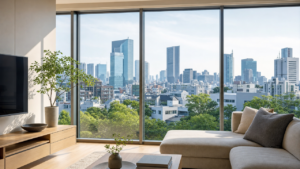
Jiyugaoka has a mix of recently built low-rise apartments and older mansions (a Japanese term for mid-rise concrete apartment buildings, used regardless of actual luxury level). Newer buildings tend to have better earthquake resistance ratings, more efficient layouts, and amenities such as auto-lock entry and built-in IH cooktops. Older buildings often offer larger floor areas for equivalent rent and may have character details — exposed concrete, larger balconies, or quieter building communities — that some renters actively prefer. Neither is categorically better; the right choice depends on your priorities, and a good bilingual agent will help you compare options across both categories rather than defaulting to one type.
The challenges expats face in Tokyo’s rental market

Tokyo’s rental market functions efficiently for applicants who fit its default assumptions. The system was built around Japanese nationals with permanent employment contracts, Japanese-language literacy, and a Japanese personal guarantor. Foreign professionals — even those with high incomes, strong employment records, and long-term visas — fall outside those defaults in ways that create friction at almost every step of the process.
Language barriers in documentation and negotiation
Lease agreements in Japan are typically written entirely in Japanese, and while translation tools have improved, they do not reliably capture the legal nuance of clauses covering restoration obligations, noise rules, or the circumstances under which a deposit may be withheld. Signing a document you cannot fully read is a significant legal risk, and landlords are not generally obligated to provide English translations. Beyond the contract itself, the negotiation of terms — requesting modifications, asking about pet policies, clarifying who bears the cost of specific repairs — is conducted in Japanese unless you have an intermediary who can bridge that gap.
- ●Signing a lease without understanding the restoration clause (genjo kaifuku) — you may be charged for normal wear and tear on departure
- ●Choosing a property without confirming the landlord’s policy on foreign nationals — some agents will not disclose this upfront
- ●Underestimating move-in costs — key money, deposit, and brokerage fees can total five to six months’ rent
- ●Applying without a guarantor or guarantee company arrangement in place — applications without this are often rejected immediately
- ●Relying on machine translation for lease clauses — nuance in legal Japanese is frequently lost in translation
Guarantor and guarantee company requirements
Most rental properties in Japan require either a personal guarantor (usually a Japanese national with a stable income) or enrollment in a rental guarantee company (hoshō gaisha). For foreign nationals who have recently arrived in Japan and do not yet have a network of Japanese contacts, finding a personal guarantor is often impractical. Rental guarantee companies fill this role and are increasingly accepted by landlords, but not all guarantee companies will accept foreign national applicants, and the application process involves its own documentation requirements — including in some cases a Japanese-language interview.
Navigating this layer of the process is one of the areas where working with an experienced bilingual real estate service makes the most concrete difference. An agent who understands which guarantee companies reliably accept international applicants, and who can prepare your application to meet their specific documentation requirements, materially reduces the risk of an otherwise strong application being rejected on procedural grounds.
Building a credible application as a newly arrived expat
Landlords in desirable neighborhoods like Jiyugaoka often have more applicants than available properties, which means they have the practical ability to be selective. A foreign national applicant without a Japanese credit history, without a local guarantor, and without the ability to communicate directly in Japanese may be passed over in favor of a more straightforwardly processable application even when their financial profile is stronger. Presenting your application in the most compelling possible form — with employment documentation translated and formatted in a way that Japanese landlords can easily verify, with a guarantee company arrangement already in place, and with an agent who has an existing relationship with the property management company — significantly changes the dynamics of this competition.
Essential services and daily life for expats in Jiyugaoka
Beyond the apartment itself, building a functional daily life in a new Tokyo neighborhood requires understanding which services exist, where they are, and how accessible they are in English. Jiyugaoka performs reasonably well on most of these dimensions by Tokyo standards, though it is not as internationally oriented as Hiroo or Azabu.
Shopping and food
The neighborhood’s retail identity — specialty food, wine, imported goods — means that sourcing Western ingredients is easier here than in most Tokyo neighborhoods at comparable distance from central Shibuya. There is a Peacock supermarket close to the station for everyday groceries, supplemented by a strong network of specialty food shops covering everything from Italian deli items to craft chocolate. The weekly farmers’ market that operates near the station provides fresh produce from regional suppliers. For larger shopping runs, the Tokyu Department Store at the station and the commercial facilities around nearby Futago-Tamagawa offer a broader range of household goods and apparel.
Healthcare and English-language medical services
Accessing healthcare in Japan as a foreign resident is manageable once you understand the structure of the system, but it requires some preparation. Japan’s National Health Insurance system covers most medical costs at 30% out-of-pocket for enrolled residents, and enrollment is compulsory for those not covered by an employer’s health scheme. Most clinics in the Jiyugaoka area conduct consultations in Japanese, so having a translation app or a Japanese-speaking colleague available for anything beyond routine checkups is advisable.
For English-language medical care, the broader Shibuya and Minami-Azabu area has several international clinics with English-speaking staff, and these are accessible from Jiyugaoka within twenty to thirty minutes. International Health Insurance plans used by expats on assignment packages typically cover these clinics, and several of them maintain English-language appointment booking systems.
Ward office registration and administrative setup
Within two weeks of moving into any apartment in Japan, you are legally required to register your address at the local ward office. In Jiyugaoka, this means registering at either Meguro or Setagaya ward office depending on which side of the ward boundary your apartment falls on. Both offices have foreign resident support counters, though the availability of English-speaking staff varies. Bringing all relevant documentation — your passport, residence card (zairyu card), and lease agreement — will make the process more efficient. Some ward offices now offer multilingual guidance documents, and the Japan National Tourism Organization maintains a Foreigner Call Center that can provide telephone interpretation support during administrative procedures.
Community and lifestyle — what expats find once they settle in
The experience of living in Jiyugaoka evolves considerably once the initial logistics are resolved. The neighborhood rewards exploration and develops a specific quality of daily life that is difficult to appreciate from a short visit or a real estate search alone.
Café culture and social spaces
Jiyugaoka has a genuinely excellent café scene — not in the specialty third-wave coffee sense that dominates Shimokitazawa or Sangenjaya, but in a more European café-as-institution sense where specific places develop regular crowds and a sense of neighborhood ownership. Several cafés in the area function as informal co-working spaces during the week and shift to a more social weekend atmosphere, making them useful starting points for building a local social life. The wine bars along the main shopping streets tend to draw a mixed local and foreign crowd, and the lower-key atmosphere compared to Ebisu or Nakameguro makes conversations with neighbors easier to initiate.
Parks and outdoor spaces
Jiyugaoka does not have a large central park within the immediate neighborhood, but Toritsu-Daigaku and the broader Meguro ward area offer several smaller parks and green corridors that are pleasant for running and cycling. The Tama River — accessible by a short cycle or Oimachi Line connection — provides a long green riverside path that is popular with runners and cyclists throughout the year. For those who prioritize access to large parks, Todoroki Valley and Komazawa Olympic Park are both within cycling range and offer significantly more space than the immediate neighborhood provides.
Building a social network
The foreign resident community in Jiyugaoka is less concentrated than in Hiroo or Roppongi, which some expats prefer. Social connections here tend to form through workplaces, through language exchange meetups (the Jiyugaoka and Meguro area has several active groups), and increasingly through neighborhood-focused online communities where both Japanese and foreign residents share local recommendations. The neighborhood’s café and restaurant density makes it well-suited to the informal social style that many professional expats prefer over organized expat association events.
Moving checklist — first steps to setting up in Jiyugaoka
The period between signing your lease and settling into a functional daily life in a new Tokyo neighborhood involves a concentrated sequence of tasks. Having a clear checklist reduces the cognitive load considerably, particularly when you are managing these steps alongside starting a new role or relocating from overseas.
| Task | When to complete | Key detail |
|---|---|---|
| Ward office address registration | Within 14 days of moving in | Bring passport, residence card, and lease agreement |
| National Health Insurance enrollment | At ward office, same visit if possible | Required if not covered by employer health scheme |
| Utilities setup — electricity, gas, water | Before or on move-in day | Gas requires an in-person engineer visit for activation |
| Internet connection | Apply before move-in — 1–3 week wait is common | Optical fiber (hikari) is standard; confirm building compatibility |
| Japanese bank account (if not yet open) | Within first 1–2 weeks | Japan Post Bank and some regional banks accept new residents with limited visa tenure |
| My Number registration | Card should arrive ~2 weeks after address registration | Required for tax and some financial services |
| Residence card update with new address | At ward office, same day as registration | New address is written on the back of the card at the counter |
Utilities in a Japanese apartment
Setting up electricity, gas, and water in Japan is operationally straightforward but requires a phone call or online form in Japanese for each utility. Some providers now have English-language web portals, and Tokyo Electric Power Company (TEPCO) in particular has improved its English support for the eastern Tokyo area. Gas activation always requires a technician visit within a specific time window — this appointment needs to be booked in advance, and you will need to be present at the apartment. Plan this for your move-in day or the day immediately after, as you cannot use the hot water system or gas cooktop until activation is complete.
Internet and phone setup
Japan’s fixed-line internet infrastructure is excellent — optical fiber connections offering 1 Gbps speeds are widely available and reasonably priced, typically in the range of ¥4,500 to ¥6,000 per month for residential plans. The catch is installation wait times: depending on the provider and the building’s existing wiring, connecting a new fiber service can take two to four weeks. If you need connectivity immediately on moving in, a mobile WiFi router (pocket WiFi) is a practical stopgap. SIM card setup for your smartphone is relatively straightforward at major electronics retailers such as Yodobashi Camera or Bic Camera, with English-language staff available at the larger locations.
Navigating Japanese paperwork as a foreign resident
The administrative tasks associated with moving in Japan are manageable but generate a significant volume of Japanese-language paperwork. Keeping all lease-related documents, utility contracts, and registration certificates organized from day one will save considerable time later — particularly when renewing your visa, applying for a My Number card, or opening a bank account. A simple folder system with labeled sections for housing, utilities, insurance, and official registrations covers most of what you will encounter in the first three months.
How Living in Jonan can help you find your apartment in Jiyugaoka
The practical challenges described in this guide — the language barrier in lease negotiations, the guarantor requirement, the need to identify landlords who are comfortable with foreign nationals — are solvable, but they are genuinely easier to solve when you have the right support in place before you start viewing properties.
Living in Jonan, operated through Balleggs global, is a bilingual real estate consulting service built specifically for foreign professionals seeking apartments in central Tokyo. With 25 years of experience as a real estate consulting firm, the team brings a depth of market knowledge that extends well beyond a standard listings search — understanding which buildings have landlords who have worked successfully with international tenants, which guarantee companies reliably approve foreign national applications, and how to present your profile in the way that Japanese property management companies respond to most positively.
The service is oriented toward professionals working near Shibuya who need confidence in the process, not just a list of available units. You can search properties by area and train line through the online portal, and the bilingual consultants at Living in Jonan handle the negotiation, documentation review, and application coordination on your behalf. For an area like Jiyugaoka — desirable, competitive, and not broadly covered by English-language real estate platforms — this kind of hands-on support makes a concrete difference to both the quality of apartments you are able to access and the likelihood of your application succeeding.
Summary — is Jiyugaoka right for you?
Jiyugaoka is a genuinely excellent neighborhood for foreign professionals working near Shibuya who want a residential environment that is quiet, aesthetically pleasing, and well-connected without being in the thick of a major commercial district. The commute is efficient, the café and food scene is strong, and the area’s European character tends to feel immediately comfortable for expats arriving from Western Europe or North America.
The trade-offs are real: rents sit at the higher end of the central Tokyo range, the foreign resident community is smaller than in areas like Hiroo, and the rental market requires navigating the same structural challenges that affect international applicants across the city — perhaps more so, because competition for good properties here is strong. Going into the process informed, with professional bilingual support and a clear sense of your priorities, significantly changes the outcome.
- ●Work near Shibuya and want a 12–17 minute commute in a calmer residential setting
- ●Have a budget of ¥150,000 or more per month for your apartment
- ●Value café culture, quality food retail, and an aesthetically cohesive neighborhood
- ●Prefer a quieter, more integrated neighborhood over a dense expat hub
What to prepare before starting your apartment search
Frequently asked questions
Q: How long does the commute from Jiyugaoka to Shibuya take?
A: On the Tokyu Toyoko Line, Jiyugaoka to Shibuya takes approximately twelve to seventeen minutes depending on the service type (express or local). Express trains stop at Jiyugaoka and reach Shibuya in around twelve minutes. Services run frequently during peak hours, with waits rarely exceeding five minutes.
Q: Can foreign nationals rent an apartment in Jiyugaoka without a Japanese guarantor?
A: Yes, in most cases. Many landlords in the area accept applications backed by a rental guarantee company (hoshō gaisha) rather than a personal Japanese guarantor. Not all guarantee companies accept foreign national applicants, so working with a bilingual agent who knows which companies are compatible with your profile is advisable. The process is manageable but requires preparation.
Q: What is the realistic rent budget for a 1LDK apartment in Jiyugaoka in 2026?
A: A 1LDK apartment (typically 35–50 m²) in Jiyugaoka generally costs between ¥160,000 and ¥220,000 per month as of 2026. Newer buildings with premium finishes or concierge services sit above this range. Older buildings slightly further from the station may offer options toward the lower end. These figures are indicative; actual availability varies month to month.
Q: Are there English-speaking real estate agents who cover Jiyugaoka?
A: Yes. Bilingual real estate services covering the Jonan area — which includes Jiyugaoka — exist specifically to support foreign residents navigating Tokyo’s rental market. Services like Living in Jonan (Balleggs global) provide English-speaking consultants who handle the full process from property search to lease signing, including document translation and guarantee company coordination.
Q: What ward is Jiyugaoka in, and does it affect my administrative setup?
A: Jiyugaoka spans both Meguro and Setagaya wards. Which ward your specific apartment falls in determines which ward office you register at. Both Meguro and Setagaya ward offices have foreign resident support counters, though the range of English-language assistance varies. Confirming your ward before move-in allows you to prepare the correct documentation in advance.
Learn more about how we can help.
Bilingual consultants guide you so foreign residents can find a home with confid